

Bulk Order Completed: Black Animal Safety Fencing for German Zoo

Professional Stainless Steel Animal Fence Netting Solution
07/24/2026
Steel Cable Mesh Solves Most Safety‑Related Problems
08/11/2026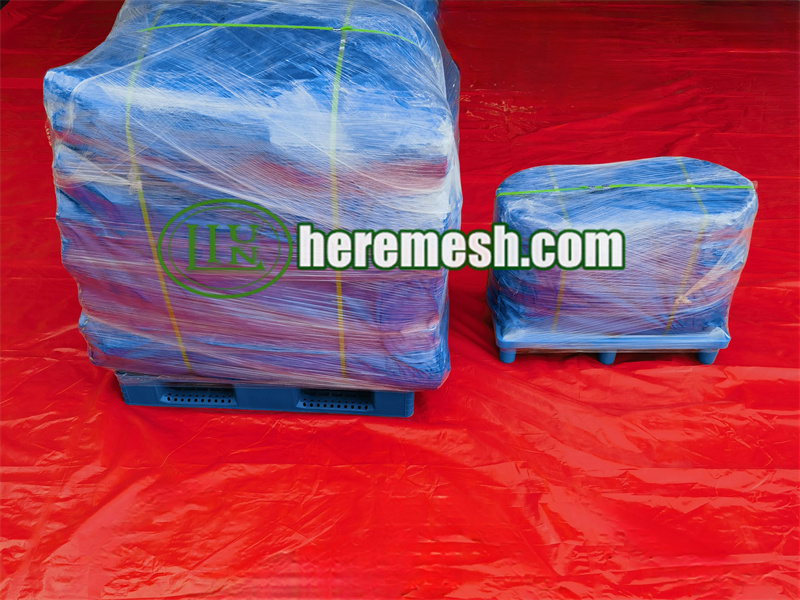
Overview: Bulk Order Model 1625 Black Animal Safety Fencing for German User
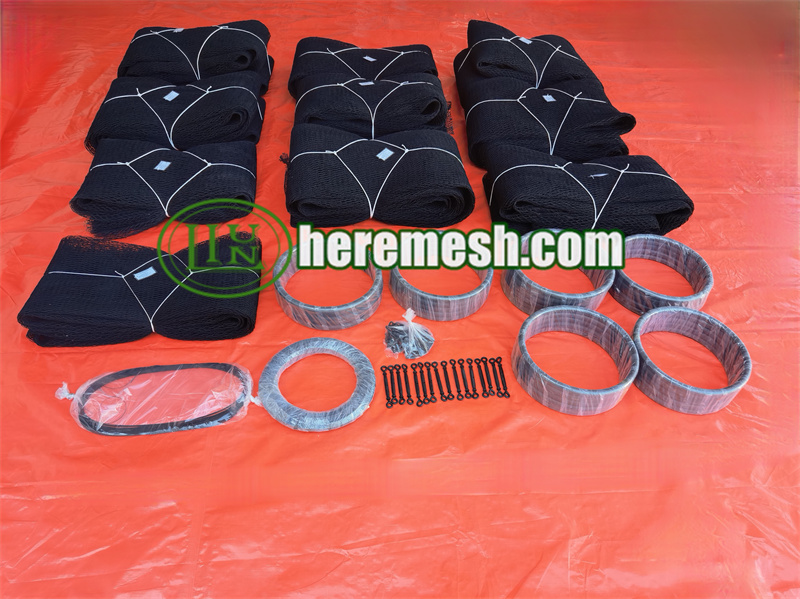
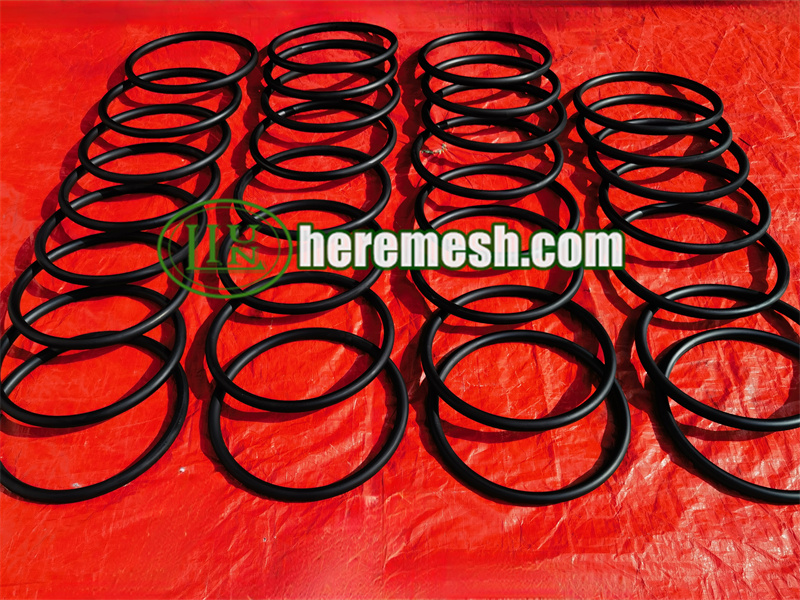
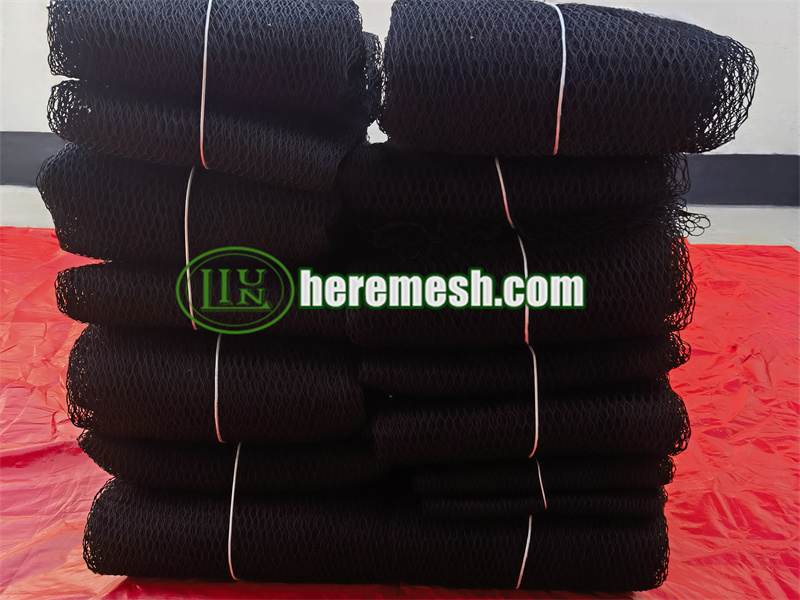
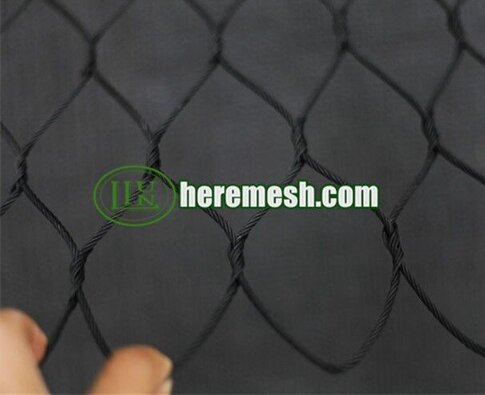
This month, we successfully completed production on a large-volume order of stainless steel rope mesh from Germany. The user is a professional zoo organization based in Germany. The mesh model ordered was 1625, featuring a rope diameter of 1.6mm and aperture of 25mm by 25mm. The entire surface treated with a black oxide finish. The total order included animal safety fencing and animal tunnel mesh, along with a complete set of stainless steel accessories. Stainless steel fasteners, steel wire ropes, and rings.
This marks our first collaboration with this user. The user’s decision to entrust us with the production of the entire tunnel system and animal safety fencing in a single order demonstrates their confidence in our products. From the initial technical discussions to the final production schedule confirmation, every detail in our email correspondence was thoroughly verified.
It is worth noting that, in addition to conventional fencing, this batch of wire rope mesh is primarily intended for use as animal passageways—transitional spaces connecting different animal exhibit areas. This means the mesh must maximize visual transparency while ensuring safety. It allows visitors on both sides of the tunnel to clearly observe the animals’ activities.
Why users Choose Black oxidation Animal Safety Fencing Mesh?
The user explicitly requested that all rope mesh undergo a black oxidation treatment during the inquiry phase. Several key considerations underlie this decision.
First is visual discretion. In applications such as zoo enclosures and tunnel, the mesh is directly within visitors’ line of sight. While natural-colored stainless steel rope mesh offers good transparency, its silvery metallic sheen reflects sunlight, distracting visitors. After oxidation treatment, the black rope mesh develops a matte black oxide layer on its surface that does not reflect light, even under direct, intense sunlight. From the visitors’ perspective, the black mesh virtually “disappears” into the background, allowing their gaze to pass directly through the mesh to view the animals, thereby significantly enhancing the viewing experience.
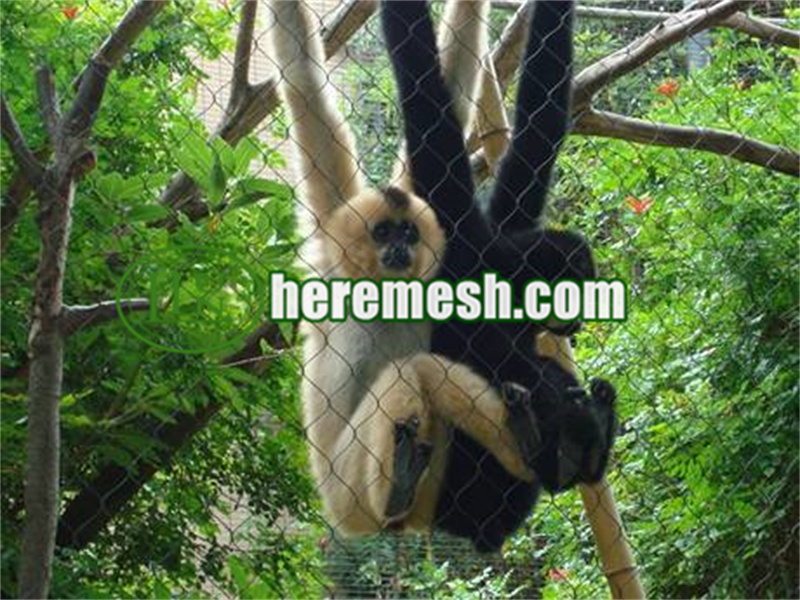
Second is the reduction of visual stress on the animals. Studies have shown that birds and primates are particularly sensitive to metallic reflections. Prolonged exposure to bright-colored metal fencing may cause a certain degree of stress. To animals, the black mesh surface more closely resembles branches and shadows found in their natural environment. This helps to lower their wariness of the fencing and reduce the frequency of stereotypical behaviors. In zoo construction, an increasing number of zoos prioritizing animal welfare are actively opting for dark-colored mesh when selecting materials.
Third is the added benefit of durability.The black oxide layer is not a simple surface coating. Instead, it is a dense oxide film formed on the surface of stainless steel wire via chemical oxidation treatment. This film is integral to the base material and will not peel off like spray paint or PVC coating. At the same time, the oxide film enhances the wire’s resistance to ultraviolet rays, preventing color changes even after long-term outdoor use.
Custom-Built Tunnel Mesh: Innovative Spatial Solutions for Connecting Different Exhibition Areas
A “tunnel mesh” refers to the system of connecting pathways within a zoo that link two or more animal exhibits. These are typically constructed above or alongside visitor walkways. Animals move freely between different exhibits via this tunnel. Visitors can observe the animals’ natural behaviors as they pass through from below or from the sides of the passageways.
This project for a German user involved the renovation of a primate exhibit. The original exhibit was divided into three separate enclosures connected by underground passages, allowing visitors to observe the animals only from the outside of each individual enclosure, resulting in a fragmented viewing experience. The new design involves installing an above-ground rope-net passageway between the three enclosures, enabling monkey groups to move through the air while visitors walk along the path beneath the passageway and look up to see the monkeys passing overhead.
This design places extremely high demands on the rope mesh. First is safety. The 1625 model features a rope diameter of 1.6mm and a mesh size of 25 mm. This model is just right for small to medium-sized primates. The mesh is small enough that monkeys cannot extend their arms or heads through it, while the rope diameter is thin enough not to obstruct the visitors’ view. Second is flexibility. Hand-woven rope mesh can adapt flexibly to various curved surfaces. Third is structural strength. The tunnel mesh must not only support the weight of climbing monkeys but also withstand wind and rain loads. Therefore, in addition to the rope mesh itself, the accompanying steel cable tensioning system and fasteners are equally critical.
Complete Set of Accessories Included
This German customer requested a one-stop, turnkey delivery solution during the initial coordination phase. All fasteners included in this order were strictly selected and assembled in accordance with the models, specifications, and quantities confirmed by the customer. All fasteners are uniformly made of 304 stainless steel, consistent with the material used for the main rope netting. This prevents electrochemical corrosion caused by dissimilar metals during long-term outdoor use. The overall resistance to moisture and mild acid and alkali corrosion matches the performance of the netting, meeting the long-term usage standards for German open-air zoos. While this one-stop service may appear to increase our workload, it actually saves the client a significant amount of time on procurement coordination and ensures a smoother installation process.
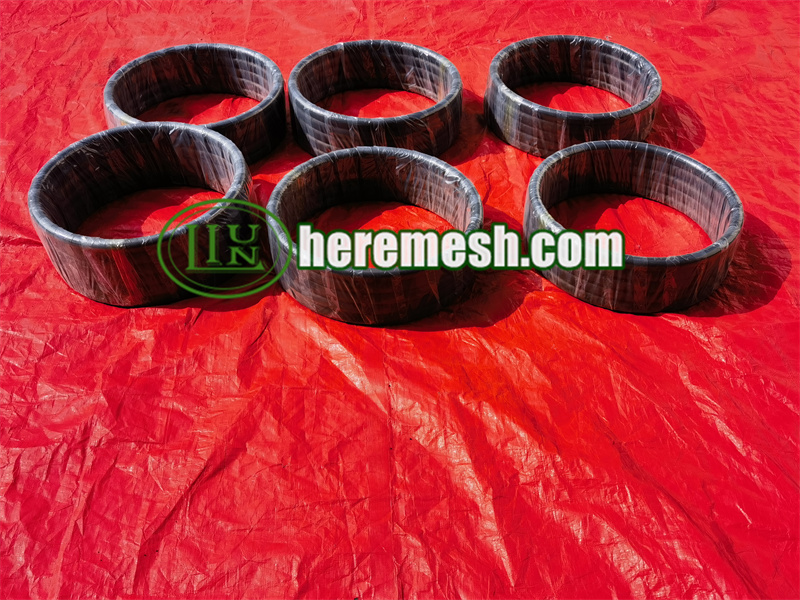
Comparison of Long-Term Operating Costs Between Black Mesh and Natural-Colored Mesh
Natural-colored rope mesh is cheaper and has a shorter lead time, so why spend more money on black?
First, there’s the cost of visual maintenance. Although natural-colored stainless steel rope mesh doesn’t rust, after years of outdoor use, its silver surface will gradually lose its luster due to dust accumulation and slight oxidation. While this doesn’t affect structural strength, zoos may need to clean or even replace it periodically for aesthetic reasons. Since black oxidized mesh has a naturally darker surface, dust accumulation is virtually imperceptible to the eye, allowing the cleaning frequency to be reduced from once per quarter for natural-colored mesh to once a year. When calculated across an entire zoo project, the combined labor and equipment costs for each cleaning session add up to a significant amount.
Second is the difference in replacement cycles. The theoretical lifespan of natural steel mesh is over 20 years. The black oxidized mesh has an even longer actual lifespan due to an additional protective oxide layer on its surface. This oxide layer blocks direct contact between UV rays and moisture and the steel wire substrate, effectively providing an extra layer of protection for the stainless steel. In climates like Germany’s—with damp, cold winters and intense summer sunlight—the advantage of black oxidized mesh in terms of long-term weather resistance becomes even more pronounced.
Third is the intangible value of the visitor experience. A zoo’s ticket revenue and reputation depend largely on the viewing experience of its visitors. The black mesh surface is non-reflective and does not distract the eye, resulting in better-looking photos taken by visitors and higher sharing rates on social media. Although this indirect marketing value cannot be precisely quantified, German clients place great importance on it.
All things considered, the initial purchase cost of black rope mesh is about 15 percent higher than that of natural-colored rope mesh, but when you factor in the savings on maintenance costs and the improved user experience over a 20- to 30-year lifespan, it actually offers better long-term value.
Smooth Execution: From Order to Delivery
This order went very smoothly from the first inquiry email to the final shipment. By reviewing this process, we can see how a typical high-volume custom order progresses step by step.
First came the requirements discussion phase. The user provided the required dimensions and quantities for the animal safety fencing panels. Later, the user added new panel sizes and animal tunnel mesh. Ultimately, both parties confirmed the Model 1625 and an all-black design. We prepared a comprehensive quotation for the user. Before payment was made, we confirmed the details with the customer multiple times, and the customer eventually paid the advance deposit.
The factory issued the production order and began manufacturing for the user. Due to the large order volume and the black anodizing process involved, the production cycle was approximately ten days longer than for standard natural-color orders. The anodizing process was carried out by a specialized team, and each batch of black oxidation mesh underwent sampling to test the thickness and adhesion of the anodized coating. After quality inspection was completed, each panel was labeled with its serial number and dimensions. The quantities of the accompanying fasteners and steel wire ropes were also verified one by one. Finally, all goods were shipped by sea to the Port of Hamburg.
Looking back on the entire project, what was most impressive was the user’s level of professionalism. Every specification detail was clearly defined. This rigorous approach to work made communication between both parties highly efficient and gave us even greater confidence in our future long-term collaboration.