

Professional Stainless Steel Animal Fence Netting Solution

Stainless Steel Aviary Bird Netting Selection Guide
07/17/2026
Bulk Order Completed: Black Animal Safety Fencing for German Zoo
08/03/2026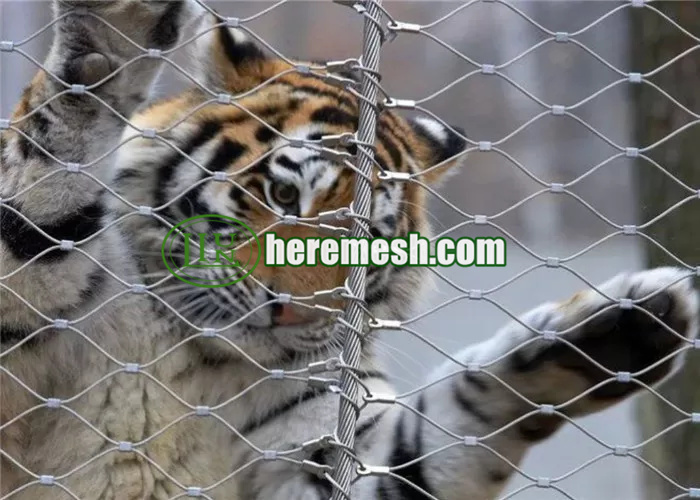
What is animal fence netting?
Animal fence netting is a mesh barrier material used to enclose and isolate areas where animals roam. Unlike ordinary wire fences, it is a specialized protective product designed specifically to accommodate the size, strength, and behavioral habits of animals. In projects such as zoos, wildlife parks, and bird sanctuaries, animal fencing is an indispensable piece of infrastructure.
In terms of applications, animal fencing is used in a wide range of scenarios. Whether it is to prevent animals from escaping, separate different species, or ensure the safety of visitors and nearby residents, animal fencing serves as a critical barrier. With the growing popularity of animal welfare concepts, flexible stainless steel rope netting is becoming the mainstream choice for animal fencing.
Core Benefits of Animal Fence Netting: Two-Way Safety Protection and Long-Term Durability
For Animals: Preventing Escapes and Avoiding Bumps and Scratches
For animals, the primary function of fencing is to prevent escapes. The ability to escape varies greatly among different species. Monkeys are skilled climbers and will repeatedly tug at the mesh to find weak spots. Large felines possess explosive power and deliver astonishing impact forces. Birds are strong fliers and can slip through even the slightest gap. A qualified enclosure must meet standards for both mesh size and material strength to effectively eliminate the risk of escape. Secondly, the enclosure must prevent animals from being injured during their activities. Stainless steel rope netting has a smooth, rounded surface and is elastic. When an animal collides with it, the mesh provides moderate cushioning and rebounds, significantly reducing the likelihood of injury from collisions.
For Visitors / the Outside World: Isolating Predators, Ensuring Personal Safety
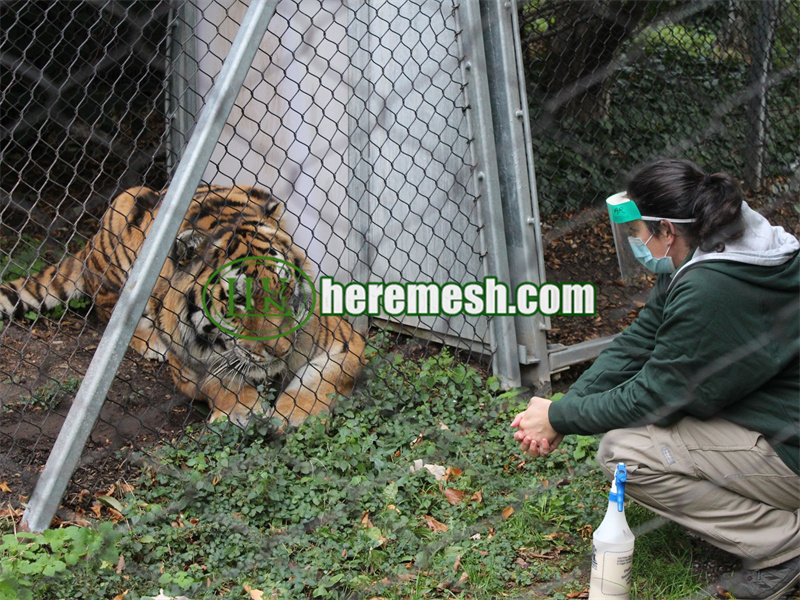
For visitors and the outside world, the fencing serves as a critical barrier to isolate predators and ensure personal safety. Therefore, the fencing must possess sufficient impact resistance to withstand full-force collisions from large animals without breaking or deforming. At the same time, the mesh openings must be designed to prevent animals from extending their forelimbs outside the fence and injuring visitors.
Bite- and Impact-Resistant, with a Long Service Life
In terms of durability, animal fence netting is exposed to the elements for extended periods, enduring sun, rain, and the biting and climbing of the animals themselves. Stainless steel rope netting far exceeds traditional materials in terms of bite and impact resistance. And it has a service life of over thirty years. During this period, it requires virtually no major maintenance, truly delivering a one-time investment for long-term use.
Mainstream Animal Fence Netting Products
Currently, there are two main manufacturing processes for high-quality animal fence netting. Flexible stainless steel wire rope mesh (hand-woven mesh) and stainless steel ferrule mesh. Both types use 304 or 316 stainless steel wire rope as the raw material. The difference lies in the method of joining the knots. The seams of the hand-woven mesh are formed by hand interweaving and knotting of stainless steel cables. The structure is simple, the mesh is uniform, the surface is smooth, and there are no protrusions. Ferrule mesh, on the other hand, uses stainless steel ferrules to secure the intersecting cables, creating stronger joints.
In terms of material selection, 304 and 316 are the two most commonly used grades of stainless steel.
304 stainless steel rope netting is the standard configuration and currently the most widely used specification. It effectively blocks air and moisture, preventing the substrate from oxidizing and corroding. In typical outdoor environments, 304 stainless steel rope netting remains rust-free and break-resistant over the long term, fully meeting the needs of most zoos and farms. It offers excellent value for money and is the top choice for most customers.
316 stainless steel rope netting, on the other hand, contains additional molybdenum compared to 304. This means that 316 stainless steel rope netting offers greater corrosion resistance. For zoos or wildlife reserves located near coastlines, 316 is the more reliable choice. Additionally, 316 exhibits superior stability to 304 in high-temperature and highly acidic or alkaline environments, making it suitable for tropical regions with high humidity and high salinity.
Detailed Classification of Application Scenarios for Animal Fencing
The application scenarios for animal fence netting must be classified and matched based on the species of animals and the characteristics of the exhibit areas.
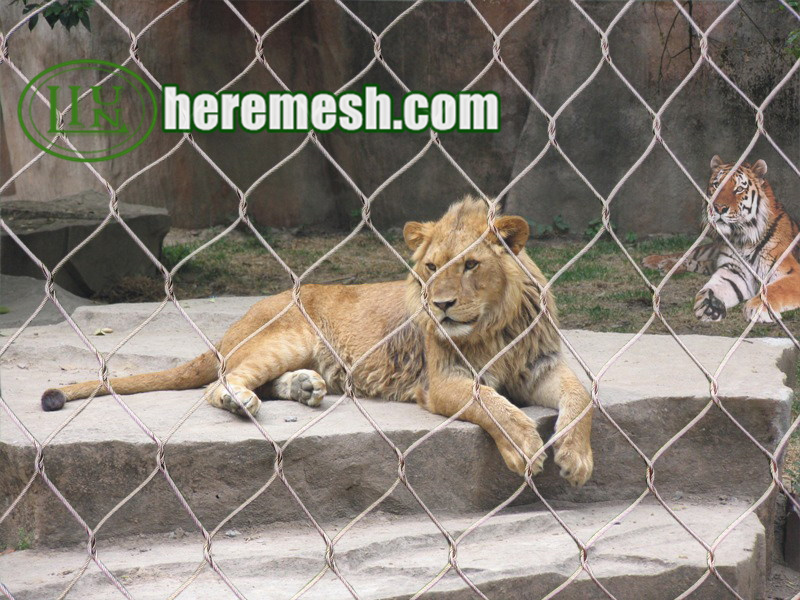
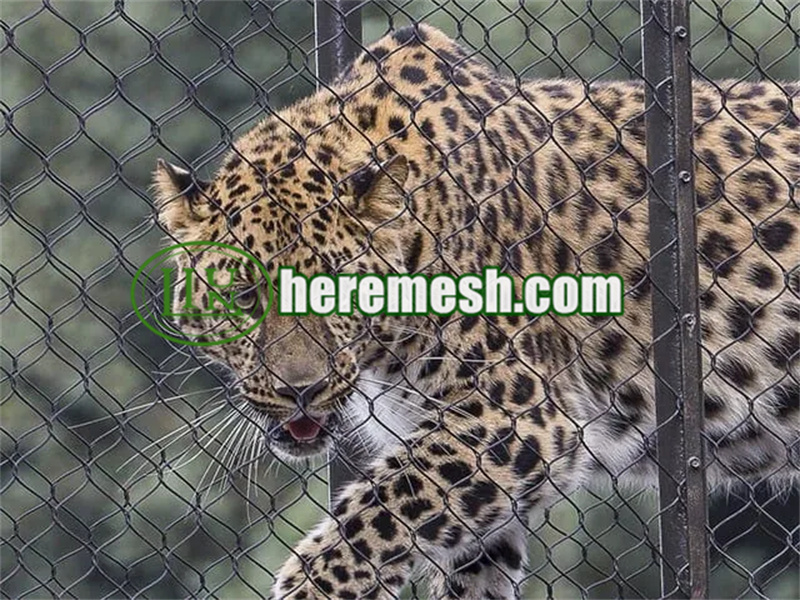
Fencing for big cat enclosures in zoos presents the most challenging scenario. For this type of fencing, a 3.2mm rope diameter is typically selected, combined with a 7×19-strand steel wire rope structure, with a single rope’s breaking strength exceeding 300 kilograms. Mesh sizes are generally maintained between 51 mm and 76 mm to withstand collisions from large predators while preventing their forelimbs from extending through the mesh. A protective netting is typically installed at the top to prevent large predators from climbing over.
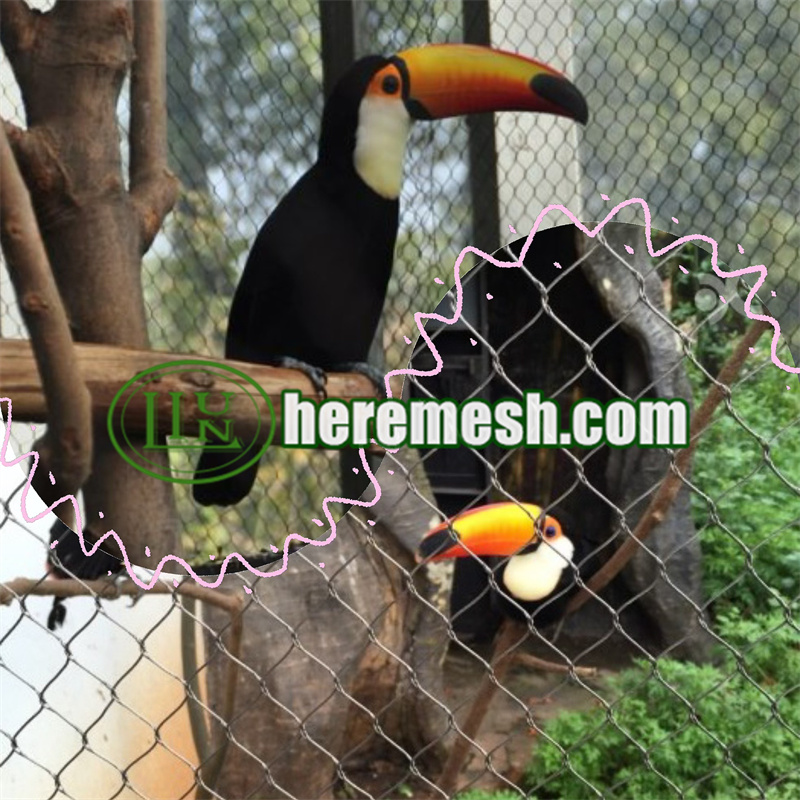
Protective netting for aviaries and bird exhibits has different priorities. Parrots have powerful beaks and tend to gnaw, so the rope must be thick enough and have a wear-resistant surface. Finches are small in size, so the mesh size must be reduced to within 20 mm to prevent them from escaping. Large birds of prey fly at high speeds, so the netting must have elastic cushioning capabilities to prevent injuries from collisions. Open-air exhibits, such as aviaries, are typically large in area and height, placing high demands on the size of individual netting panels and ease of installation.
Applications in livestock fencing on farms are more practical in nature. Fences for cattle, horses, sheep, and other livestock do not need to withstand the impact forces of large predators, but they do require high weather resistance and cost-effectiveness. 304 stainless steel rope netting can effectively separate different herds while withstanding long-term exposure to the elements outdoors. Its maintenance costs are far lower than those of traditional wire mesh, which requires regular painting to prevent rust.
Material Selection Guidelines for Fence Netting in Different Climatic Environments
Material selection must be based on the specific usage environment. Climatic conditions are the key factor in determining whether to use 304 or 316 stainless steel.
Dry, inland environments are the most common application scenarios. In such environments, humidity is moderate, the salt content in the air is low, and corrosion of metal materials is minimal. 304 stainless steel rope netting is fully suitable for these conditions, offering the best value for money and a service life that easily exceeds twenty years.
Coastal areas with high salt fog and humidity present a completely different scenario. The sea breeze contains a large amount of salt. Over time, these salts accumulate on the surface of the metal, accelerating the corrosion process of the metal. In such environments, 316 stainless steel rope netting is strongly recommended, as it ensures long-term stability in coastal settings.
Choosing the right material is the first step, but selecting the correct specifications is equally important. Only by comprehensively considering the three factors—animal species, exhibit area size, and climatic conditions—can you strike the optimal balance between safety and cost-effectiveness for your animal fencing. If you are planning an animal fencing project, please feel free to contact us. We can provide professional selection advice and free sample trials.