

The Best Bird Aviary Mesh for Zoo and Bird Exhibit

Delivered Stainless Steel Cable Net: New Safe Duck Fencing Solution
08/20/2026
Shipment of Black Animal Protection Cable Net
09/04/2026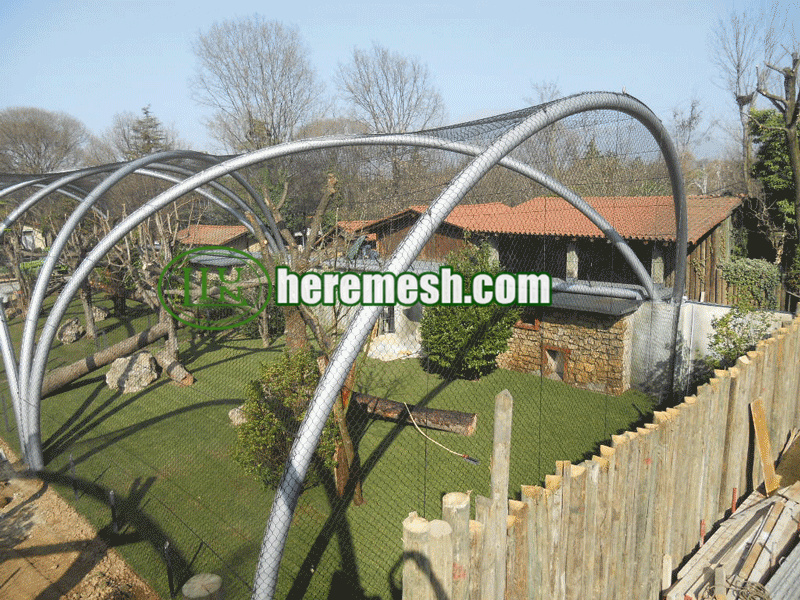
What is stainless steel aviary mesh?
Stainless steel aviary mesh, also known as stainless steel wire rope bird netting or stainless steel woven bird netting. It is a flexible protective netting made from fine wire ropes formed by twisting multiple strands of stainless steel wire, which are then woven by hand or with ferrules into a diamond-shaped mesh. It is specifically designed for aviary exhibits in zoos, bird pavilions, and ecological parks. The bird netting is used to enclose the activity areas of birds, prevent them from flying away. It simultaneously block the intrusion of external birds of prey or natural predators.
Structurally, a single wire rope consists of 7 strands, each containing 7 wires—totaling 49 extremely fine stainless steel wires—twisted together. It combines the strength of individual wires with the flexibility of a rope. The entire mesh is interconnected by thousands of cross-knots, forming a unified structure that evenly distributes force when under tension, preventing it from concentrating at any single point.
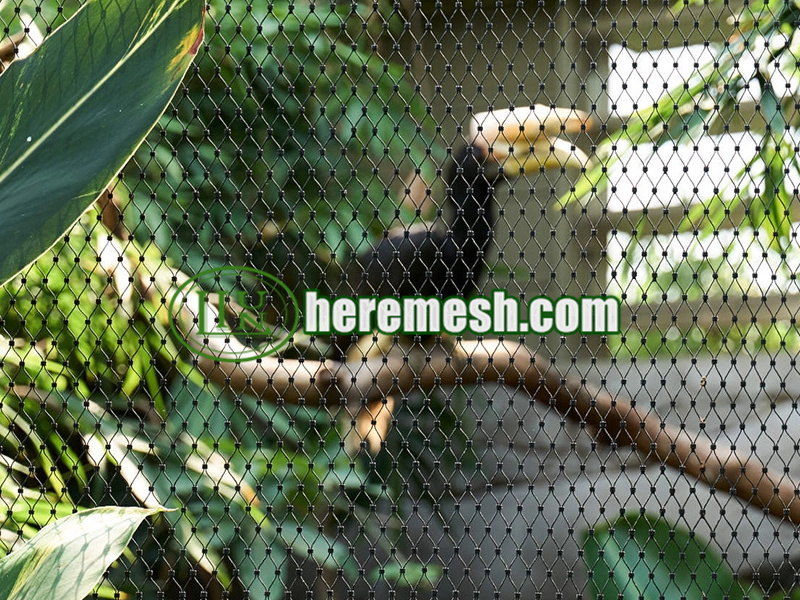
Unlike the plastic nets and galvanized wire mesh commonly seen in daily life, the core characteristics of stainless steel aviary mesh are “fine, strong, and transparent.” The strands are so fine they are nearly invisible, yet strong enough to withstand collisions from large birds. The entire mesh is visually transparent, offering an excellent aesthetic effect. For this reason, it has become the most popular fencing choice for modern bird exhibits. For these facilities, beyond safety, bird mesh serves as a fundamental material for creating natural effects and ensuring animal welfare.
Drawbacks of Conventional Bird Aviary Mesh
Before the upgrade to bird mesh, many venues used two types of traditional materials, both of which had significant problems.
The first type is plastic netting. It is inexpensive and lightweight, but its fatal flaw is its low strength and susceptibility to aging. Birds—especially species with powerful beaks, such as parrots and falcons—can peck through it in just a few strikes. When exposed to the outdoors, plastic becomes brittle and crumbles within two or three years. And birds may accidentally ingest the fragments.
The second type is galvanized wire mesh. It is sturdier than plastic, but the welded joints are rough and often have burrs, making it easy for birds’ feathers and claws to get caught and injured. Even more problematic is that wire mesh rusts within a year or two in the humid environments of bird exhibits. Rusted and broken wires not only lose their protective function but also pose a direct threat to the birds’ safety. Furthermore, wire mesh creates a significant visual barrier. When visitors view the birds through the dense mesh, their experience is greatly diminished.
A common drawback of both materials is the labor required for frequent repairs and replacements, resulting in long-term costs. This is why many venues are decisively replacing their old mesh with stainless steel aviary mesh during renovations.
Main Strengths of Stainless Steel Aviary Mesh
Peck and Bite-resistant Protection Suitable for All Birds
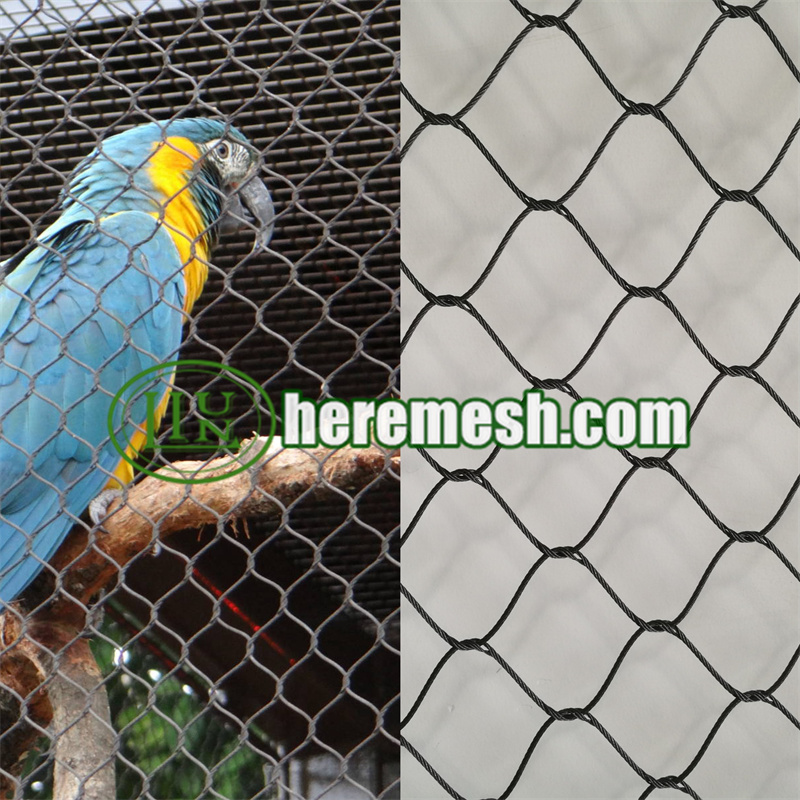
Stainless steel wire ropes are made by twisting together dozens of extremely fine stainless steel wires, with each rope capable of withstanding a breaking load of several hundred kilograms. Neither the sharp beaks of macaws nor the talons of raptors can damage the netting. The entire net distributes stress across thousands of intersecting nodes, allowing localized impacts to disperse rapidly and preventing single-point tears. This is particularly crucial for large parrots and birds of prey with extraordinary pecking force.
High Transparency and Visual Invisibility
The wire diameter can be as small as 1.2 mm. At normal viewing distances, the human eye barely notices the net’s presence. Visitors see birds flying freely, rather than a metal mesh spanning the space. The experience provided by this “invisible bird netting” is something that iron bars and dense mesh will never be able to offer. For venues, the open-weave fencing also makes exhibition areas appear larger and more natural, significantly enhancing visitor satisfaction.
Flexible Structure, No Deformation
The woven steel cable structure is inherently elastic. When a bird collides with the mesh, it deforms slightly and then springs back. It will not suffer permanent deformation due to long-term stress. The surface is smooth and rounded, ensuring it is safe for birds’ feathers and skin to come into contact with it. This is crucial for protecting precious bird species on display. The flexible structure also means it can conform to various irregularly shaped frames, making it highly adaptable for installation.
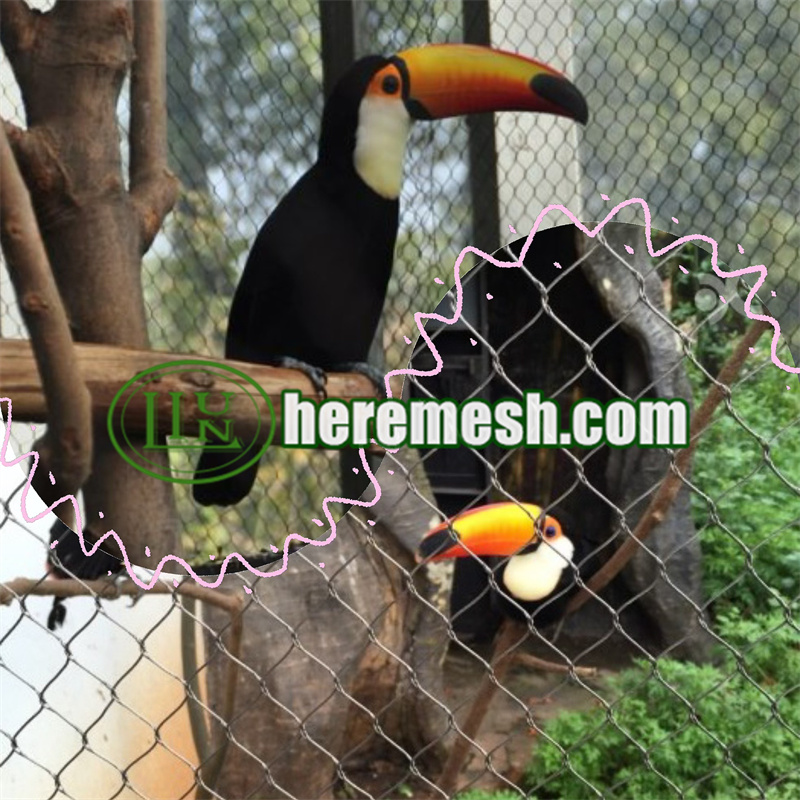
Selection of Standard Material Grades(304 / 316)
The Difference Between 304 and 316 in Bird Exhibit Areas
304 stainless steel is suitable for mild climates, dry environments, or indoor exhibition halls. It offers excellent value for money, with a typical service life of over 20 years. 316 stainless steel contains added molybdenum compared to 304, providing greater resistance to salt spray and moisture corrosion, with a service life approximately 3 to 5 times longer than that of 304. Both materials are non-toxic, and harmless to birds, posing no health risks.
The difference lies in the usage environment: in dry, indoor, or standard inland areas, 304 is sufficient. Near the coast, salt lakes, or in regions with year-round high humidity and heavy rainfall, the additional corrosion resistance of 316 truly demonstrates its value. From a cost perspective, 316 is slightly more expensive than 304.
Recommendations for Outdoor Wetland Bird Areas
Bird exhibits often feature pools and sprinklers, creating a persistently high-humidity environment that places greater demands on materials than typical outdoor settings. If the facility is near the coast, a salt lake, or located in a rainy, humid region, we recommend selecting 316 directly. In standard inland environments, 304 is sufficient. Choosing the right material from the start is far more cost-effective than future maintenance.
Common Wire Rope Diameters and Mesh Opening
Recommended Wire Rope and Mesh Opening for Different Bird Species
The specifications of stainless steel aviary mesh are primarily determined by two parameters. Wire diameter and mesh opening, both of which must be selected based on the bird’s size and strength.
For small birds, which are compact in size and have narrow heads. A wire diameter of 1.2 to 1.6 mm paired with a mesh opening of 20 to 25 mm is recommended. Although these birds are small, some species have considerable pecking strength, so the mesh size should not be too large, otherwise there is a risk of them squeezing through and escaping.
For medium-sized birds, a rope diameter of 1.6 to 2.0 mm paired with a mesh opening of 25 to 38 mm is recommended. This range strikes a balance between strength and visibility and is the most common configuration in exhibition halls.
For large birds, which are bulky and have strong impact force, we recommend using rope with a diameter of 2.0 to 2.4 mm, paired with mesh openings of 38 to 50 mm. The thicker rope diameter is designed to withstand the repeated impact of their takeoffs and landings.
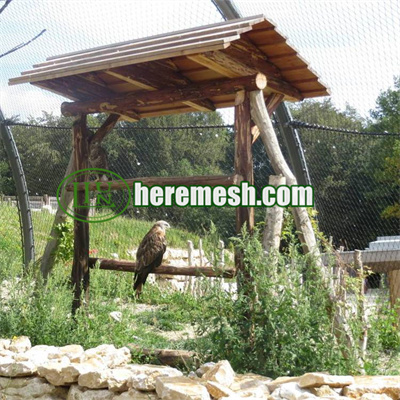
For birds of prey, which have sharp talons and are highly aggressive, we recommend using rope with a diameter of 2.4 to 3.2 mm, paired with mesh openings of 50 to 76 mm. These exhibits have the highest safety requirements, so the rope diameter must be sufficiently thick and sturdy.
Principles of Aviary Netting Selection
The principle for selecting bird netting specifications is that the diagonal of the mesh opening must be smaller than the widest part of the bird’s head to prevent escape. Thicker ropes offer greater impact resistance, but they also reduce visual transparency. Therefore, a balance should be struck between safety and aesthetics. If birds of various sizes are housed together in the same exhibit area, the maximum mesh opening is typically determined by the smallest bird, while the minimum rope diameter is determined by the largest bird. Additionally, for the same specifications, you can choose between the natural color or a black oxide finish. Black blends in better against a backdrop of greenery, creating a more natural visual effect, and is the preferred choice for most bird exhibits. The natural color option is slightly less expensive and is suitable for budget-sensitive projects or settings with ample indoor lighting.
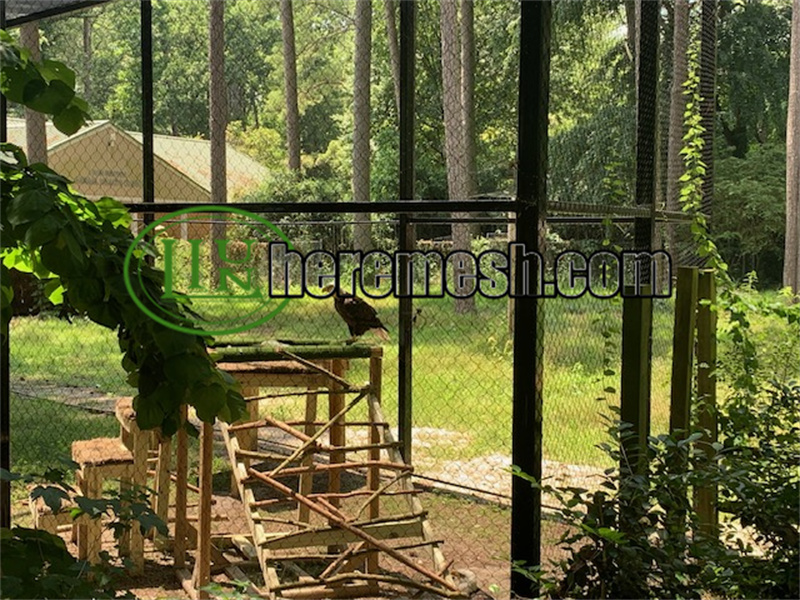
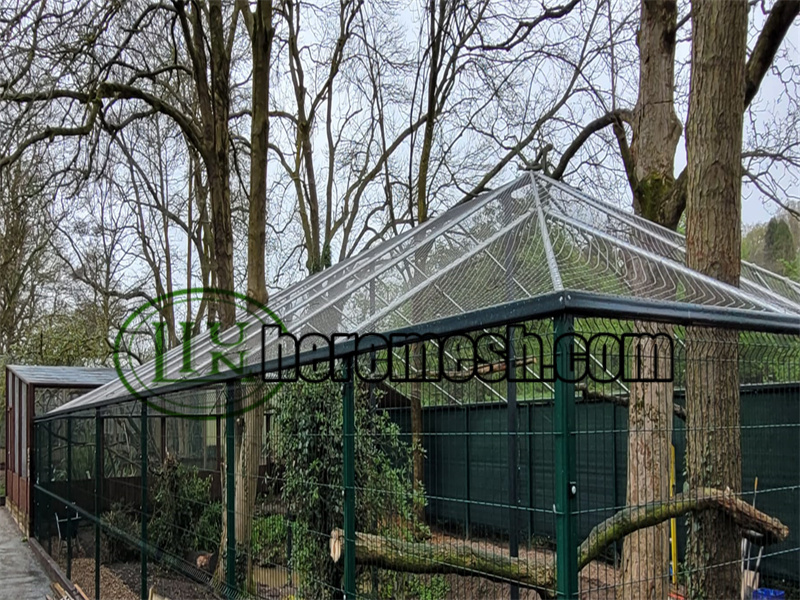
FAQs for Stainless Steel Aviary Mesh
Q: Can birds squeeze through the mesh openings?
A: No. As long as you select a suitable mesh opening according to the bird’s body size, birds cannot escape if the diagonal length of the mesh is smaller than the width of their heads. That is why different mesh openings are required for birds of different sizes.
Q: Will birds get injured if they fly into the mesh?
A: The stainless steel rope mesh is elastic with a smooth surface. Birds will bounce off gently upon impact. No cuts to their feathers or skin will occur. This is its biggest safety advantage over rigid hard sided enclosures.
Q: How often does the mesh need replacing for outdoor installation?
A: Grade SS304 can last more than 20 years under normal outdoor conditions. Grade SS316 can serve over 30 years in humid, salt spray environments. It is virtually maintenance free, with no annual repainting or mesh repair work required.
Q: How do you clean dirty mesh panels?
A: Simply rinse with clean water. Stubborn stains can be wiped gently with neutral PH detergent. The stainless steel surface will not be damaged, unlike coated nets whose outer layer wears thin with repeated cleaning.
Q: Can the mesh be fabricated into dome shapes?
A: Yes. Its flexible structure conforms to all kinds of curved surfaces. Custom shapes including aviary domes and irregular free flight zones are available. Both ferrule mesh and woven mesh can meet this requirement.
Q: Which is better for bird exhibits: ferrule mesh or woven mesh?
A: Woven mesh is recommended for most bird houses. It delivers a smoother surface, offering better protection for bird feathers. Ferrule mesh can be chosen for large raptor enclosures when extra rigidity is needed. The final selection depends on your bird species and project budget.
Conclusion
Overall, stainless steel aviary mesh outperforms traditional materials significantly in containment strength, transparency, durability and animal safety. It is a highly reliable upgrade option for bird exhibit enclosures. With the correct material grade and mesh specifications, one single mesh allows birds to fly freely, offers unobstructed views for visitors and brings long term peace of mind to facility managers.