

Delivered Stainless Steel Cable Net: New Safe Duck Fencing Solution

Steel Cable Mesh Solves Most Safety‑Related Problems
08/11/2026
The Best Bird Aviary Mesh for Zoo and Bird Exhibit
08/28/2026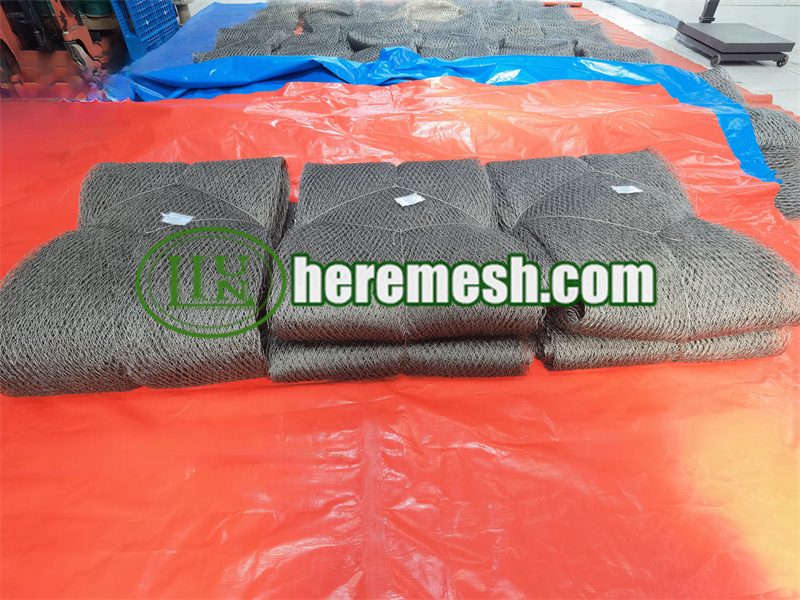
Order Summary
Duck Fencing Order Delivered to US
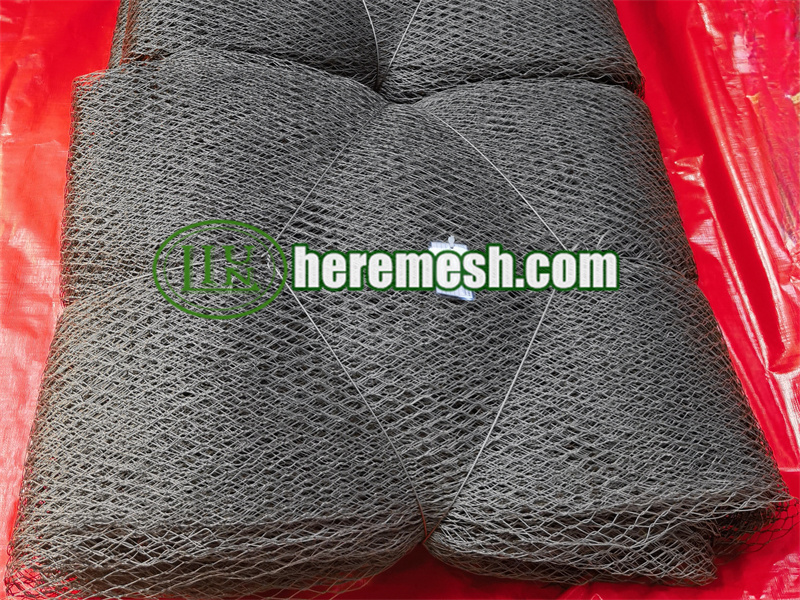
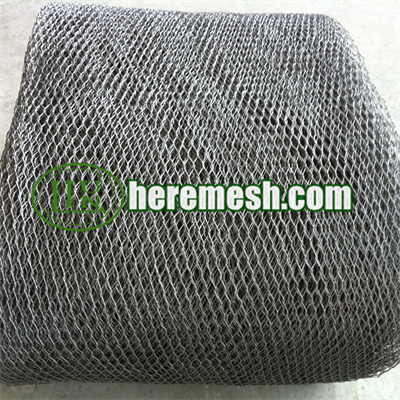
The stainless steel cable net produced for this order, now ready for shipment to the United States. It was custom-made specifically for this user’s duck fencing project. In accordance with the user’s requirements, the entire batch features 1.2mm-diameter rope, 25mm × 25mm mesh openings. And it is made of 304L stainless steel with a normal steel color finish. This combination balances protective strength, visual transparency, and procurement costs. As a result, it serves as the most common and practical configuration for small‑ to medium‑sized waterfowl enclosures.
The mesh aperture requirements for duck enclosures are on a completely different scale compared to those for large predators. Ducks are small in size, so a standard 25mm mesh aperture is sufficient to prevent them from escaping. Reducing the mesh size further would actually increase costs and reduce visual transparency. For larger waterfowl such as geese and wild geese that are raised together in the same enclosure, the 25mm mesh aperture is equally suitable and poses no risk of escape.
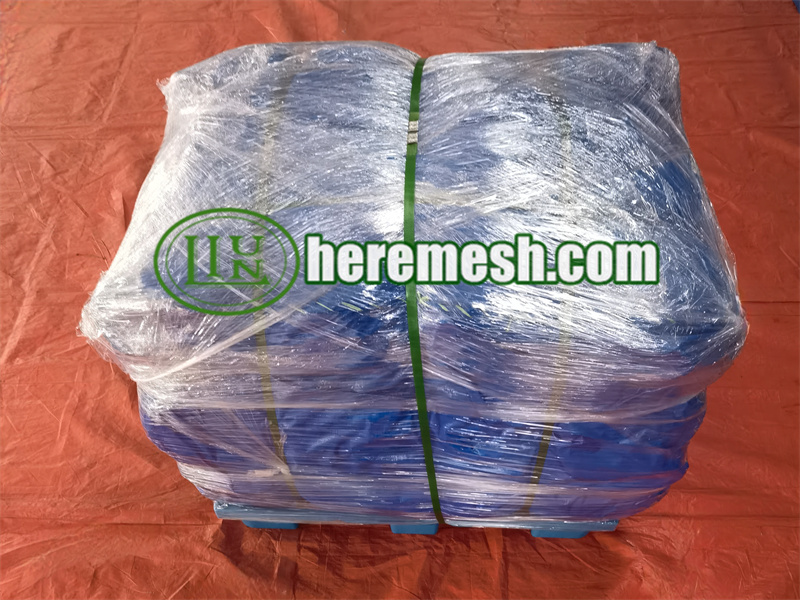
During production, each mesh panel is woven to the dimensions provided by the customer. Every panel is manually inspected before shipment. The inspection ensures uniform mesh openings, neat edges, and no broken wires or loose knots. We pay special attention to the finishing of the mesh edges. The edge ropes are secured with stainless steel ferrules to prevent fraying. The product is packaged in rolls and wrapped in moisture-proof woven bags for easy long-distance transport and on-site handling.
Core Application
Once installed, this set of cable nets serves three primary functions. First, it encloses the perimeter, clearly delineating the ducks’ activity area to prevent them from straying or being scattered by the wind. Second, it provides overhead protection. The net covering the top of the enclosure effectively blocks aerial attacks by prey such as hawks and owls. Third, it provides side protection. When combined with a solid, low wall at the base, it prevents ground-based predators such as foxes, weasels, and stray dogs from entering. A single net that simultaneously meets the protection needs in all three directions—perimeter, overhead, and sides—is the foundation for the safe operation of a waterfowl pen.
In practice, all three functions are indispensable. Many farmers have installed only side fencing, resulting in ducks being carried off by eagles during the day. Others install only the top net while neglecting the bottom, allowing weasels to burrow in from the ground at night and wipe out the entire flock. Adopting a comprehensive solution of “top net + side net + solid bottom wall” minimizes security vulnerabilities. The products in this order are specifically designed for this comprehensive solution. The same mesh specifications can be used for both the top and sides. And installation simply requires attention to smooth transitions at the corners and uniform tension.
Why Duck Fencing Require Professional Cable Net
Many farmers are accustomed to using plastic net or galvanized wire mesh to enclose their ducks. But both materials present significant problems with long-term use. Plastic net is not very strong. It tears easily in strong winds or when struck by animals, and within two or three years, it becomes brittle and crumbles to dust, shattering at the slightest touch. Although galvanized wire mesh is inexpensive, in the damp environment near water where ducks frequently gather, the galvanized coating begins to peel off and rust within a year or two. Rusted and broken wires can also scratch the ducks, leading to infections.
Stainless steel cable net overcomes these shortcomings by virtue of its material. It does not rust, does not become brittle, and does not degrade due to sun and rain. Once installed, it generally requires no replacement, making it more hassle-free and cost-effective in the long run. For customers raising ducks as long-term livestock, the higher initial purchase cost is quickly offset by savings on maintenance and replacement expenses. This is why an increasing number of professional farms and zoos are choosing stainless steel duck fencing as their first option when renovating enclosures.
Safety Protection and Material Performance Advantages
High Strength Duck Fencing Resists External Intrusion
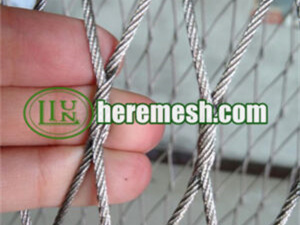
Stainless steel duck fencing may appear delicate, but its actual strength far exceeds most people’s expectations. A single strand of rope, 1.2 mm in diameter, is composed of 49 extremely fine stainless steel wires twisted together. The entire net is supported by thousands of intersecting nodes that share the load. When a bird of prey dives into the net or a ground-based predator bites it, the impact force is rapidly dispersed across the entire surface of the net. This feature prevents a single-point failure.
For ducks, which typically weigh between 2 and 5 kilograms, this level of protection is sufficient to withstand the vast majority of threats in the wild. Upon impact, the stainless steel duck fencing undergoes only elastic deformation and immediately returns to its original shape once the external force is removed. This characteristic of “using flexibility to overcome rigidity” is precisely what enables it to function reliably outdoors over the long term.
Smooth Surface Protects Duck Health
Ducks like to rub against the fence to preen, resulting in frequent contact between their bodies and the mesh surface. The cable net is woven from steel wire ropes, with each knot smooth and rounded, free of any sharp protrusions. Even with repeated rubbing, the ducks will not be injured, which is crucial for maintaining the flock’s health and reducing skin infections.
Furthermore, after playing in the water, the ducks walk to the fence while still wet to preen themselves, subjecting the mesh to prolonged cycles of “wet and dry” conditions. The surface of stainless steel cable net is dense and smooth, so it rinses clean easily and does not readily accumulate algae or debris, which indirectly reduces the risk of spreading poultry diseases. From an animal welfare perspective, an animal-friendly net is, in itself, an integral part of healthy farming practices.
Well-Designed Mesh Openings Prevent Escapes
The 25mm mesh openings is a good choice. It provides sufficient ventilation, ensuring they do not obstruct visitors’ views or hinder airflow. For breeds of domestic ducks capable of flight, once the top is covered with net, the ducks will be prevented from escaping even if they jump or take off for short distances.
The choice of mesh opening is critical. If the mesh opening is too large, it won’t contain the animals. If it’s too small, it compromises visibility and increases costs. We have accumulated extensive experience in recommending specifications for various poultry species. Before placing an order for this net, we provided users with sample references. The 25mm sample reference serves as proof. Users chose the 25mm mesh opening as it ensures safety while also providing a good visual effect.
Advice on Choosing Between 304 and 316 Materials
This order specifies 304L stainless steel. 304L is suitable for typical outdoor environments with mild climates and moderate humidity, offering outstanding value for money. If the fencing is to be built in coastal areas or in regions with high water salinity, we recommend SS316. 316 stainless steel contains added molybdenum. It provides longer corrosion resistance in humid environments with high chlorine and salt content. It effectively withstanding the water splashes and salt fog erosion commonly encountered in waterfowl enclosures.
Generally speaking, 304 or 304L is the preferred choice for inland freshwater aquaculture. 316 is recommended for areas near the coast, estuaries, or regions where salt is spread for de-icing in winter. The mechanical properties of the materials are consistent. The only difference lies in their corrosion resistance ratings. It is advisable to first assess the corrosion environment at the enclosure’s location before deciding on the material for this customer’s site.
Outdoor Adaptation Performance Specifications
Weather Resistance
Duck enclosures are typically exposed to the elements year-round, enduring the high temperatures and heavy rainfall of spring and summer, as well as the cold temperatures and biting winds of fall and winter. Stainless steel cable net maintains stable performance across a temperature range from several dozen degrees below zero to 40 degrees above zero. It does not become brittle or deform due to alternating hot and cold conditions. During winter snowfall, the diamond-shaped mesh allows most snowflakes to pass straight through and fall. It prevents them from accumulating into a heavy layer of snow that could collapse the structure. It safer than solid panel fencing.
It is worth noting that in northern regions, there are significant day-night temperature fluctuations in winter, causing materials to repeatedly expand and contract with temperature changes. Under these conditions, the welds in ordinary welded wire mesh are prone to cracking. In contrast, stainless steel cable net has a flexible structure. The slight displacement between joints can fully absorb the stress caused by thermal expansion and contraction, preventing fatigue failure. This is why it is particularly well-suited for outdoor use in regions with a continental climate.
Corrosion Resistance
Duck fencing relies on water, and the underside of the net is constantly exposed to high humidity or even intermittent submersion. The passivation film on the surface of 304L stainless steel remains stable in humid air and does not rust continuously like ordinary steel. The net structure also ensures that water flows freely through it, preventing the formation of stagnant water pockets on the net surface, which further reduces the likelihood of localized corrosion.
Strong UV resistance
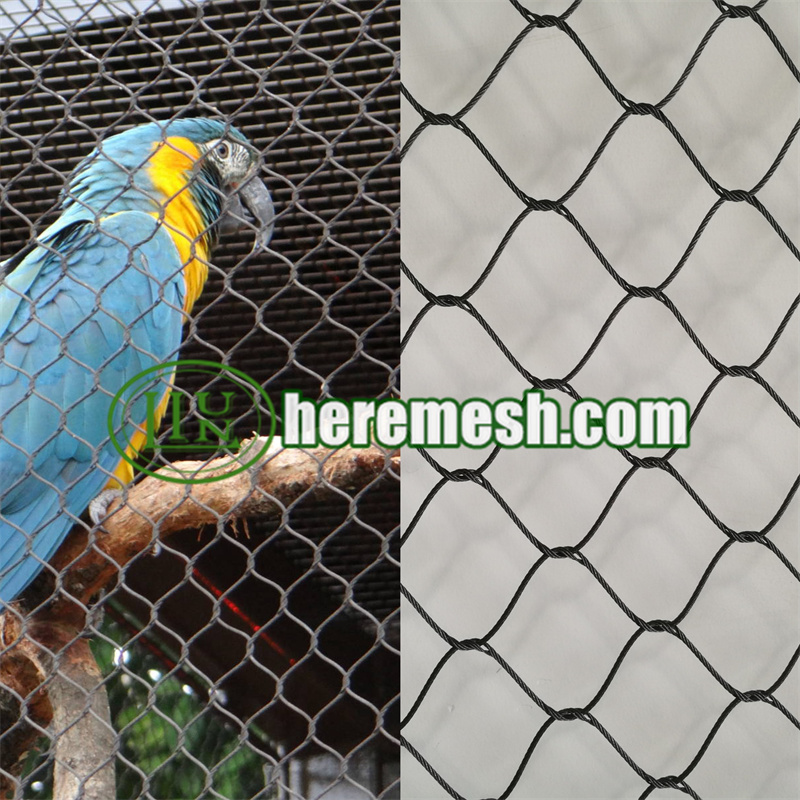
The biggest concern with outdoor fencing is that the materials will be damaged by sunlight. Plastic and coated fences fade, become brittle, and crumble under years of UV exposure, losing their protective capabilities within just one or two years. Stainless steel cable net is made of inorganic metal and is resistant to UV rays.Its performance does not degrade and its color does not fade even after prolonged exposure to the sun. Models with a black oxide finish retain their even color even after ten years outdoors, without any mottling or fading.
From an environmental perspective, stainless steel rope netting does not contribute to microplastic pollution as plastic netting does when it degrades, making it more environmentally friendly for the soil and water bodies within the enclosure. This is equally important for farms and scenic areas that prioritize sustainable operations.
Wide Range of Application Scenarios
Backyard Duck Fencing
A backyard duck fencing may not be very large, but it still faces issues with predators and escaped birds. Stainless steel mesh is lightweight and easy to install, allowing you to easily enclose an activity area ranging from a few square meters to several dozen square meters. The stainless steel mesh can be installed with a wooden or metal frame, creating an attractive enclosure that doesn’t detract from the garden’s appearance.
Farm Duck‑House Fencing
Commercial duck farms often require large outdoor grazing enclosures. In such settings, the durability of fencing and maintenance costs are critical considerations. For fences spanning hundreds or even thousands of meters, the annual labor and material costs for maintenance using traditional materials can be a significant expense. Stainless steel cable net can last for decades after a single installation. It does not require annual painting to prevent rust or frequent repairs and replacements, resulting in hidden long-term operating costs that are far lower than those of traditional materials. It is particularly well-suited for large-scale farms seeking low-maintenance solutions.
Zoo Waterfowl Exhibit Fencing
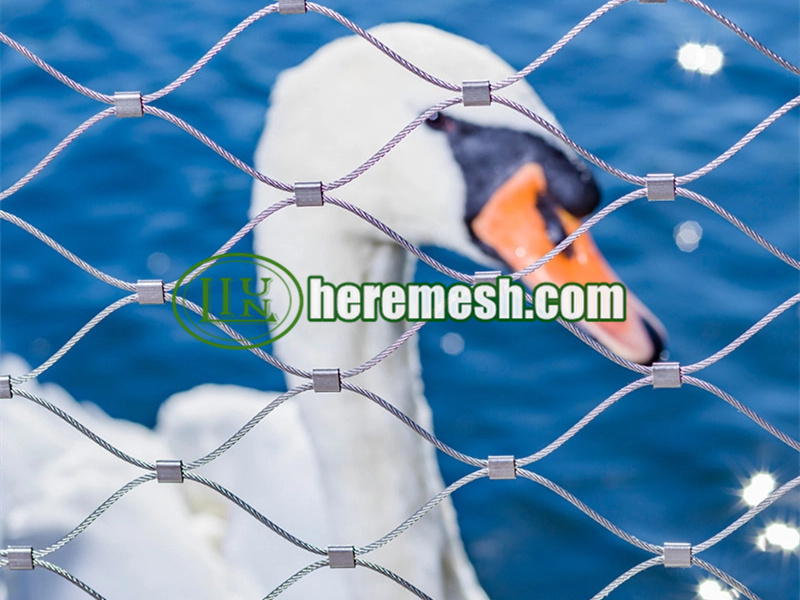
The duck and bird exhibits at zoos typically allow visitors to get up close to the animals, placing higher demands on the transparency and safety of the fencing. With a transparency rate of over 97%, stainless steel cable net makes the fencing virtually imperceptible to visitors, offering a viewing experience far superior to that of iron railings. At the same time, its smooth surface and appropriately sized mesh ensure the welfare of the birds, making it a standard feature in modern waterfowl exhibits. When renovating old-style iron cages, many zoos choose stainless steel cable net as their first option, as it preserves the original framework while significantly improving both the display quality and the animals’ well-being.
Wetland Park and Ecological Reserve
In wetland parks and bird conservation areas, stainless steel cable net is commonly used to isolate sensitive habitats, guide bird migration routes, or protect nesting areas. Its low visual impact does not disrupt the natural landscape, and its durability allows it to withstand long-term exposure in the wild without human supervision. Whether in freshwater wetlands or coastal tidal flats, it performs reliably when paired with the appropriate material selection.
Furthermore, the recyclability of these cable nets aligns with the environmental philosophy of ecological conservation areas. Stainless steel is 100% recyclable, meaning no difficult-to-dispose-of construction waste is generated once a project is completed—a principle consistent with the green operations advocated by wetland parks. For organizations and scenic areas committed to a sustainable image, this is also a valuable consideration that adds to their appeal.