

Stainless Steel Parrot Cage Netting Order Shipping

Metal Woven Mesh Animal Cage Net: The Optimal Choice for Modern Zoo
07/03/2026
Stainless Steel Aviary Bird Netting Selection Guide
07/17/2026Parrot Cage Netting for European Zoos
In May of this year, we received an inquiry email from a zoo in Europe. They were planning a brand-new parrot exhibit and needed to purchase a batch of stainless steel parrot cage netting. This exhibit would house multiple species simultaneously. So the netting had to meet high standards for safety, weather resistance, and aesthetic appeal.
Prior to this, the zoo had been using traditional galvanized welded wire mesh. Over the years, the welded mesh had developed numerous breaks and deformations due to the parrots’ constant pecking. Some welded joints had rusted, which not only compromised the aesthetic appeal but also raised safety concerns for the zoo regarding the parrots accidentally ingesting rusty fragments. Furthermore, the opaque nature of the welded mesh made the entire parrot exhibit area feel oppressive, significantly diminishing the visitor experience.
Based on these challenges, the zoo management clearly outlined three core requirements in their email. First, the cage netting must be sufficiently sturdy to withstand the parrots’ prolonged pecking and climbing. Second, the material must be corrosion-resistant, suitable for European outdoor climates. And it must have a service life of at least twenty years. Third, the cage netting must offer high transparency, allowing visitors to clearly observe the parrots’ natural behavior.
Upon receiving the inquiry, our team responded to the email immediately and sent samples of the stainless steel rope netting. After several rounds of communication, the client was very satisfied with the stainless steel rope netting we recommended. And then the client confirmed the purchase of model #1625, and placed a formal order.
Why Do European Zoos Choose Stainless Steel Wire Rope Mesh for Parrot Cage Netting?
Parrots are a very unique species of bird. They possess astonishing beak strength. Especially large breeds like the macaw—with a bite force powerful enough to easily snap ordinary wire and plastic mesh. At the same time, parrots are typical climbers, spending most of their day climbing and moving around. Therefore, the surface of the cage netting must be smooth enough to prevent scratching their feet and feathers.
Traditional cage netting materials often struggle to meet both of these requirements. Stainless steel wire rope mesh, however, resolves these conflicts. Each strand is made of multiple strands of extremely fine stainless steel wire twisted together, combining the strength of steel wire with the flexibility of rope. When a parrot pecks forcefully, the elastic structure of the rope mesh disperses the impact force to the surrounding joints rather than concentrating it at a single point where it could be bitten through. Furthermore, the surface of stainless steel parrot cage netting is smooth and free of burrs. So parrots will not be scratched while climbing and moving about on it. This is crucial for zoos.
In terms of long-term operating costs, the advantages of stainless steel wire rope mesh are equally evident. 304 or 316 stainless steel possesses inherent rust resistance, requiring no surface treatment and thus avoiding issues such as coating deterioration or peeling. Its outdoor service life can exceed thirty years, with virtually no maintenance required during that time. In contrast, the long-term total cost of welded wire mesh is significantly higher than that of stainless steel netting.
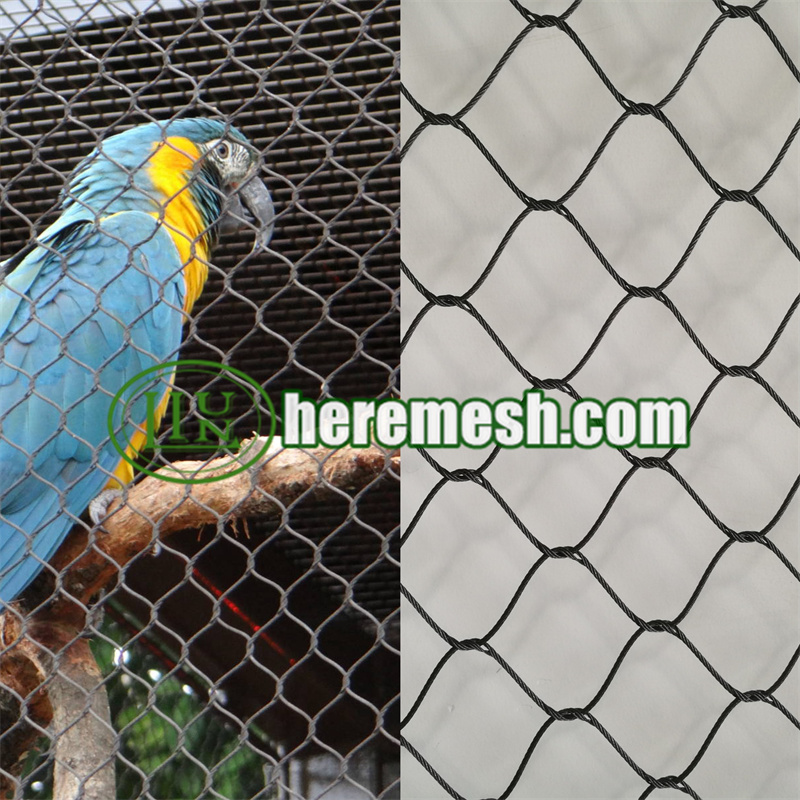
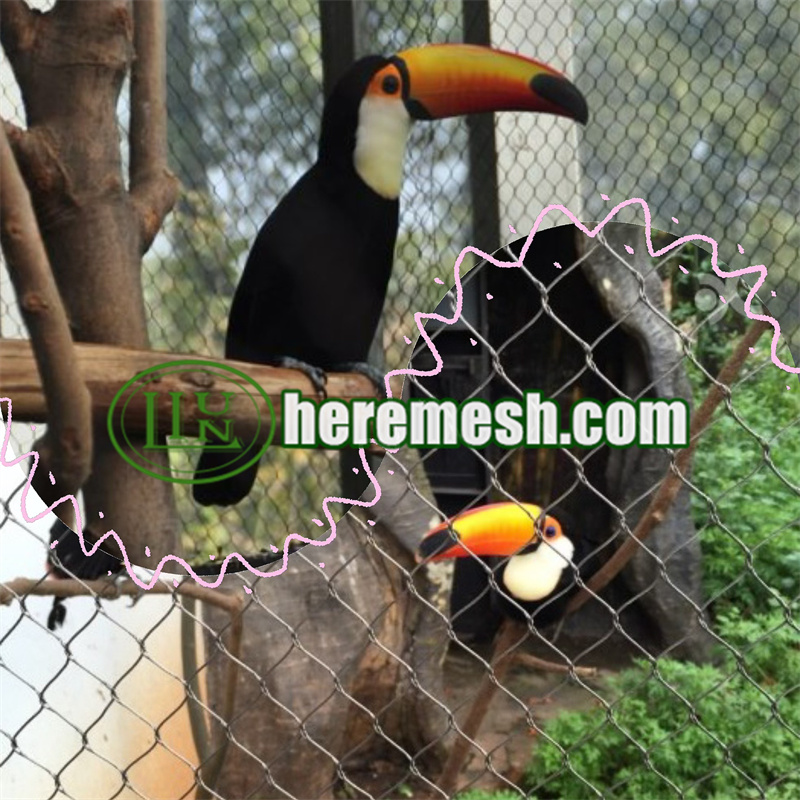
Openness is also a key consideration for zoos. The mesh structure of stainless steel wire rope netting allows light and air to circulate freely. From a visitor’s perspective, the netting is virtually “invisible,” making it seem as though the parrots are living in an open, natural environment. This effect not only enhances the visitor experience but also benefits the parrots themselves. Ample natural light and fresh air contribute to their health, while the unobstructed view reduces stress associated with captivity.
It can be said that stainless steel rope netting meets zoos’ expectations for parrot enclosures in all four dimensions. Safety, durability, aesthetics, and animal welfare. This is precisely why European zoos ultimately chose it.
Cage Design: Dimension Planning
The overall spatial layout of the parrot exhibition area for this project was strictly produced in accordance with the cage dimensions specified in the client’s preliminary plans. We carried out one-on-one custom manufacturing based on the dimensions provided by the client. The exhibition area is divided into three independent breeding and display zones. Each zone features independent roof coverings and fully enclosed sides in accordance with the client’s planned dimensions, with the total area of the exhibition area approaching 600 square meters.
The Macaw Zone is the largest area within this exhibition space. All cage specifications were custom-manufactured according to the client’s planned dimensions. In line with the client’s initial plans, the total height of the cages in this area is fully adapted to the Macaws’ flying capabilities. Ample vertical space allows the Macaws to perform complete flight maneuvers. The design maximizes the recreation of their natural behaviors and serves as a key highlight for visitors. We strictly adhered to the client’s specified dimensional standards when manufacturing the mesh panels.
We customized the aperture and rope diameter entirely according to the order, ensuring the safety and durability of the enclosures. The appropriately sized mesh apertures ensure the birds’ safety while maintaining excellent visual transparency. The open layout, free of solid partition walls, allows visitors to fully overlook the entire panorama of the three exhibition zones from the perimeter of the display area, providing an unobstructed viewing experience.
Material Selection and Specifications: Matching Wire Diameter and Aperture to Parrot Species
Different parrot breeds vary greatly in body size and beak strength. And their requirements for cage mesh specifications are entirely different. For this batch of orders, we recommended mesh panels with a wire diameter of 1.6 mm to our customers.
The parrot exhibit area uses mesh model 1.6 mm x 25.4 mm × 25.4 mm. The 1.6 mm wire diameter is formed by twisting 7 × 7 strands of steel wire together, and the breaking strength of a single strand is sufficient to withstand the impact of a parrot pecking with full force. The appropriately sized mesh openings prevent parrots’ heads or bodies from getting stuck while ensuring adequate ventilation by avoiding overly dense mesh.
In terms of material, 316 stainless steel was selected for the cage netting in all three areas. European winters are damp and cold, and in some coastal regions, the air has a high salt content. 316 stainless steel contains molybdenum, which forms a passivation film on its surface that is denser than that of 304 stainless steel, resulting in significantly greater corrosion resistance in humid and salt-fog environments. For parrot cage netting intended for long-term outdoor use, choosing 316 stainless steel ensures a longer service life and lower maintenance costs.
Order Confirmation and Delivery
After finalizing the specifications and quotation, the user formally placed the order. The order included all cage mesh panels for the parrot exhibit area, as well as the corresponding stainless steel clips and steel wire ropes. Due to the tight construction schedule for the customer’s project, we committed to completing production and shipping within thirty business days of receiving the order.
The production phase is the most critical step in order fulfillment. Upon receiving the production assignment, our workshop workers first cut the material precisely according to the dimensions confirmed by the client. Each mesh panel is hand-woven. The advantage of hand-weaving is that every knot is manually inspected, ensuring uniform mesh size and excellent surface flatness, while avoiding the loose knots commonly found in machine-woven products.
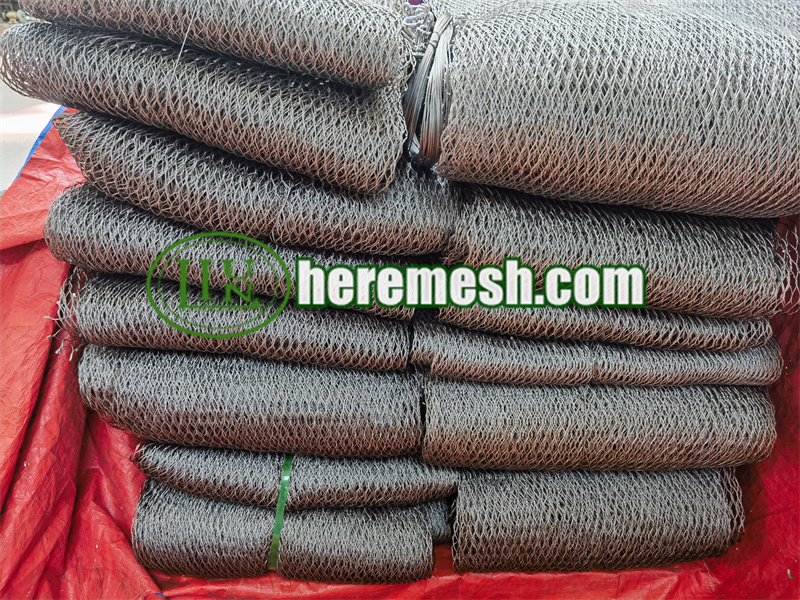
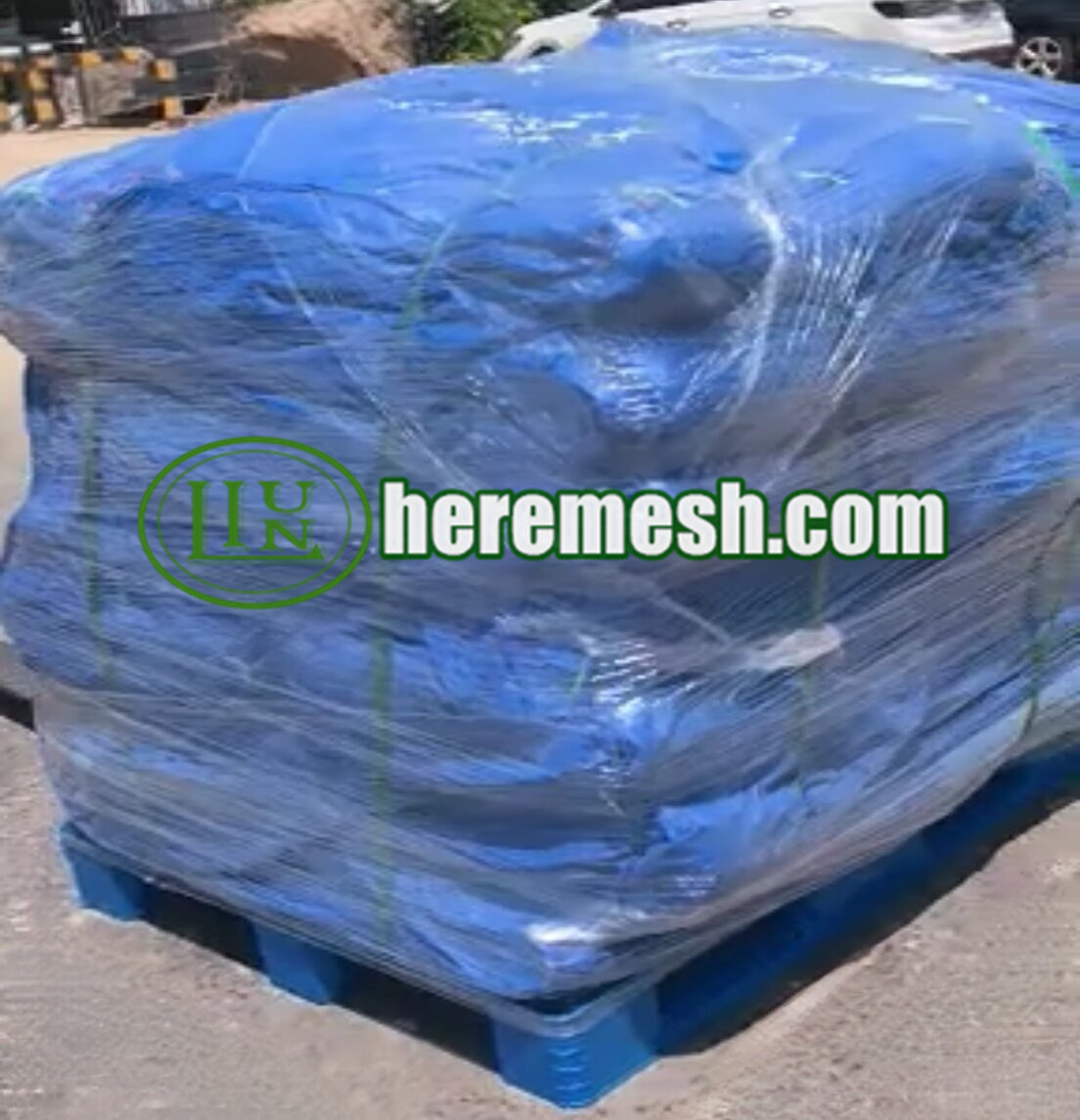
After weaving is complete, every mesh panel undergoes a quality inspection process. Only panels that pass all inspections proceed to the packaging stage. Finally, this batch of stainless steel parrot cage netting was successfully packaged and shipped from the Port of Beijing.
Although this was just a routine order delivery, for both us and this zoo, it marks the beginning of a long-term partnership. We believe that once these stainless steel parrot cage panels are put into use, they will not only provide the parrots with a safe and comfortable home but also offer European visitors a more enjoyable viewing experience.