

Rope Mesh Animal Passage Guide: Natural Interaction for Zoo Animals

Cougar Enclosure Net Shipped, Comprehensive Beast Protection
04/29/2026
Stainless Steel Woven Wire Mesh Order for Zoo Animal Exhibits
05/14/2026In the planning and construction of modern ecological zoos, the concept of “animal-centered” has become a consensus in the industry. Under the traditional closed captive model, animals are confined to fixed cages with limited space and monotonous behavior patterns. Such a model not only affects the physical and mental health of animals but also fails to meet the public’s demand for observing animals in their natural state and for scientific popularization. However, the emergence of rope mesh animal passage passage has completely broken this deadlock. With its flexible, transparent and sturdy characteristics, it builds an “ecological corridor” for animals in zoos to connect various exhibition areas and extend their activity space. This approach not only ensures the animals’ freedom of movement but also guides their natural interaction, becoming a core supporting facility for the upgrading and transformation of modern zoos.
Understand the Rope Mesh Animal Passage
Stainless steel rope mesh animal passage is a specialized protection and connection facility made with stainless steel rope as the core raw material via professional weaving technology. It is tailored for various zoo animals. It is applied to build cross-exhibition and overhead activity passages, enabling animals to freely move, inhabit and interact between different zones.
Unlike traditional fences, the rope mesh animal passage is not merely an isolation tool, but an ecological connection carrier integrating protection, permeability and ecological performance. Its core function is to restore the wild living space for animals, allowing them to move and socialize in a relatively natural state, while taking into account the safety of zoo management and tourists’ viewing experience.
Structurally, the animal passage net mainly consists of three parts: stainless steel wire ropes, fixing fittings and supporting structures. Stainless steel wire rope serves as the core material, with Grade 304 and 316 as the commonly used types. Stainless steel features corrosion resistance, tensile resistance and aging resistance. It causes no harm to animals and can adapt to the all-weather outdoor environment of zoos. All fixing fittings are made of stainless steel to ensure the stability of the passage net. And the supporting structure can be flexibly constructed according to the terrain and actual demands of the zoo.
Compared with ordinary industrial protective nets, the rope mesh animal passage net has exclusive characteristics. First is safety. The mesh size and rope diameter are customized according to animal body shapes to prevent animals from being trapped, escaping or getting injured. Second is flexibility. The mesh has proper elasticity, which avoids rigid impact when animals collide and reduces injury risks. Third is permeability. The reasonable weaving density does not hinder animals’ sight and activities, and also allows tourists to clearly observe animals’ natural behaviors.
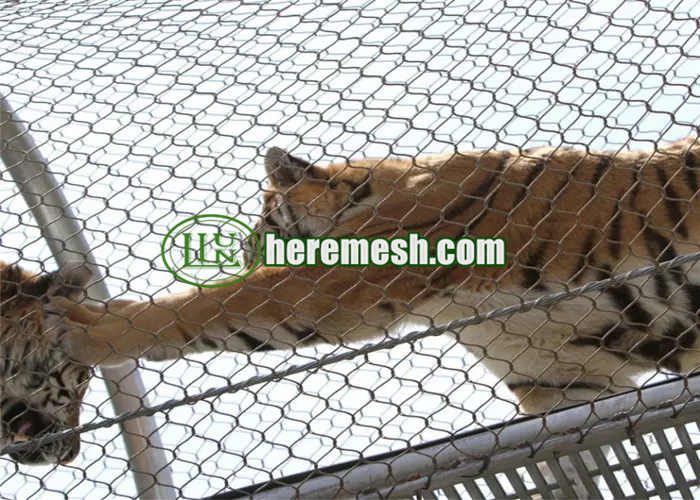
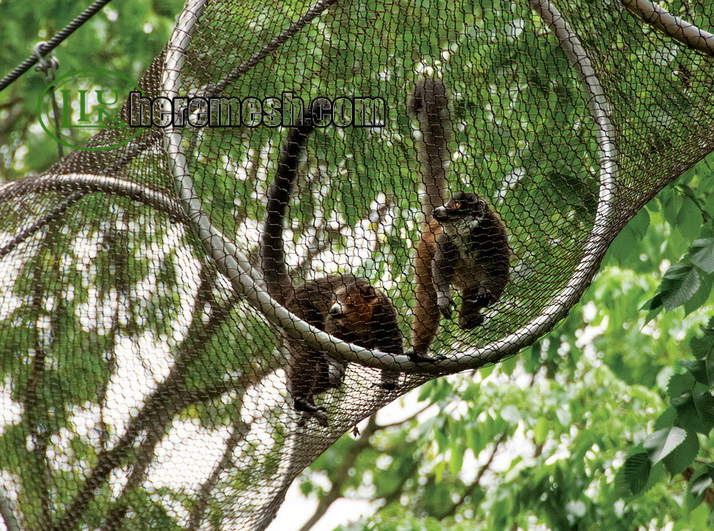
At present, the rope mesh passage net has been widely used in major ecological zoos at home and abroad. It covers various animals, such as primates, birds, beasts and other animal species. Customized solutions are available for all kinds of animals, ranging from small animals to large lions, leopards and bears.
Importance of Zoo Rope Mesh Animal Passage
The biggest drawbacks of the traditional captive breeding model are space limitation and behavioral monotony. Most zoo enclosures have a limited area. Confined in fixed zones for a long time, animals are prone to stereotyped behaviors such as pacing and staring blankly. These are direct signs of physical and mental anxiety and excessive stress, which seriously affect animals’ health and lifespan. The installation of animal passage nets breaks the physical barriers between exhibition areas. Stainless steel rope mesh passage nets connect isolated cages and enclosures, providing animals with a broader and more diverse living space. Animals can move freely between different areas, interact more with other species, and achieve better physical and mental health.
From the perspective of zoo management, rope mesh animal passage effectively reduce management difficulty and improve overall park safety. Traditional rigid fences involve high construction costs and are inconvenient for daily cleaning and maintenance. In contrast, the flexible woven structure of stainless steel rope mesh passage nets delivers sufficient sturdiness to effectively prevent animal escape. In addition, the high permeability of the mesh allows staff to easily monitor animal activities and reduce management risks.
From the perspective of popular science and visitor viewing experience, animal passage nets help create a more natural viewing environment and enhance tourists’ experience as well as science education effects. Fences in traditional zoos create a sense of separation between humans and animals. Tourists can only watch animals statically from a distance and rarely observe their natural interactions.
Rope mesh passage nets are nearly invisible, allowing visitors to clearly watch animals’ natural behaviors in the passageways. Meanwhile, the construction of such passage nets conveys the significance of animal protection to tourists and fulfills the purpose of popular science education.
Furthermore, animal passage nets can enhance the overall competitiveness of zoos. Building ecological rope mesh animal passage nets demonstrates a zoo’s commitment to animal welfare and improves its public reputation.
The Core Advantage of Zoo Rope Mesh Animal Passage
Why Stainless Steel Rope Mesh is the Preferred Choice?
Stainless steel rope mesh is the preferred choice for zoo animal passage nets. Because it integrates multiple strengths including flexible adaptability, sturdiness and durability, as well as eco-friendliness. It perfectly meets zoo application needs and solves many pain points of traditional passage facilities. Compared with other materials, stainless steel rope mesh boasts irreplaceable advantages in adaptability, safety and durability, making it the top-choice material for animal passage nets.
Flexibility and Plasticity for Complex Scenarios
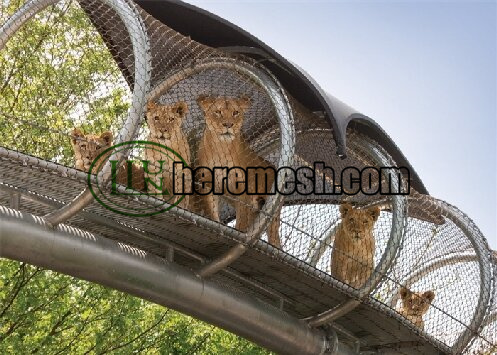
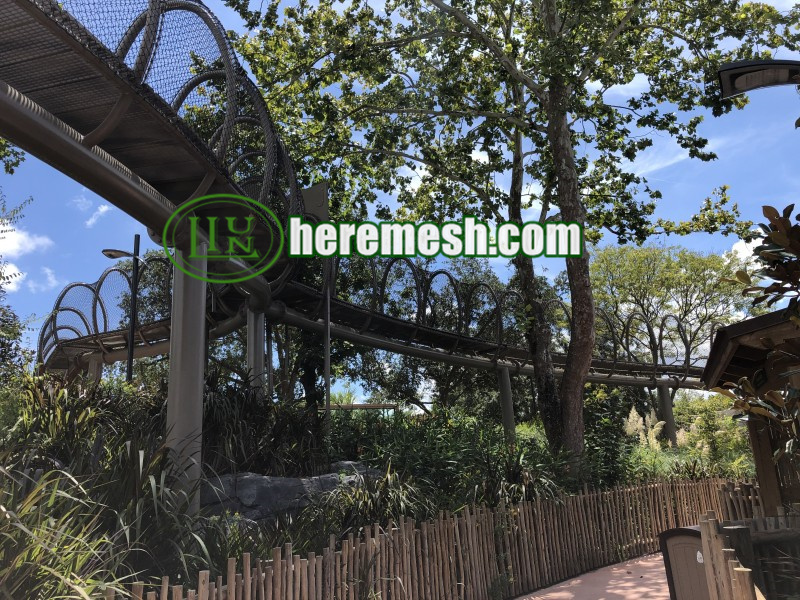
Firstly, stainless steel rope mesh features excellent flexibility and plasticity to adapt to various complex scenarios. Zoos usually have diverse and complicated terrains with varying requirements for the size and installation method of passage nets. Adopting a flexible weaving process, stainless steel rope mesh can be customized in size according to actual park demands. It can be installed overhead to connect different enclosures and exhibition areas, enabling medium and large animals to move across different zones. It can also cover wide cross-exhibition spaces without being restricted by terrain or space conditions.
Sturdiness, Durability and High Protection
Secondly, stainless steel rope mesh is sturdy, durable and highly protective, ensuring the safety of both animals and the zoo. Animals vary in body size, strength and habits, placing different requirements on the load-bearing, tensile and tear resistance of passage. Stainless steel rope mesh features high tensile strength and toughness. Professionally woven for stable structure, it can withstand impact and tearing by medium and large animals and is not easy to damage. Meanwhile, stainless steel delivers outstanding corrosion and aging resistance, suitable for harsh outdoor environments. It resists rust, deformation and aging, with a service life of 15 to 20 years, greatly reducing the zoo’s maintenance costs.
Permeability and Eco-Friendliness
Thirdly, stainless steel rope mesh is highly permeable and eco-friendly, without damaging the ecological landscape of the zoo. With fine weaving craftsmanship, it offers superior permeability and blends perfectly with the natural scenery of the park. Tourists can view animals while enjoying the natural landscape. In addition, stainless steel is non-toxic, odorless and environmentally harmless. It causes no injury to animals and no pollution to the park’s soil, water sources or vegetation.
Easy Installation and Maintenance
Finally, stainless steel rope mesh is easy to install and maintain. Lightweight in nature, it requires no large complicated equipment during installation. It can be rapidly fixed with bolts and buckles according to the characteristics of the supporting structure, greatly shortening the construction period. For daily maintenance, it only needs regular inspection of fastening status and damage conditions, effectively cutting down maintenance workload and costs. Moreover, it is highly repairable; local damage can be fixed partially without replacing the entire mesh.
Enhance Animal Welfare
The core value of stainless steel rope mesh animal passage nets lies in comprehensively improving animal welfare, enabling animals to gain a wild-like living experience even in captive environments. Expanding activity range, reducing stereotyped behaviors and increasing animal interaction are the three core embodiments of improved animal welfare.
Expanding Activity Range
Expanding animals’ activity range is the foundation of enhancing animal welfare. Traditional zoo enclosures are limited in area, leaving many animals with insufficient living space. Long-term confinement in narrow areas restricts their physical movement and affects their mental state. The installation of stainless steel rope mesh animal passage nets connects originally isolated exhibition areas and enclosures, greatly expanding their range of activities. A wider living space allows animals to fully release their natural instincts and improve physical flexibility and health.
Reducing Stereotyped Behaviors
Reducing animal stereotyped behaviors is the key to upgrading animal welfare. Stereotyped behavior is a common psychological problem among captive animals. Persistent stereotyped behaviors seriously damage their physical and mental health and even shorten their lifespan. Animal passage nets can effectively relieve such behaviors by enriching their activity patterns. The diverse shapes and spacious space of passage nets stimulate animals’ desire for exploration and reduce aimless repetitive movements. For instance, small animals can shuttle, hide and forage in the mesh passages; medium and large animals can run, jump and interact freely. These instinctive activities keep animals in a positive mental state and effectively lower the occurrence of stereotyped behaviors.
Increasing Animal Interaction
Increasing animal interaction is also crucial to restoring their natural social state. Under the traditional captive model, animals are often raised alone or separated into small groups, lacking adequate space and opportunities for interaction. This leads to degraded social skills and loose group relationships. The interconnection feature of stainless steel rope mesh animal passage nets provides ample space for animal interaction. For example, primates can engage in collective activities through the passage nets to boost psychological well-being. Meanwhile, passage nets enrich animals’ life experience and further elevate overall animal welfare.
Conclusion
In the construction and upgrading of modern ecological zoos, stainless steel rope mesh animal passage nets have become indispensable core supporting facilities. With the advantages of flexible adaptation, sturdiness and durability, eco-friendliness as well as high safety and reliability, they perfectly fit the animal-centered construction philosophy. Stainless steel rope mesh animal passage nets create a living environment closer to the wild for animals, while bringing convenience to zoo management and popular science viewing.
The value of stainless steel rope mesh animal passage nets lies not only in breaking the spatial limitations of the traditional captive model and expanding animals’ range of activities, but also in effectively reducing stereotyped behaviors, boosting natural interactions among animals, comprehensively improving animal welfare, and keeping animals physically and mentally healthy even in captive environments.