

Stainless Steel Lemur Enclosure Mesh: Create Comfortable Lemur Exhibits

Wolf Enclosure Mesh Order Dispatched Successfully
06/11/2026
Animals Cage Mesh Order Shipped to Canada
06/26/2026How Critical It Is to Select the Right Lemur Enclosure Mesh
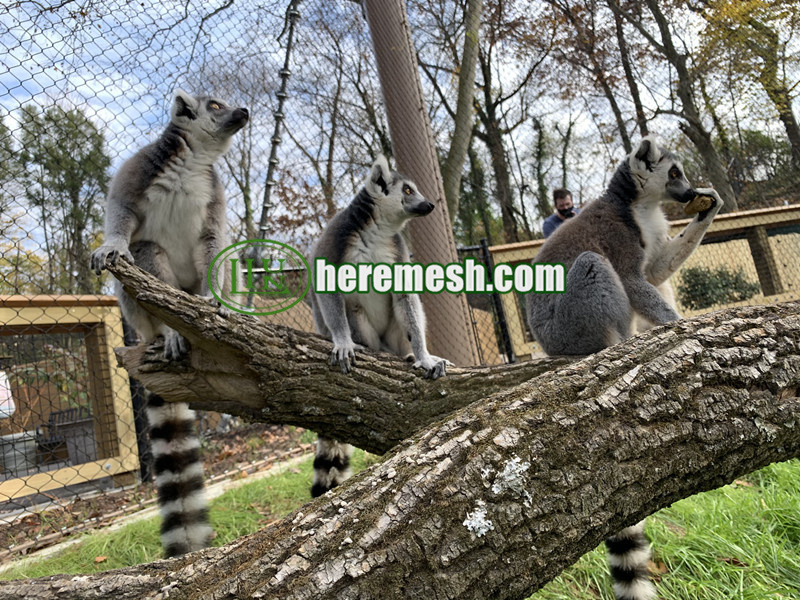
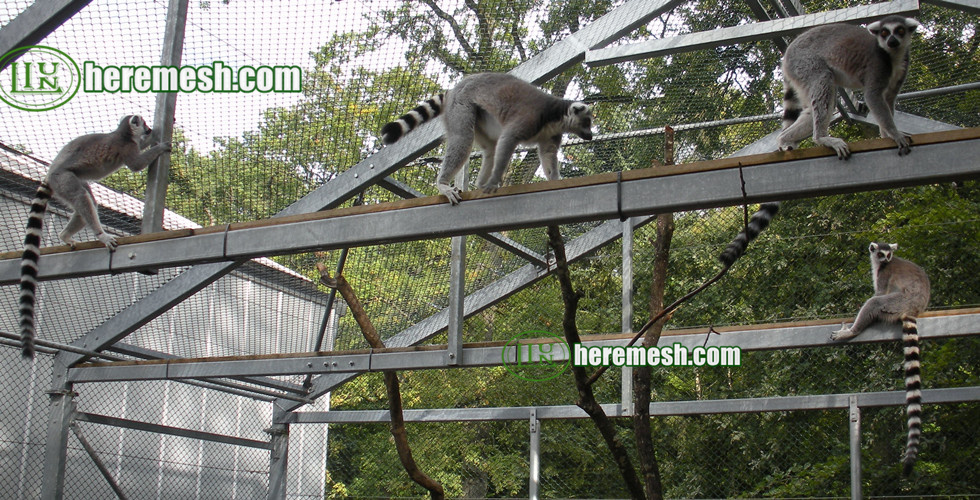
Lemurs are among the most popular primates in zoos. Agile, energetic and endlessly curious, they spend nearly all their time leaping, climbing and chasing around their exhibit spaces. For this reason, lemur enclosure mesh faces far more complex challenges than enclosures for most other animals.
The risk of Animal Escape
Lemurs have extremely flexible bodies paired with long, strong fingers adept at gripping and climbing. If the mesh openings are too large, lemurs can squeeze through with ease. Any protruding grips on the enclosure surface give them leverage to climb to elevated areas and seek out potential escape routes. This means enclosure height and overhead covering must be fully factored into the design.
Animal Safety
While lemurs do not possess the destructive power of big cats such as lions and tigers, their constant climbing, gripping and tugging places stringent long-term durability demands on enclosure materials. Rough, burr-covered mesh surfaces will cut and injure lemurs’ fingers and paws with repeated contact.
Visitor Viewing Experience
Lemurs are one of the zoo’s most engaging species for observation. Overly thick, dense enclosure creates an obstructive barrier between visitors and the animals, drastically ruining the viewing experience. A growing number of zoos are building immersive exhibits that allow visitors to walk through and observe lemurs up close. Such immersive environments impose the highest standards for both mesh transparency and structural safety.
Maintenance Costs
Lemur enclosures typically feature complex layouts filled with abundant vegetation, climbing frames, ropes and perches. Frequent enclosure repairs or full replacements will severely disrupt the animals’ daily routines and damage the exhibit landscaping. The enclosure must therefore be highly durable, delivering long-term service after a single installation to minimize disruption to animals and the exhibit environment.
In summary, lemur enclosure mesh is far more than standard wire netting. It must satisfy four core requirements simultaneously: escape prevention, animal protection, unobstructed visitor visibility and long-lasting durability. Any shortfall in these four aspects will directly compromise exhibit operational efficiency and the lemurs’ quality of life.
How Enclosure Design Balances Safety, Transparency and Rust Resistance
Lemur enclosure design needs to fulfill three core requirements simultaneously. Preventing lemur escapes, offering unobstructed viewing for visitors, and delivering long-term rust-proof performance.
Safety and Escape Prevention
Lemurs rank moderately high in escape ability among primates. They are capable of squeezing through gaps far smaller than their body size. Practical experience proves that the diagonal dimension of mesh openings must not exceed 50 mm to effectively stop adult ring-tailed lemurs from slipping out. Mesh apertures need to be further reduced for smaller lemur species.
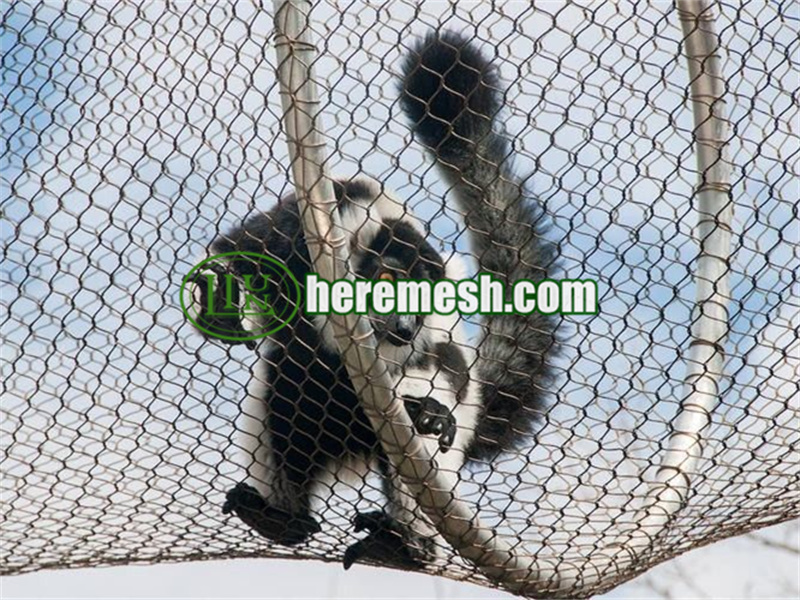
In addition, overhead covering is equally vital. Lemurs climb all the way to the top of enclosures, so incomplete or poorly sealed roofing creates major escape risks. Stainless steel cable mesh can cover side walls and overhead areas in one piece for seamless connection.
Fastening methods also determine overall safety. Lemurs hook their toes onto any protrusions. Exposed connectors between the mesh and support frames serve as convenient climbing grips for lemurs. Therefore, all fasteners should be installed on the outer side of the fence or adopt concealed fixing designs to eliminate any graspable bulges.
Visual Transparency
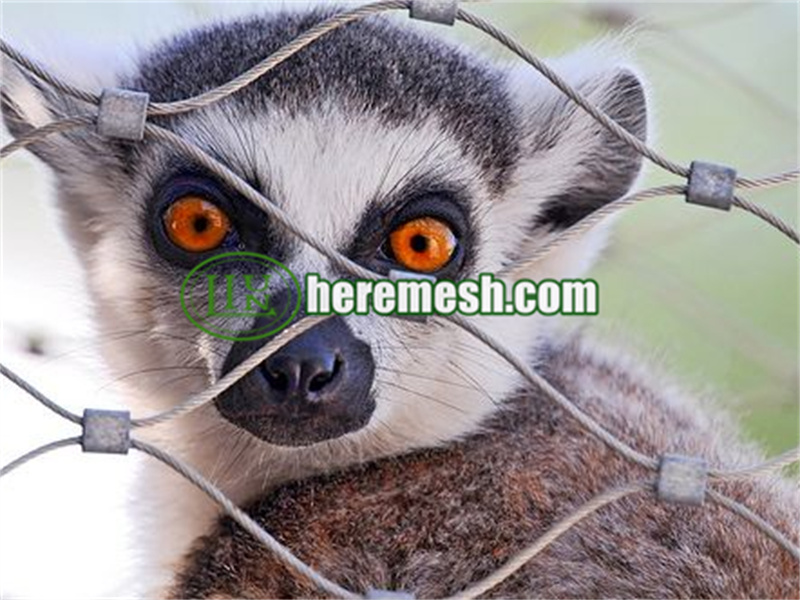
The ideal lemur exhibit creates an immersive effect where visitors barely notice the enclosure, as if they share the same space with the animals. The wire diameter of stainless steel cablemesh can be as thin as 1.2 mm. With mesh openings around 50 mm, cables occupy less than 3% of the total surface area, meaning over 97% of the mesh is transparent. At standard viewing distances, the net is nearly invisible to the human eye. Cables with black oxidation treatment deliver an even more inconspicuous visual effect.
Rust Resistance
Stainless steel cable mesh is inherently anti-corrosive. It is worth noting, however, rust protection relies on both material grade and structural design. Welded metal mesh is prone to rust at welding spots, as welding alters the metal’s microscopic structure. By contrast, stainless steel cable mesh features an all-woven structure with zero welding points, fundamentally eliminating this corrosion vulnerability. Its diamond-shaped apertures allow rainwater to drain freely without pooling on the mesh surface, further cutting corrosion risks.
Safety, visibility and rust resistance may seem conflicting goals, yet stainless steel cable mesh strikes a perfect balance between them. Thin cables paired with large mesh openings guarantee high transparency; woven construction and properly sized apertures deliver reliable anti-escape performance; 316 grade material together with weld-free design ensures long-lasting rust-proof service life.
Animal Welfare: Premium Cable Mesh Enables Lemurs to Live Freely
Animal welfare stands as a core value of modern zoos. The World Association of Zoos and Aquariums explicitly stipulates that enclosures for captive animals must accommodate their natural behavioural expressions. For lemurs, a high-quality barrier is far more than a containment tool — it is an integral component of recreating a natural living habitat.
Alleviate Visual Confinement Stress
In the wild, lemurs inhabit unobstructed habitats covered with continuous tree canopies. Conventional metal bar cages make lemurs distinctly aware of being confined, which frequently triggers stereotypical behaviours over prolonged exposure.
By contrast, stainless steel lemur enclosure mesh features exceptional transparency, rendering the barrier virtually invisible visually. Lemurs can focus their attention on branches, ropes and platforms within the enclosure, exhibiting behavioural patterns much closer to those seen in wild populations. Ethological research has proven that primates housed behind highly transparent barriers show a marked reduction in stereotypical behaviours.
Safeguard Lemurs’ Paws and Digits
Lemurs spend most of their day climbing and gripping surfaces. Traditional metal mesh has coarse joint nodes often lined with sharp burrs. Repeated gripping of these rough spots abrades and lacerates the skin on lemurs’ paws.
Stainless steel cable mesh is woven from steel wire ropes. Every crossing joint is hand-woven or secured with clamps, delivering a smooth, rounded surface free of sharp edges. Lemurs may grip any section safely without risk of cuts or injuries to their paws and fingers.
Maximise Climbing Freedom
Many zoos integrate perches and platforms directly onto cable mesh, turning the barrier itself into part of the enclosure’s three-dimensional landscape. With uniform mesh apertures and even load distribution, the mesh safely supports the weight of supplementary fixtures.
Instead of acting merely as a boundary wall, the mesh evolves into a multi-level space where lemurs climb, leap and rest. This design drastically improves space utilisation, extending the lemurs’ activity range from the ground to the entire vertical dimension of the enclosure.
Preserve Natural Light and Ventilation
Lemurs are diurnal species, and ample sunlight is vital to their circadian rhythms and physical well-being. Stainless steel cable mesh boasts a high open area ratio, allowing abundant natural sunlight to penetrate deep into the enclosure. Natural airflow also passes unobstructed through the mesh, maintaining fresh air and a comfortable temperature inside the habitat.
Glass-sealed enclosures, by comparison, rely on artificial lighting and air conditioning as substitutes. Such systems incur higher operating costs and fail to replicate the animal-friendly conditions of natural environments.
Practical Application Scenarios of Stainless Steel Lemur Enclosure Mesh
Walk-In Lemur Enclosures
This is currently the most popular style of lemur habitat. Visitors enter a large space enclosed by stainless steel cable mesh, where lemurs roam freely all around. There is no glass or metal railing separating humans and animals, only an almost invisible mesh barrier. Such enclosures impose the strictest requirements on enclosure: complete escape prevention, maximum visual invisibility, and resistance to long-term indirect wear caused by heavy visitor traffic.
Cable mesh with a wire diameter of 1.6 mm and mesh apertures of 38 to 50 mm is recommended. A double-gate entry system shall be installed at the access point to stop lemurs from escaping while visitors enter and exit.
Lemur Islands
Many zoos construct small islands in the middle of artificial lakes or ponds for lemur husbandry. Since lemurs cannot swim, the surrounding water forms a natural barrier. Nevertheless, fencing is still required on the island to prevent accidental drowning. Fences in this setting are primarily exposed to wind and rain, so superior weather resistance is essential. 1.6 mm diameter cable mesh with 50 mm apertures is recommended.
Conventional Display Lemur Cages
Ideal for small and medium-sized zoos. Lemurs are housed within an independent enclosed zone, with visitors observing from outside. Fencing covers the front, side and ceiling surfaces. The front facade serves as the main viewing panel; 1.6 mm wire diameter and 50 mm mesh apertures are suggested for optimal visibility.
Breeding and Research Facilities
These facilities are closed to the general public or only accessible to professional staff. Visual presentation is not the top priority, yet long-term animal welfare and fencing durability remain critical. Breeding facilities usually house a larger, denser lemur population, leading to heavier physical abrasion on the mesh. Cable mesh with a wire diameter of 2.0 mm and apertures ranging from 38 to 50 mm is recommended.
Mixed-Species Enclosures
Certain zoos co-house lemurs alongside docile species such as birds to create themed exhibits. The fencing must accommodate the needs of multiple animal species simultaneously. The mesh openings must be small enough to contain the smallest animals while retaining high transparency.
We recommend black oxide finished cable mesh with 1.6 mm wire diameter and 25–38 mm apertures, balancing escape-proof performance and visibility. Special attention should be paid to zoning design for species separation to guarantee each animal group a dedicated safe territory.
Conclusion
Building an excellent lemur enclosure mesh starts with the most fundamental aspect: choosing the right enclosure mesh. Enclosure is far more than a physical barrier when building a high-quality lemur habitat. It directly determines the lemurs’ quality of life, visitors’ viewing experience, and the zoo’ s operation and maintenance costs over the next two decades.
Stainless steel cable mesh delivers outstanding performance across multiple dimensions. Thin steel cables paired with large mesh apertures create a nearly invisible viewing barrier. Its woven structure eliminates the risk of rust at welding joints. Grade 316 stainless steel guarantees a service life of over 20 years, and its smooth surface prevents injuries to lemurs’ paws and digits. The combination of all these merits makes stainless steel cable mesh the optimal fencing solution for modern lemur exhibits.
Admittedly, its upfront investment is slightly higher than conventional materials. However, in the long run, stainless steel cable mesh can last 20 years with barely any repairs or replacements required. By contrast, ordinary materials demand major overhauls every few years. Each renovation entails enclosure closure, lemur relocation, damaged landscaping, and extra labor expenses. When calculating total lifecycle costs, stainless steel cable mesh proves to be the more economical option.