

Jaguar Habitat Enclosure Mesh: An Immersive Habitat in the Wildlife Park

Stainless Steel Woven Wire Mesh Order for Zoo Animal Exhibits
05/14/2026
Stainless Steel Bird Wire Mesh Order Shipped for Peacock Enclosure
05/28/2026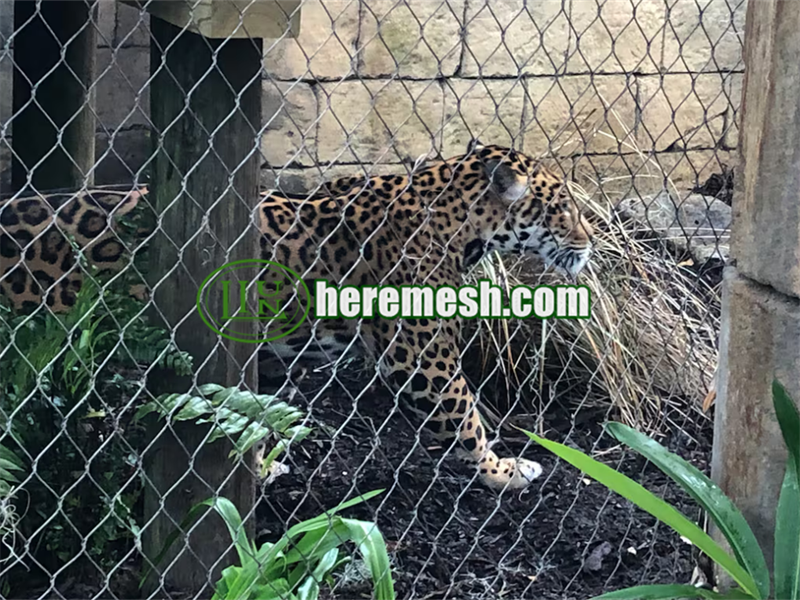
The construction of zoos is increasingly emphasizing the construction of animal welfare. The traditional closed enclosures have long been unable to meet the dual demands of animal welfare and tourists’ immersive viewing. Modern zoo projects are mostly centered on natural ecology, creating immersive wild habitats for animals. Relying on scientific site planning, native vegetation landscaping, and professional protective facility construction, the wild habitats of animals are restored. Immersive jaguar habitat enclosure mesh lets jaguars roam freely while visitors enjoy wild nature closely.
Jaguar Habitat Enclosure Mesh: Breaking Free from Traditional Cages
The Limitations of Traditional Jaguar Cages
For decades, most zoo big cat exhibits relied on welded steel bar cages, cast iron grating, or galvanized wire mesh. While these designs were physically capable of preventing animal escapes, they introduced a range of unavoidable problems.
Visually oppressive. Heavy iron bars created an unmistakable sense of confinement. It places a cold, hard barrier between visitors and animals and severely diminishing the viewing experience.
Spatial fragmentation. Dense fencing sharply divided animal habitat areas from visitor walkways, undermining the overall aesthetic and cohesion of the exhibit.
Detrimental to animal welfare. Enclosed environments fail to meet the behavioral needs of jaguars. Animals kept in such conditions are prone to developing stereotypic behaviors, posing serious concerns for their physical and psychological well-being.
High maintenance costs. Iron fencing exposed to outdoor conditions over time is subject to rust, corrosion, and paint deterioration, requiring frequent upkeep and driving operational costs persistently higher.
The Core Philosophy of New Enclosure Design
The immersive jaguar habitat enclosure represents a modern zoo development philosophy centered on animal welfare and grounded in natural ecology. It moves entirely beyond the conventional captivity mindset, genuinely restoring a naturalistic living environment for the animals. Designers conduct in-depth research into jaguars’ wild behavioral patterns and social dynamics, recreating landscapes modeled on their native habitats. This approach minimizes the gap between artificial environments and the wild, enabling jaguars to express instinctive behaviors while supporting their physical and mental health.
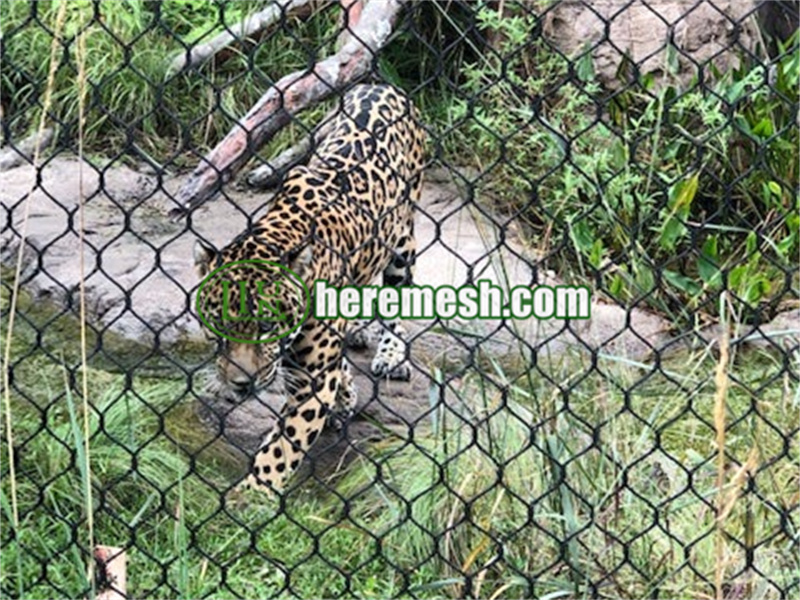
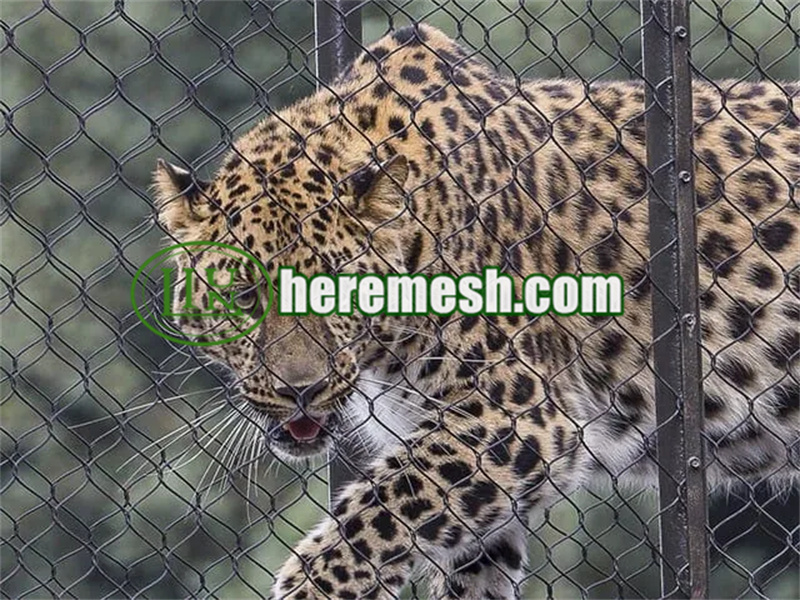
The key to realizing this philosophy lies in rethinking enclosure materials. Immersive jaguar habitat enclosures have moved away from oppressive barriers such as high walls, iron cages, and rigid fencing, transitioning fully to transparent, flexible stainless steel jaguar habitat enclosure mesh. The flexible mesh barrier significantly reduces the visual footprint of man-made structures, dissolving the psychological sense of confinement and providing animals with a spacious, unrestricted environment in which to move freely. At the same time, it allows visitors to observe jaguars in their natural state with unobstructed clarity.
Safety remains the non-negotiable foundation of every exhibit design. Flexible stainless steel jaguar habitat enclosure mesh delivers high-strength protective performance — resistant to impact, biting, and pulling. It offer outstanding weather resistance, corrosion resistance, and anti-aging properties, making it the ideal material for outdoor habitat enclosure. It ensures the safety of both animals and visitors while significantly reducing long-term maintenance costs and enabling stable, lasting performance across the full lifespan of the enclosure.
Stainless Steel Rope Mesh Adapted to Jaguar Behavior
To understand why stainless steel rope mesh is the ideal material for jaguar enclosures, it helps to first consider the jaguar’s biological characteristics and behavioral needs. The jaguar is the third-largest felid in the world, surpassed in size only by the lion and tiger. It possesses exceptional jumping and climbing abilities, with a wild home range spanning 25 to 150 square kilometers. In a captive setting, this means the environment must offer sufficiently rich spatial stimulation to meet the animal’s instinctive drive to explore and move. So how does stainless steel rope mesh deliver on these requirements?
Supporting the Natural Instinct to Climb
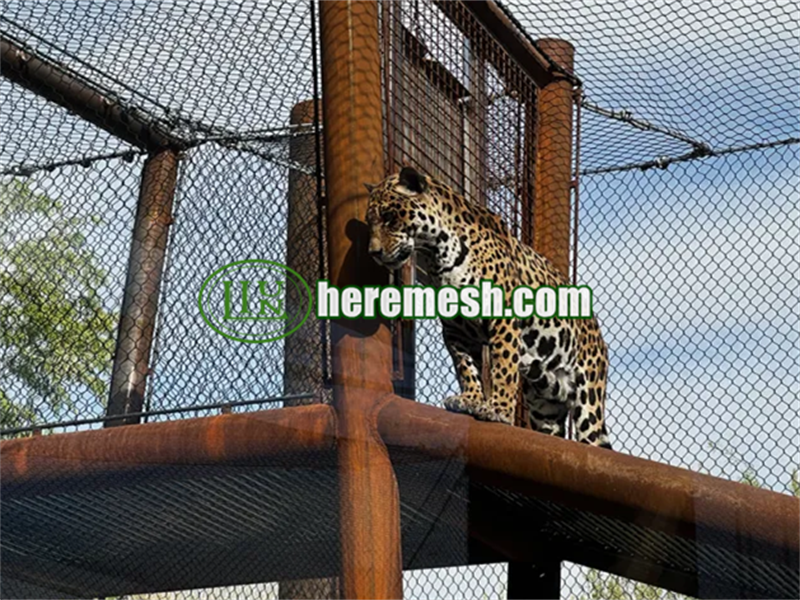
The rigid structure of the traditional iron fence can cause strong impact and rebound when the jaguar attempts to climb. Therefore, the rigid fence poses risks of paw injuries and joint damage for the animals. In contrast, the flexible mesh of the stainless steel rope mesh can deform slightly with the climbing movements of the jaguar, evenly distributing the impact force and neither hindering the climbing behavior nor compromising the safety of the animals to the greatest extent.
Mesh Opening Design to Prevent Paw Entrapment
The claws of a jaguar are strong and robust. An inappropriate mesh opening may cause the claws to get stuck in the grid. Professional jaguar enclosure mesh usually adopts a design with mesh opening no larger than 76mm. Combined with the smooth and rounded surface of the rope, it ensures that the animal’s claws can freely grasp on the netting while moving, without getting stuck.
Open Visual Environment to Reduce Stress Behaviors
An enclosure environment with an open field of view can significantly reduce the frequency of stress responses in captive felids. The high transparency of stainless steel rope mesh allows jaguars to clearly perceive their surrounding environment at all times, minimizing anxiety triggered by spatial confinement. This directly contributes to improved behavioral welfare and supports a more naturalistic expression of the jaguar’s daily activity patterns.
Flexible Jaguar Habitat Enclosure Mesh: Creating a Naturalistic Activity Environment
The Unique Value of a Flexible Structure
Unlike rigid enclosure materials such as welded wire mesh, stainless steel rope mesh is fundamentally a tensioned flexible structure. This structural characteristic gives it an unmatched spatial adaptability in enclosure design — one that rigid materials simply cannot replicate.
Terrain Adaptability
Jaguar habitat enclosures are frequently constructed across natural or artificially sculpted terrain featuring uneven ground, slopes, and varied contours. Rigid fencing requires extensive cutting and welding to accommodate such irregular surfaces, adding significant time and cost to the project. Stainless steel rope mesh, by virtue of its inherent flexibility, conforms seamlessly to any terrain profile — following the natural rise and fall of slopes without the need for large-scale ground modification.
Ease of Installation
Stainless steel rope mesh can be custom-manufactured to project specifications and installed on-site through a straightforward tensioning process. The entire installation is efficient and uncomplicated — a significant advantage for zoo renovation and expansion projects where minimizing disruption to ongoing operations is a priority.
Ideal Choice for Simulated Ecological Habitats
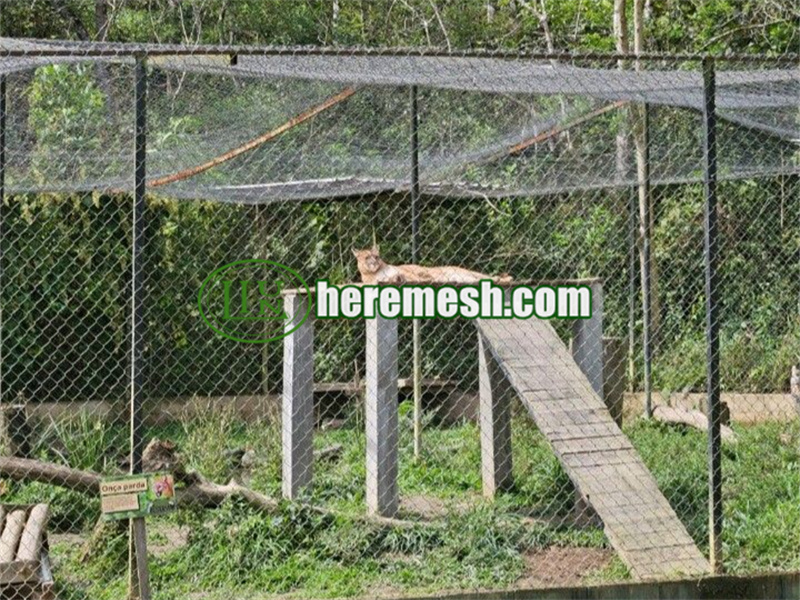
Another defining characteristic of stainless steel rope mesh is its exceptional compatibility with living vegetation. The mesh surface provides abundant anchor points for climbing plants, allowing greenery to grow naturally through and across the structure. Over time, the enclosure boundary gradually merges with the surrounding vegetation, making the perimeter virtually disappear into the landscape.
This approach transforms the jaguar’s habitat into something that feels far more like a genuine territory carved out of the jungle than an artificially constructed exhibit space — and that is precisely the ultimate goal of immersive exhibit design in the modern zoo.
Core Performance Advantages of Stainless Steel Material
Material properties are the fundamental guarantee for the long-term and reliable operation of the enclosure net. The reason why stainless steel rope net can become the preferred material for large-scale feline enclosure is rooted in its outstanding material characteristics. The stainless steel rope nets produced by our factory are all made by expertly weaving high-quality 304, 316, and 316L stainless steel raw materials. The material composition is stable and pure, and the comprehensive performance is extremely outstanding.
Stainless steel itself has excellent anti-rust and anti-corrosion properties. Its surface can form a dense protective oxide layer. It can effectively resist various environmental influences and is not prone to rust, corrosion, fracture, or aging when used outdoors for a long time. It remains stable and durable in complex environments and significantly extends the overall service life. For outdoor Jaguar enclosures, it is strongly recommended to choose 316 stainless steel rope nets. The 316 material is more corrosion-resistant and has a longer service life.
The ropes of the stainless steel rope net are made by twisting multiple thin wires together. The common structures are 7×7 or 7×19. The more rope wires there are, the better the flexibility of the rope, and the better the energy dispersion effect when subjected to impact. Taking a 316 stainless steel rope with a diameter of 2.0mm as an example, its minimum breaking tensile force can reach approximately 2.0-2.5kN. The entire rope net is supported by hundreds and thousands of grid nodes, and the actual safe load is far greater than that of a single rope.
The surface of the stainless steel material is smooth and flat, making it easy to clean. The material is non-toxic and environmentally friendly, and can be recycled. This material has a wide range of applications. Whether it is for large-scale feline enclosures, animal cages, or birdhouse protection, it can be used with peace of mind and is a high-quality protective building material that is both safe, practical, beautiful, and durable.
Unobstructed Visibility: Dissolving the Barrier
Beyond its mechanical performance, rope mesh also excels in a dimension that is equally critical to zoo design: visual openness. The overall mesh structure is light, open, and clean-lined — creating an expansive sense of unbounded visibility. Unlike solid walls and heavy barriers, it does not form a harsh visual divide, significantly reducing the oppressive feeling that conventional fencing creates. This openness allows spatial continuity, making the overall visual field feel connected and flowing, and effectively broadening the viewer’s sense of space.
The open mesh structure allows natural light and fresh air to pass through freely, ensuring that the jaguar habitat receives ample daylight and smooth ventilation. It fulfills its essential safety function without fragmenting the existing landscape or disrupting the overall spatial composition. Stainless steel jaguar habitat enclosure mesh preserves the aesthetic quality of the space while providing robust protection — creating an environment that feels comfortable for the animals and cohesive to the eye.
Tourists can truly experience the wildness and vitality of the Jaguar in an almost unobstructed view. This immersive experience is precisely the most valuable display value of modern wildlife parks.
Professional Customization: Building the Ideal Jaguar Habitat
An outstanding animal habitat is far more than a simple enclosure mesh. It represents the seamless integration of animal welfare principles, ecological landscape aesthetics, and professional protective engineering. With its unique material properties, stainless steel rope mesh has become an indispensable core component within this system.
Liulin Zoo Mesh Factory has been deeply engaged in the research, development, and manufacture of stainless steel rope mesh for many years, accumulating extensive hands-on experience in zoo enclosure projects worldwide. From mesh opening dimensions and cable diameter selection to material grade specification — every detail can be customized to meet the specific requirements of your project. Whether you are planning a new jaguar exhibit from the ground up or undertaking an ecological upgrade of an aging enclosure, we provide comprehensive, end-to-end professional support.
Choosing the right material to give every jaguar a territory that is truly its own — that is our mission. Contact us today to build a jaguar habitat enclosure that delivers equally on safety, ecology, and aesthetic value.