

High-strength Durable Stainless Steel Animal Cage Netting Order

Zoo Mesh Price Guide: Animal Enclosure Selection and Costs
09/18/2026Bulk Premium Animal Cage Netting Shipped to US
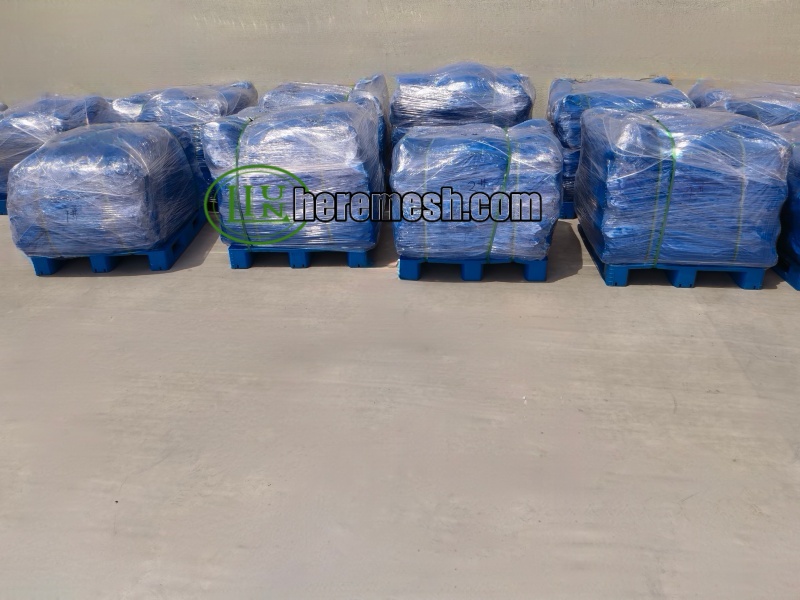
This week, we completed a large order of animal cage netting destined for the United States. All goods have undergone production, quality inspection, packaging, and container loading, and are about to be shipped from a domestic port. The client for this order is a contractor working on a renovation project for a medium-sized zoo in the U.S. The materials from this order will be used to upgrade the fencing of several aging enclosures within the zoo.
The total area of this order exceeds 3,000 square meters, covering three main areas: big cat enclosures, primate activity areas, and avian exhibits. The primary material used is 304 stainless steel, with 316 stainless steel employed in wet areas near water features. In addition to the mesh panels themselves, the order includes stainless steel ferrules, tensioning steel cables, and other tools.
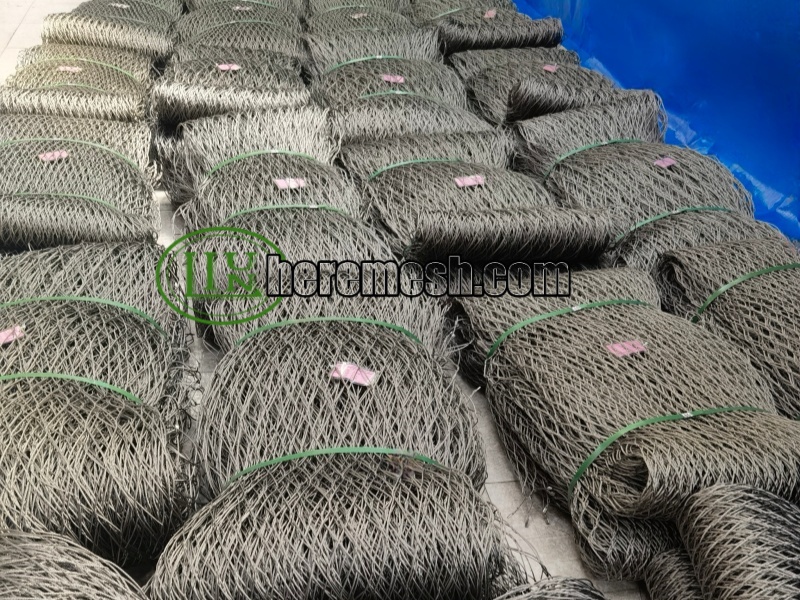
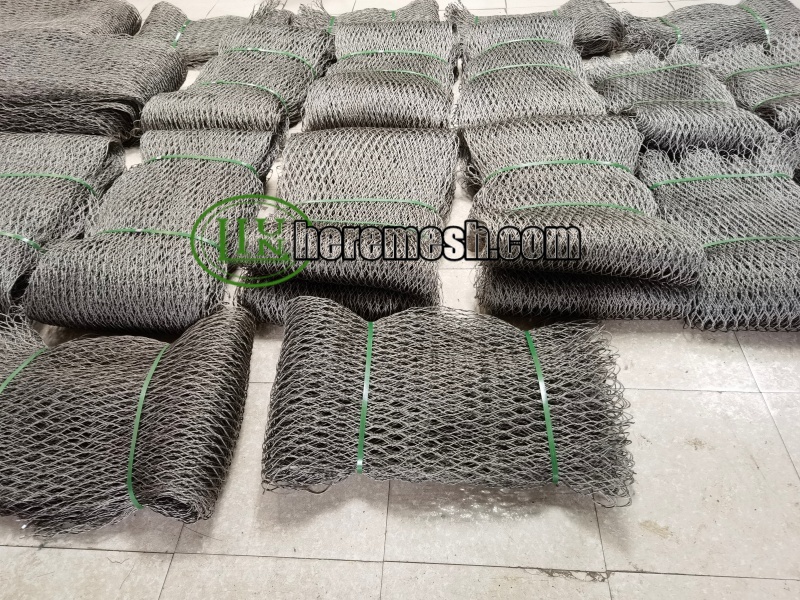
From the initial inquiry to final shipment, this project took approximately two months to complete. During the first round of communication, the client provided only floor plans and approximate areas of the enclosures. Based on the species housed in the enclosures, our team initially recommended suitable specifications. The client then discussed these with our team and finalized more precise mesh panel dimensions and quantities. Based on this, we broke down the entire project into more than 100 individual mesh panels, each labeled with a serial number and dimensions to facilitate quick alignment during on-site installation.
It is worth noting that this is already the second purchase from this client this year. In the first half of the year, they conducted a pilot renovation on two enclosures. After the results met expectations, they decided in the second half of the year to replace all remaining enclosures. This demonstrates that the performance of stainless steel animal enclosure mesh has been validated in practical use.
Premium Materials for All Kinds of Animal Cage Netting
The reason animal cage netting is referred to as a “high-quality building material” lies in its ability to be precisely tailored to the characteristics of different animals. This order from the United States exemplifies this point perfectly.
Carnivore Exhibit: Impact & Bite Resistant Design
The big cat enclosure section includes three exhibit areas: lions, tigers, and jaguars. These animals have large bodies, possessing great explosive power and astonishing biting force. The enclosure netting must be able to withstand full-force collisions and biting. For this section, we specified 316 material with a wire diameter of 3.2mm and an aperture of 51mm × 51mm. The 3.2mm wire, combined with a 7×19-strand wire rope construction. It provides a breaking strength of over 300 kilograms per strand—more than sufficient to withstand full-force impacts from animals. The 51mm aperture was chosen to balance strength with visibility and cost control—smaller apertures would exponentially increase the number of joints per unit area, leading to a significant price increase, while 51mm is already a safe aperture for large predators.
Primate Habitat: Smooth Netting for Climbing Animals
The primate activity area houses two species: macaques and ring-tailed lemurs. The challenge with monkeys lies not in their strength, but in their agility and endurance. For primates, we selected 304 stainless steel cage netting with a 2.0mm wire diameter and 38mm mesh aperture. The 2.0mm wire diameter is manageable for monkeys, while the 38mm aperture prevents juvenile monkeys from getting their bodies stuck. More importantly, the hand-woven mesh surface is smooth and free of burrs. So monkeys won’t scratch their paws or fur even after prolonged climbing.
Mixed-Species Aviary: Size-Based Aperture Customization
The requirements for the bird exhibit are different. This area houses both medium-sized parrots and small finches, which are kept together in a single large space. When selecting specifications for mixed-species enclosures, we follow a specific principle. The mesh aperture is determined by the smallest bird, and rope diameter by the bird with the greatest destructive potential. Ultimately, we opted for a solution with a 1.6mm rope diameter and 25mm mesh aperture. The 25mm mesh aperture ensures that even small finches cannot squeeze through, while the 1.6mm rope diameter can withstand continuous pecking by parrots. This combination of specifications is more expensive than some options with larger mesh apertures and thicker ropes. This is because the increase in labor required for weaving the smaller mesh far exceeds the increase in material costs. However, to meet the essential requirement of preventing escapes, this cost is unavoidable.
Consistent Manufacturing Standard
Although the specifications vary across the three zones, the material and manufacturing standards remain consistent. All cage netting is hand-woven, featuring uniform mesh openings, secure knots, and a surface free of weld marks—which is why they are collectively referred to as “premium building materials.”
Shift from Welded Wire Mesh to Stainless Steel Animal Cage Netting
Over the past few years, we’ve noticed a clear trend in our communications with overseas clients. An increasing number of zoos are explicitly excluding welded wire mesh from their renovation projects and specifying stainless steel animal cage netting instead. This shift isn’t merely a trend. It stems from the fact that the problems exposed by welded wire mesh in practical applications have become increasingly unacceptable.
Risk of Weld Failure
The most critical issue with welded wire mesh is the welds. Repeated collisions by large animals and constant tugging by primates can cause the welds to come apart. Once a weld breaks, the surrounding wires begin to bear additional tension, and the tear rapidly expands. What’s more troubling is that weld failures often occur on the inside of the mesh, making them difficult to detect during routine inspections and posing a risk of animal escape. Stainless steel animal enclosure mesh features a woven structure where the entire panel is supported by interwoven wires; localized stress is distributed to surrounding nodes, eliminating the risk of “one point failing and the entire mesh becoming compromised.”
Corrosion Hazard
The second issue is corrosion. Welded wire mesh typically wears down and peels away when exposed to the elements outdoors, especially at the weld points. The iron wires exposed after the coating peels off quickly begin to rust. Rust not only affects aesthetics but, more seriously, rust particles may be accidentally ingested by animals. Stainless steel rope mesh fundamentally solves this problem. The rust resistance of stainless steel comes from the material itself, eliminating the risk of coating peeling or rust particle contamination.
Service Life & Overall Life-Cycle Cost
The third issue is service life and total cost. Welded wire mesh typically shows significant rusting after two to three years of outdoor use and requires complete replacement after four to five years. Replacement involves not only the cost of materials but also labor costs for removing the old mesh and installing the new one, as well as operational losses during the period when the enclosure is out of service. Stainless steel animal enclosure mesh has a service life of over twenty years and requires virtually no maintenance during that time. In the long run, the total cost of stainless steel enclosure mesh is actually lower.
Visual Transparency for Improved Visitor Viewing Experience
The fourth consideration is the viewing experience. Welded wire mesh has thick wires and a dense weave, which detracts from the visitor experience. Stainless steel cage mesh, on the other hand, features fine wires and high transparency. Once installed, it is virtually invisible, significantly enhancing the visitor experience.
Balances Protection and Animal Welfare
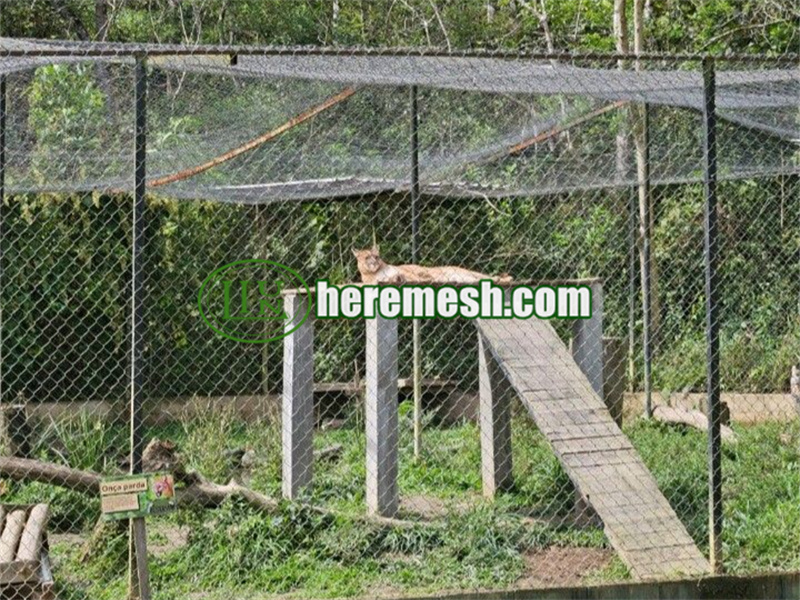
Modern zoo design philosophy places greater emphasis on animal welfare. Zoos are required to maintain safety standards without sacrificing animal welfare. Stainless steel animal cage netting strikes a good balance between these two aspects.
One of the core objectives of animal welfare is to allow captive animals to maintain natural behaviors while reducing stereotypical behaviors and stress responses.
First is the psychological impact of visual transparency. When animals are constantly faced with dense, sight-obstructing fencing, they are prone to developing stereotypical behaviors such as pacing and head-shaking. Stainless steel mesh enclosures offer high transparency and an unobstructed view, which significantly reduces the sense of confinement associated with captivity. At the same time, the open mesh allows ample natural light to enter the enclosure, which is particularly important for animal health.
Second is ventilation. The diamond-shaped mesh structure allows air to circulate freely. Good ventilation reduces the incidence of disease, minimizes the buildup of odors, and improves the experience for both animals and visitors. In contrast, solid walls or dense panel enclosures hinder ventilation.
Third is the freedom to climb and move around. For primates and some felines, climbing is an important natural behavior. The mesh structure of stainless steel cage netting allows animals to climb, and the flexible material poses no risk of injury.
Fourth is material safety. Stainless steel is non-toxic and harmless; it does not release any harmful substances, so animals will not be poisoned even if they chew on the mesh. For parks in Europe and the United States that prioritize animal welfare certification, material safety is a mandatory requirement.
Overall, stainless steel animal enclosure mesh strikes the perfect balance between security and animal welfare—exactly the type of fencing solution modern zoos are seeking.