

Stainless Steel Aviary Bird Netting Selection Guide

Stainless Steel Parrot Cage Netting Order Shipping
07/09/2026
Professional Stainless Steel Animal Fence Netting Solution
07/24/2026Core Considerations for Selecting Aviary Bird Netting
The correct approach to choosing aviary bird netting is to first identify the bird species and then decide which type of netting to use. There are significant differences in body size, behavioral habits, and destructive tendencies among different bird species. If you discuss material selection without considering the characteristics of the bird species, it’s easy to choose the wrong specifications and materials.
First, consider the bird’s size. Small birds, such as finches, are compact; even slightly larger mesh openings pose a risk of escape. These birds do not require highly durable netting, but they are very sensitive to mesh aperture. Medium-sized birds, such as budgerigars, are of moderate size. Their beaks have some strength but are not powerful enough to damage metal netting. Large birds, such as macaws, are massive and possess astonishing biting force in their beaks, posing a true test of the netting’s strength and resistance to pecking.
The second factor is the bird’s behavioral habits. Parrots are typical climbers, spending a significant amount of time each day climbing and gnawing. The netting surface will be repeatedly grasped and pecked, so it must be smooth and wear-resistant. Finches are strong fliers, so the focus is more on whether there is sufficient flying space. Birds of prey, such as eagles, fly at high speeds with great impact force, so the netting must have sufficient impact resistance to cushion collisions.
The third factor is the destructive power of the bird’s beak. This directly determines the choice of rope diameter. A macaw’s bite force can easily snap through wire. For these species, if the rope is too thin, it may be chewed through within a few months, creating a safety hazard.
Differences in Selection of Indoor and Outdoor Aviary Netting
Indoor and outdoor aviaries feature completely different service environments, which lead to vastly different requirements for aviary bird netting.
Indoor Aviary Netting: Aesthetics and Safety for Controlled Environments
The most prominent feature of indoor aviary netting is the controllable operating environment. Temperature, humidity and light are all under artificial regulation. Free from exposure to sunlight, rain and wind, indoor netting face no aging damage caused by ultraviolet rays. Accordingly, the material grade requirements for indoor netting can be moderately relaxed. 304 stainless steel is fully adequate for indoor use. It can deliver satisfactory performance in indoor environments. Greater emphasis is placed on the aesthetics and safety of indoor aviary netting. The aviary bird netting must be sufficiently transparent to allow visitors to clearly observe the natural behaviors of birds. Its surface should be smooth and burr-free to prevent scratches when birds climb on the netting.
Outdoor Aviary Netting: Aging Risks in Complex Outdoor Conditions
Outdoor aviary netting, by contrast, is subject to far more complex environmental challenges. First is ultraviolet radiation. Long-term exposure to sunlight accelerates the aging of most materials. And even metal netting will gradually degrade under ultraviolet rays if their surface treatment is improper. Second is rain and moisture. Wood and metal materials are prone to corrosion and rust in humid conditions. Third is temperature difference. Many regions witness large day-night temperature gaps, and the damage caused by freeze-thaw cycles to materials cannot be underestimated.
Given these differences, outdoor aviary netting must adopt truly weather-resistant materials. 316 stainless steel is the top choice for outdoor scenarios. Containing molybdenum elements, it delivers significantly better corrosion resistance — especially salt spray resistance — than 304 stainless steel, making it ideal for areas near coasts or with severe industrial pollution. For inland areas far from the coast, 304 stainless steel can also serve outdoor purposes. But its service life will be shorter than that of 316 stainless steel. Furthermore, outdoor netting generally adopt a wire diameter one size larger than indoor netting of the same specification, so as to withstand structural stress brought by wind force and temperature fluctuations.
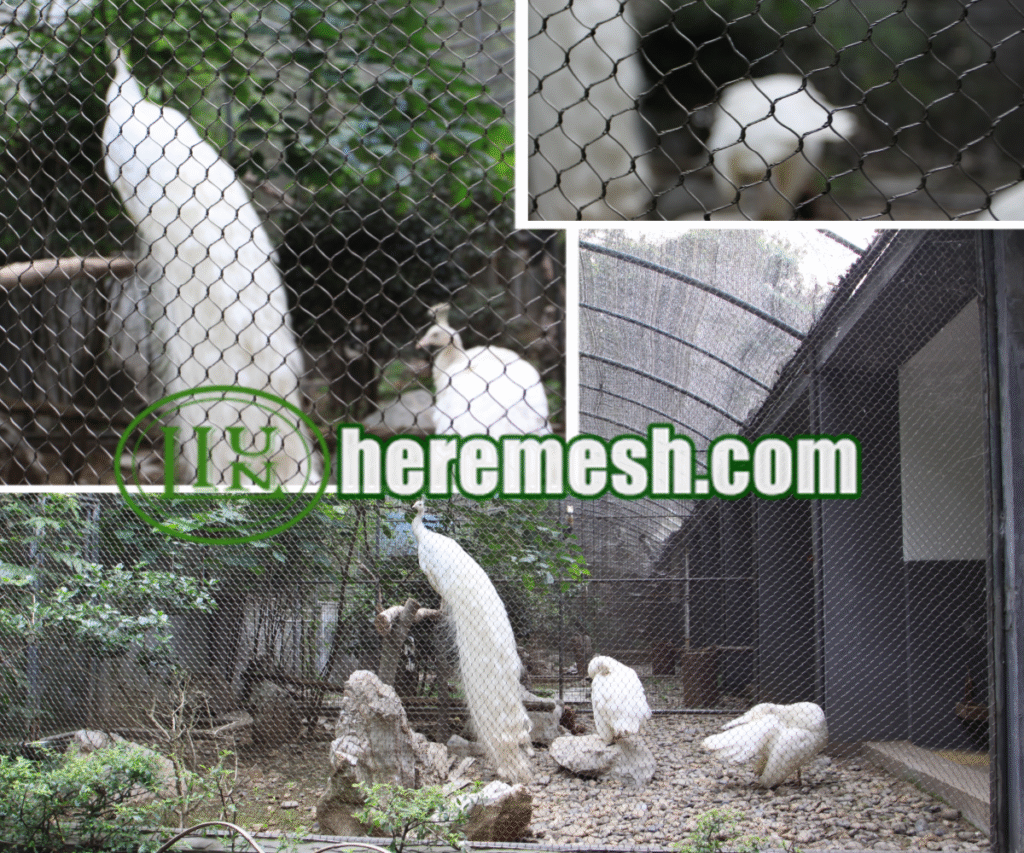
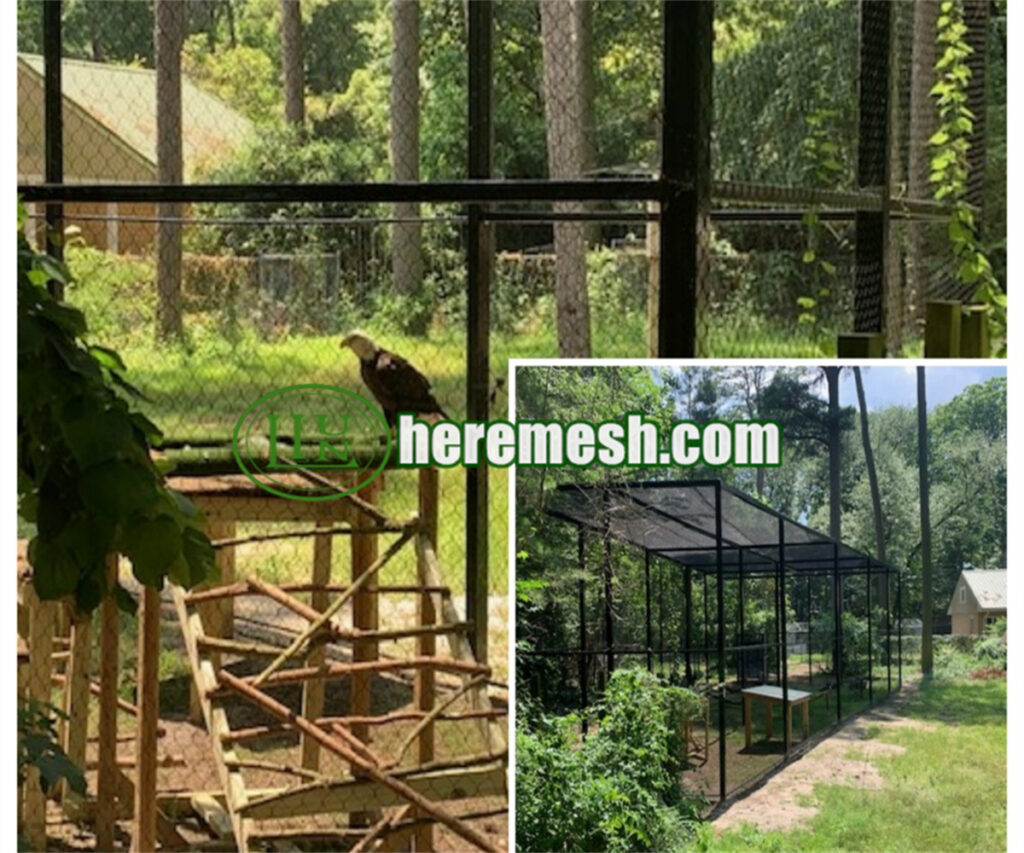
Matching Mesh Aperture and Wire Diameter for Different Bird Sizes
Choosing the right material is only the first step. The specific combination of mesh aperture and wire diameter is what determines the actual effectiveness of the aviary bird netting. This combination must be customized for each bird species based on its body size.
For Small Birds
For small birds, such as finches, the mesh aperture should be kept within 20 mm × 20 mm, with a wire diameter of 1.2 to 1.6 mm. Since these birds are small, there is a risk they could squeeze through if the mesh aperture exceeds 25 mm. The wire diameter does not need to be too thick, as small birds have limited beak strength. A 1.2 mm steel wire is sufficient to withstand their pecking. If the wire is too thick, it will make the mesh appear too dense, compromising airflow and natural light.
For Medium-Sized Birds
For medium-sized birds, such as budgerigars, the mesh aperture should be between 25 and 38 mm, with a wire diameter of 1.6 to 2.0 mm. Medium-sized parrots have beaks capable of causing some damage. 1.6 mm is the minimum diameter—any thinner may become deformed from prolonged pecking. Regarding mesh aperture, 38 mm is the safe upper limit; any larger may allow the parrot to stick its head through and get stuck.
For Large Birds
For large birds, such as macaws, the recommended mesh aperture is 51 mm × 51 mm, with a rope diameter of 2.0 to 2.4 mm. Large parrots have a wide wingspan and require sufficiently large mesh openings to ensure their flight space is not restricted; at the same time, the rope must be thick enough to withstand their biting force. A 2.4 mm rope with a 7×7-strand steel wire construction can have a breaking strength exceeding 200 kilograms per strand, capable of withstanding a macaw’s full-force pecking.
For Birds of Prey
For birds of prey, such as eagles, the impact force from flight must be taken into account. These birds fly at high speeds, and the impact when they collide with the netting is significant; the advantage of rope netting lies in its elastic structure, which cushions the impact and prevents injury to the bird. It is recommended that the rope diameter be no less than 2.0 mm, with mesh aperture ranging from 38 to 51 mm depending on the size of the birds of prey.
It is particularly important to note that if multiple species of birds are housed together in the same aviary, the mesh aperture and rope diameter should be determined based on the smallest bird and the one with the greatest destructive potential. This ensures that both escape prevention and protection against pecking are adequately addressed.
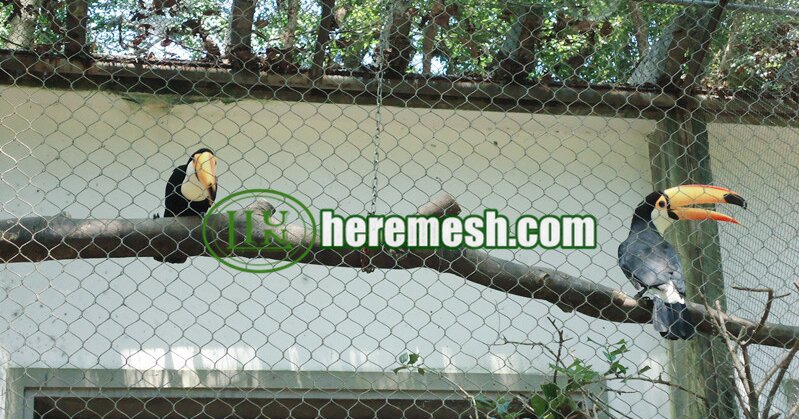

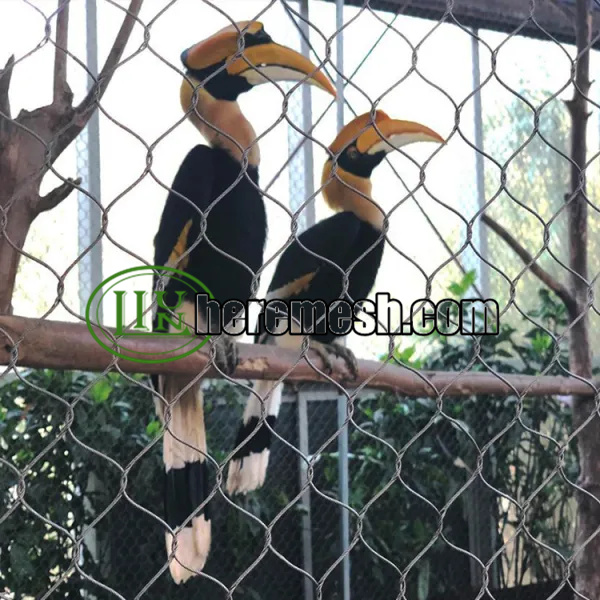
Long-Term Extreme Weather Durability
What truly tests the materials used in outdoor bird cages is continuous environmental erosion. This is the key factor that determines their service life.
Ultraviolet radiation is the number one cause of aging in outdoor materials. Nylon and plastic netting quickly become brittle when exposed to UV rays. While ordinary wire mesh is resistant to UV radiation, its galvanized coating gradually oxidizes under the alternating effects of sunlight and rain, eventually losing its rust-preventive properties. Stainless steel rope netting excels in this regard because stainless steel’s UV resistance is an inherent property of the material itself and does not rely on any surface coating. No matter how many years it is exposed to sunlight, the material itself will not degrade due to UV radiation.
The challenges posed by rain and humid environments primarily manifest as corrosion. Ordinary carbon steel is prone to rusting in humid conditions. 304 stainless steel can remain rust-free for extended periods under typical outdoor humidity conditions. 316 stainless steel, due to its molybdenum content, offers significantly enhanced resistance to chloride ion corrosion, making it a more reliable choice in marine climates.
Freeze-thaw cycles are a particular concern for users in cold regions. Since stainless steel rope mesh has no welded joints or coatings and is structurally twisted and woven, it lacks any weak points susceptible to freeze-thaw damage. Furthermore, the mesh structure allows snow to pass directly through and fall to the ground, preventing large amounts of snow from accumulating on the mesh surface and eliminating the risk of the mesh collapsing under the weight of snow in winter.
Overall, 316 stainless steel provides weather resistance suitable for virtually all extreme conditions. While SS304 is fully suitable for outdoor use in inland temperate regions, upgrading to SS316 is recommended for coastal areas or industrial pollution zones.
Extending the Lifespan of Aviary Bird Netting
Even the highest-quality materials require proper maintenance to achieve their expected service life. The theoretical lifespan of stainless steel rope netting can exceed thirty years, but how long it actually lasts depends largely on the quality of daily maintenance.
Regular Inspection
First is regular inspection. It is recommended to conduct a comprehensive inspection of the aviary netting once a month, focusing on several key areas. Whether the netting surface is deformed or sagging, whether fasteners are loose, whether the support structure has shifted, and whether there is wear at the joints between the rope netting and the frame.
Cleaning and Maintenance
Second is cleaning. Outdoor aviary netting should be cleaned at least once per quarter. Bird droppings are slightly acidic; while their long-term presence on the mesh has a limited corrosive effect on stainless steel, excessive buildup can affect the appearance and may also lead to bacterial growth. Simply rinse with clean water when cleaning.
Support Structure Stability Check
Third is monitoring the stability of the support structure. The tension of the netting depends on the support frame; if the frame’s posts become tilted or the lateral guy wires slacken, the netting will develop wrinkles and sag. It is recommended to inspect the vertical alignment of the support structure and the tension of the guy wires at least once a year, making adjustments promptly if any issues are found. In areas with strong winds, inspections should be conducted immediately after typhoons or storms, as extreme wind speeds may cause post displacement or guy wire stretching.
Winter-Specific Maintenance
Fourth is special maintenance during winter. In areas where snow falls, promptly clear snow accumulation from the top of the netting after heavy snowfall. Although the mesh openings of stainless steel rope netting allow most snow to pass through, wet snow and freezing rain may form a layer of ice on the netting surface, and the weight of this ice should not be underestimated. If the aviary is large, excessive snow accumulation may exceed the load-bearing capacity of the support structure.
By following these guidelines, stainless steel rope netting can remain in excellent condition for twenty to thirty years. From a full lifecycle perspective, although the initial investment in stainless steel rope netting is higher, its long-term total cost is actually the lowest. For institutions such as zoos and aviaries that require long-term, stable operations, choosing a truly durable aviary netting system saves not only on material costs but also on labor costs and lost revenue resulting from frequent replacements.