

Chinese Custom Zoo Enclosure Mesh Manufacturer – Stainless steel rope mesh

Stainless Steel Bird Wire Mesh Order Shipped for Peacock Enclosure
05/28/2026
Wolf Enclosure Mesh Order Dispatched Successfully
06/11/2026Why Do Zoo Enclosures Require Professional Customization?
Modern zoos have long moved beyond the outdated concept of “keeping animals in iron cages.” Whether it’s an open-style immersive exhibit, a wildlife habitat zone, or a large aviary for birds of prey, enclosure infrastructure is no longer merely a tool for containing animals. It has become an integrated carrier of animal welfare, visitor experience, and park aesthetics. For this reason, zoos must abandon the mindset of purchasing standardized fencing and instead turn to professional customization. Chinese custom zoo enclosure mesh manufacturer can achieve precise matching in terms of material, strength, and dimensions, genuinely serving the three-way needs of the animals, the visiting audience, and the park’s operations.
It is worth noting that a successful zoo enclosure is far more than a physical barrier. It must balance the physical safety and psychological comfort of the animals, unobstructed sightlines for visitor viewing, and long-term durability under outdoor conditions. This demand for customized performance is precisely why standardized products so often fall short.
The Limitations of Standardized Products
The market offers a wide variety of enclosure options, such as common welded wire mesh or galvanized iron wire mesh. While these products perform adequately in agricultural protection, factory perimeters, or construction sites, they immediately reveal several significant shortcomings once placed in a zoo environment.
The first issue is insufficient corrosion resistance. Zoo enclosure mesh is exposed to the outdoors year-round, enduring not only sun and rain but also the corrosive effects of animal waste. Standard galvanized mesh has a thin surface coating, and weld points are particularly prone to rusting. Within just two to three years, corrosion and structural damage can develop, creating serious safety hazards.
The second issue is poor visitor viewing experience. Industrial fencing typically features thick steel bars or densely spaced mesh openings. When visitors try to observe animals through what amounts to a “wire wall,” their sightlines are heavily obstructed, resulting in a poor visual experience. For modern zoos, immersive viewing is far more conducive to wildlife education — high-transparency mesh panels allow visitors to clearly observe animal behaviors and habits.
The third issue is limited size and shape flexibility. Standard-size enclosure comes primarily in rectangular rolls. When faced with curved exhibit areas, irregularly shaped overhead nets, or complex terrain, on-site cutting and splicing is not only time-consuming and labor-intensive, but also leaves behind sharp edges and gaps that increase the risk of animal injury. For all these reasons, a growing number of zoos now prefer custom-fabricated mesh panels when constructing animal exhibits.
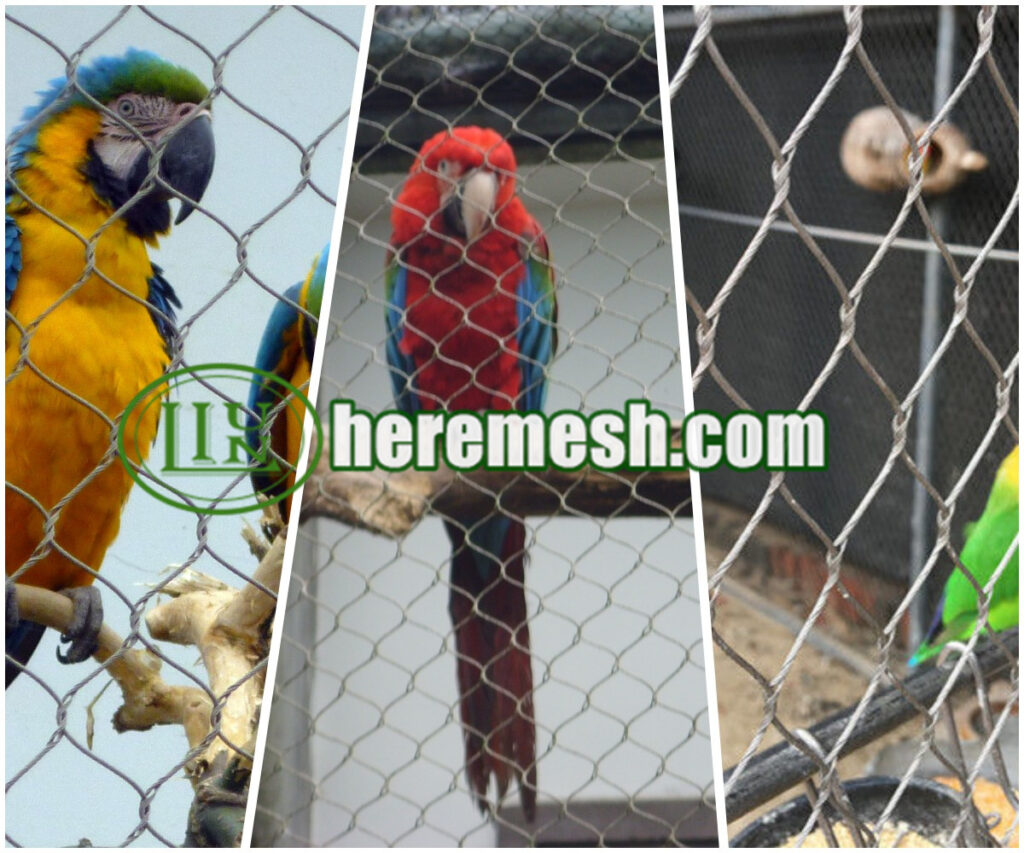
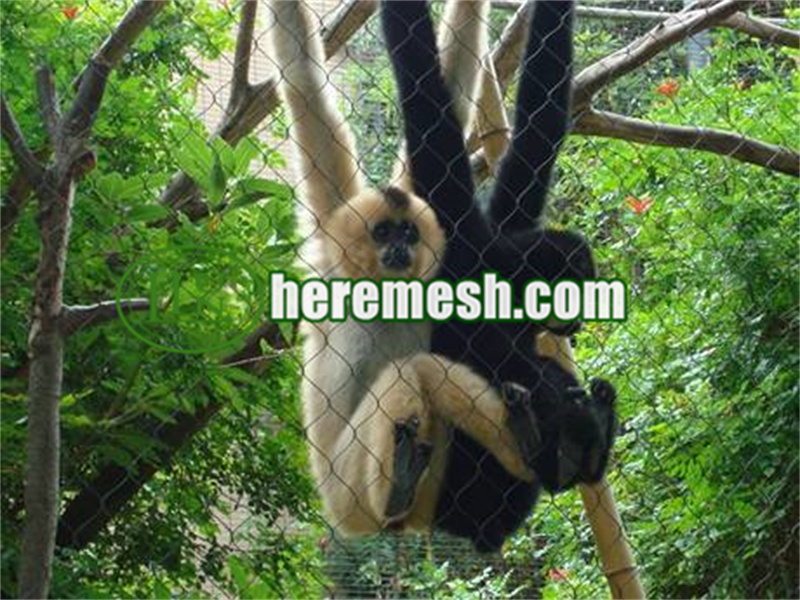
Species-Specific Requirements for Enclosure Mesh
The behavioral traits and physical characteristics of different species within a zoo vary enormously, and enclosure mesh design must be tailored accordingly.
Large Predator Zones (Lions, Tigers, Bears):
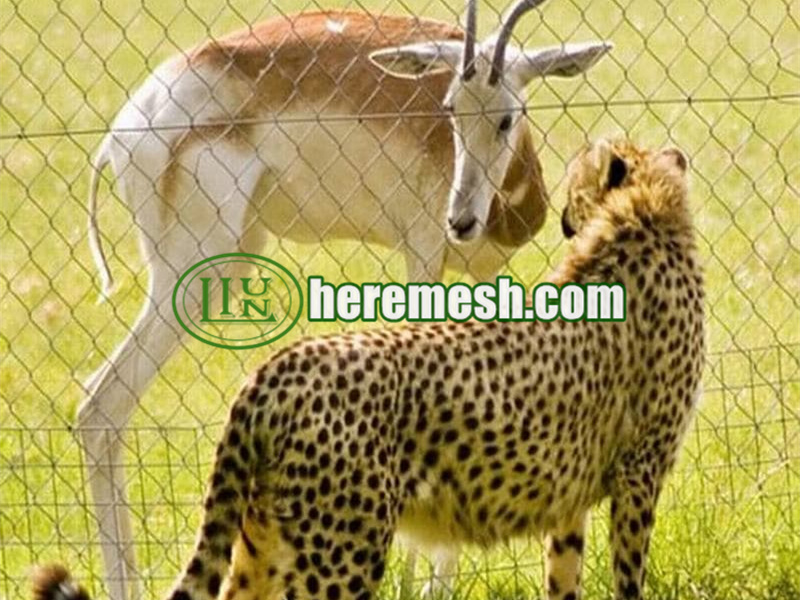
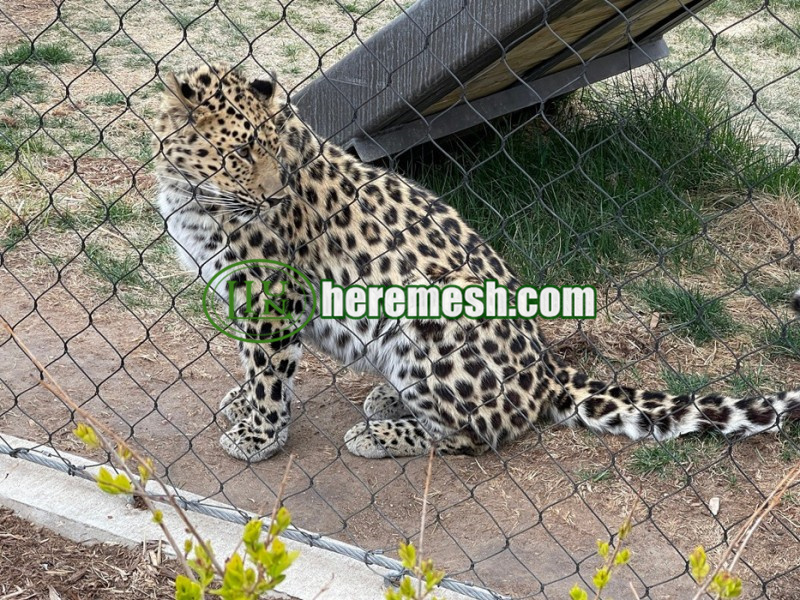
The primary consideration here is impact resistance and break strength. Chinese custom zoo enclosure mesh offers high tensile strength capable of withstanding the forceful charges and biting of large predators. Custom dimensioning also reduces material waste in large-area installations. At the same time, mesh openings must not be too large. They must prevent animals from extending claws or teeth to reach visitors.
Primate Zones (Chimpanzees, Baboons, Gibbons):
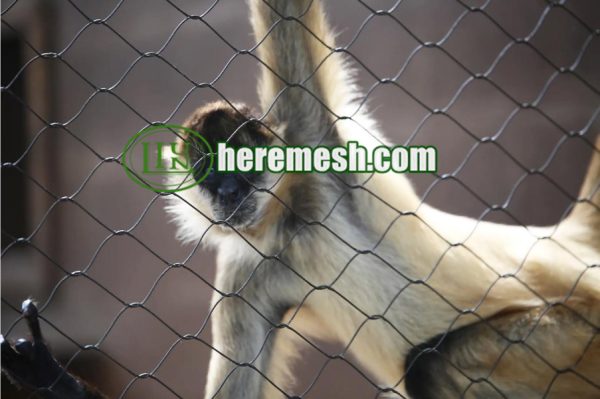
Primates are highly intelligent and dexterous, with a natural aptitude for climbing and probing. Mesh openings must be sized appropriately to prevent fingers and toes from becoming trapped and causing fractures. The mesh surface must also maintain sufficient tension. So it does not sway during climbing, which can cause distress in the animals.
Small Animal Enclosures:
For small to medium-sized animals such as squirrels, the mesh must prevent escape through the openings while still ensuring adequate ventilation and natural light.
Aquatic Mammal Zones (Otters, Sea Lions):
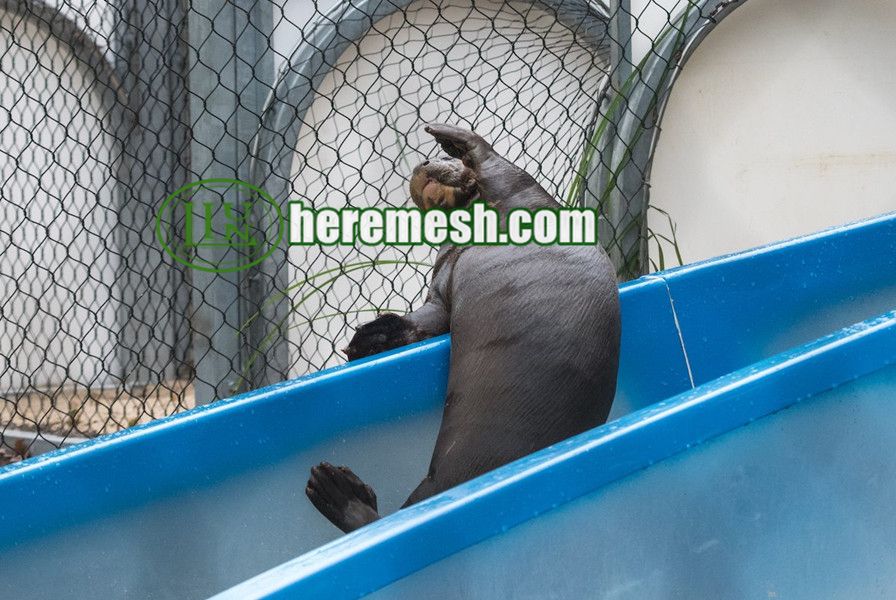
Enclosure mesh in these environments is submerged in water on a long-term basis, requiring a stainless steel grade with strong resistance to chloride ion corrosion — such as 316L — to ensure it remains rust-free over extended use in aquatic conditions. Chinese custom zoo enclosure mesh manufacturers can supply both 304 and 316 grade stainless steel for customers to choose from.
As these examples illustrate, the mesh opening specifications, wire rope diameter, and structural framework required by different animals differ completely. Standard products carry significant limitations — professional customization is the most viable solution when sourcing materials for zoo enclosures.
Chinese Custom Zoo Enclosure Mesh: Why Choose Stainless Steel Rope Mesh?
A growing consensus has emerged in the global zoo enclosure market: stainless steel rope mesh is the optimal material solution for zoo enclosures.
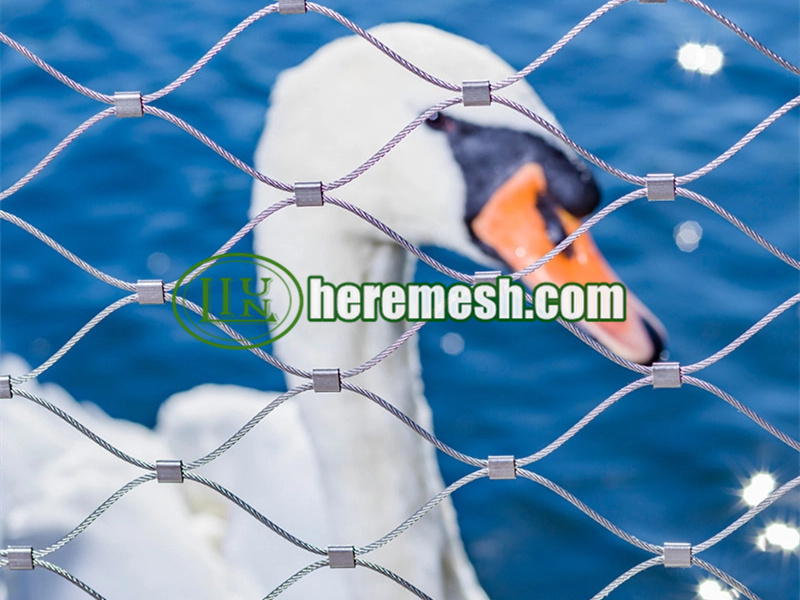
Compared to welded wire mesh, stainless steel rope mesh is constructed from multiple strands of stainless steel wire twisted together, with the ends or nodes secured by stainless steel ferrules. There are no weld points anywhere across the mesh surface. This means each individual rope can bear load independently — even when subjected to localized impact, the mesh will not fracture at weld points the way welded mesh does.
Compared to rigid fencing, stainless steel rope mesh offers a flatter, more flexible surface. Its smooth finish means that animals repeatedly rubbing against it are far less likely to suffer abrasions or coat damage. Additionally, stainless steel rope mesh is highly resistant to localized deformation under prolonged tension. Thanks to its flexible woven structure, it is better able to absorb and distribute tensile forces evenly across the panel.
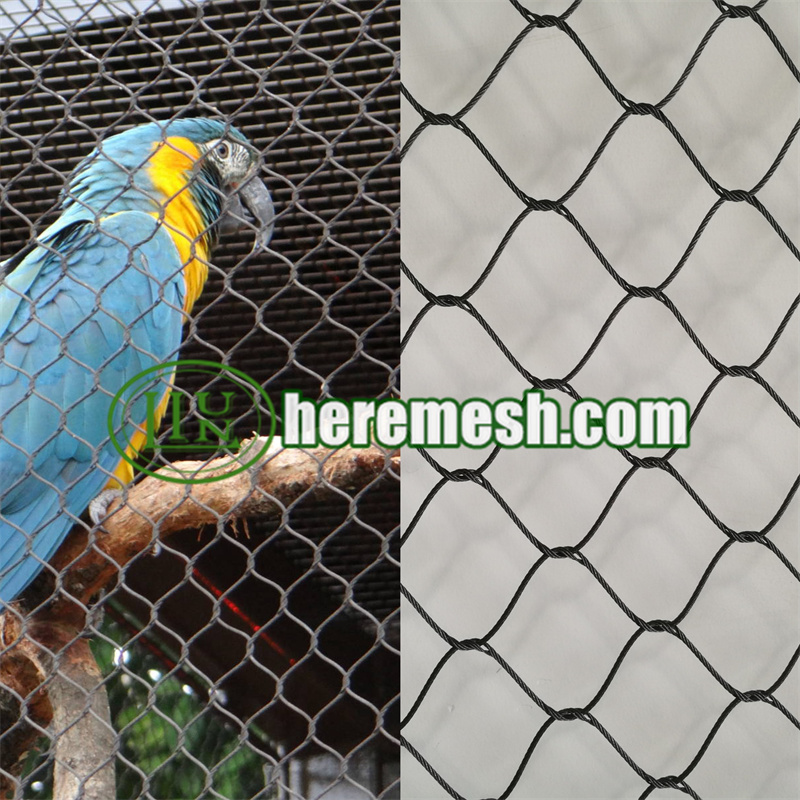
In terms of aesthetics, the advantages of stainless steel rope mesh are equally compelling. Its fine filaments have a diameter that makes them almost invisible from a distance. This significantly enhances the visual transparency of the viewing experience. This is precisely why a growing number of the world’s leading zoos — including Singapore Zoo and Leipzig Zoo — have made stainless steel rope mesh their material of choice when constructing or renovating animal exhibits.
How Stainless Steel Rope Mesh Advances Animal Welfare
Animal welfare is a multi-dimensional concept encompassing physical health, psychological well-being, the freedom to express natural behaviors, and freedom from fear. The material properties of stainless steel rope mesh directly support animals across each of these dimensions.
Corrosion Resistance Protects Animal Health:
Stainless steel rope mesh is manufactured from 304 or 316 grade stainless steel, which does not rust under outdoor conditions. This means that throughout the mesh’s service life of 20 to 30 years, there is no risk of corroded metal fragments flaking off and being ingested by animals. This is particularly important for species that habitually chew or gnaw on enclosure fencing.
High Transparency Reduces Psychological Stress:
An animal’s perception of being “confined” is largely driven by the sense of pressure created by the enclosure boundary itself. Traditional barriers can keep animals in a prolonged state of psychological stress — a state that may even trigger stereotypic behaviors. The high transparency of stainless steel rope mesh visually softens the enclosure boundary, helping animals adapt more readily to their exhibit environment and making them more likely to approach the mesh and engage in natural interaction with visitors.
Natural Light Supports Circadian Rhythms:
Compared to solid barriers or glass walls, stainless steel rope mesh allows abundant natural sunlight to penetrate the enclosure. Natural light plays a vital role in maintaining the health and physiological rhythms of animals.
Impact Absorption Reduces Injury Risk:
When startled or involved in conflict, animals often charge the enclosure mesh at high speed. The flexible structure of stainless steel rope mesh provides a degree of elastic cushioning, effectively reducing the reactive forces that cause injury on impact. This benefit is especially evident in raptor flight cages — birds striking rigid fencing at high speed are highly susceptible to fractures or even death, while the yielding nature of rope mesh dramatically reduces this risk.
Choosing stainless steel rope mesh is therefore not a simple material decision — it is a systematic investment in animal welfare.
Custom Production of Mesh Panels
Mesh Opening Size: This is the most critical customization parameter for stainless steel rope mesh. Common specifications range from 20 mm × 20 mm (for small birds) to 100 mm × 100 mm (for large predators). Custom manufacturers provide recommendations based on the target animal’s body size, behavioral habits, and climbing ability. It is worth noting that smaller mesh openings require more steel per unit area, which drives up costs accordingly. Therefore, the key is precise matching rather than unnecessarily reducing mesh size.
Wire Rope Diameter: The rope diameter directly determines the mesh’s tensile strength and impact resistance. Common diameters range from 1.2 mm to 3.2 mm. For large predators, 2.0 mm and above is recommended. Primate zones typically use 1.6 mm to 2.4 mm. Aviary roof netting rope diameter can use 1.2 mm to 1.6 mm to reduce self-weight.
Panel Dimensions: Panel size customization involves a comprehensive consideration of transportation, installation, and structural design. Standard panels are commonly available in widths up to 20 m. Heights tailored to actual enclosure requirements and a maximum of 8.5 m. For large-scale roof netting projects, custom manufacturers recommend dividing oversized panels into multiple sections to facilitate transportation and on-site installation.
Surface Treatment: The normal finish of stainless steel rope mesh is metallic silver. Some projects require a black oxidation treatment on the mesh surface to reduce reflectivity and help the mesh blend into the surrounding landscape. This surface treatment process enhances the corrosion resistance of the wire rope, though it does come at a higher price than the normal stainless steel finish.
How to Evaluate the Capabilities of a Chinese Custom Zoo Enclosure Mesh Manufacturer?
China’s stainless steel wire rope industry has developed over several decades, forming a complete industrial chain. As global zoo standards for animal enclosures continue to rise, a number of manufacturers focused on product export have introduced stainless steel rope mesh into the zoo enclosure sector.
Today, China has become the world’s leading producer and exporter of stainless steel rope mesh. Chinese manufacturers leverage a comprehensive raw material supply chain, refined weaving craftsmanship, and cost advantages to consistently deliver high-quality zoo enclosure mesh products to markets across Europe, North America, and beyond. When selecting a Chinese custom zoo enclosure mesh manufacturer, a multi-dimensional assessment is essential. Below are the key criteria for determining whether a manufacturer is a reliable partner.
Specialization in Zoo Enclosure Mesh Production
Zoo enclosure mesh is a safety-critical product that differs significantly from industrial mesh in terms of material selection, weaving density, and node treatment. Therefore, when evaluating a manufacturer, it is essential to focus on whether they position zoo enclosure mesh as one of their core business lines.
Manufacturers specializing in this field typically exhibit the following characteristics: they maintain dedicated stainless steel rope mesh weaving equipment and quality inspection protocols; their technical teams understand common animal behaviors and the specific requirements these impose on enclosure mesh. In comparison, general-purpose wire mesh rarely meets the level of specialization and reliability required for animal fencing.
Factory-Direct Pricing Advantage
As custom manufacturers, a factory-direct sales model can significantly reduce total procurement costs. Direct supply from the factory eliminates intermediary markups, while also enabling more efficient quality control and delivery schedule communication.
Furthermore, China holds a clear global advantage in raw steel and weaving processing costs. For large-scale zoo renovation projects, this price differential translates into substantial budget savings.
Delivery Time Assurance
Large zoo projects operate on tight construction schedules, and enclosure mesh is a critical milestone following the civil engineering phase, making a manufacturer’s delivery capability paramount. Professional manufacturers typically operate large-scale production workshops with multiple parallel production lines, enabling faster turnaround times.
When evaluating delivery timelines, it is important to assess the manufacturer’s capacity utilization, raw material inventory levels, and export logistics partnerships. Well-established manufacturers pre-stock commonly used specifications of stainless steel wire and maintain long-term relationships with multiple international logistics providers, ensuring a range of sea, land, and air transport options. From order placement to shipment, standard projects are typically completed within 15 to 30 days. Urgent projects can also be prioritized through production schedule adjustments.
Customization Service Capability
Manufacturers offer customized production of mesh opening size, wire rope diameter, and panel dimensions. Additionally, if customers require custom fittings or accessories, the factory can produce them based on the quantities specified. During the pre-order phase, the manufacturer can provide samples for customer reference, ensuring all product details are confirmed before production. Pre-assembly and inspection are also available. After product delivery, customers can provide feedback directly to the factory if any issues arise.
Conclusion
The trend toward customized zoo enclosure mesh is irreversible. From material selection to specification, from factory production to logistics, the professionalism of every link directly determines whether the final delivered mesh can meet the triple standard of animal welfare, visitor experience, and long-term durability.
As the world’s leading production base for stainless steel rope mesh, China has established an absolute advantage in product quality, price competitiveness, and delivery assurance. For project teams planning new construction or renovation of zoo enclosures, partnering with a truly professional Chinese custom zoo enclosure mesh manufacturer is both an effective means of controlling budgets and a sound strategy for ensuring project quality.