

New Animal Enclosure Materials: Flexible Zoo Netting Solutions

Walk-through Aviary Materials: Air Shipment Delivered
03/13/2026
Shipping Stainless Steel Bird Aviary Netting for Zoo Aviary Exhibits
03/26/2026In the fields of animal breeding, exhibition and protection, enclosures are indispensable core facilities. They not only need to build a solid safety barrier, but also need to take into account environmental aesthetics and animal welfare, while meeting the practical needs of human observation and management. With the iterative upgrading of material technology, stainless steel zoo netting has gradually replaced traditional enclosure materials due to its unique performance advantages. In fact, the reason why flexible zoo netting stands out is mainly because of its performance in key dimensions such as safety, durability, aesthetics, and animal friendliness.
Safety Strength and Zero Risks
The core requirement of animal enclosures is “safety”, which means preventing animals from escaping, resisting animal impacts, avoiding harm to animals from the enclosures themselves, and ensuring the safety of personnel. The stainless steel wire rope netting achieves a dual breakthrough in “protection” and “friendliness”. In comparison, the safety performance of the flexible zoo netting can be regarded as a “benchmark”.
Firstly, it is made of high-quality stainless steel wire ropes. And each single wire rope diameter can withstand tens of tons of tension. The overall tensile strength is high and the impact resistance is strong. With exceptional tensile strength, it can effectively withstand the impact and biting of large animals, thus eliminating any risk of escape. Secondly, the flexible zoo netting features woven or ferrule connections, with a smooth, burr‑free surface that is highly animal‑friendly. Its flexible structure provides effective elastic buffering. When animals collide with the enclosure, the netting absorbs part of the impact force, greatly reducing the risk of injury. In addition, the mesh apertures of the stainless steel wire rope netting can be flexibly customized according to the animal’s size, fundamentally eliminating the safety hazards brought by the enclosures themselves.
Long-Term Benefits
Most animal enclosures are set up in outdoor environments and are exposed to complex conditions for a long time. Therefore, the durability of the enclosure materials directly determines the lifespan and overall cost of the enclosure.
The durability of flexible zoo netting is truly “long-lasting and durable”. It is made of high-quality stainless steel materials such as 304, 304L, 316, and 316L. It has extremely strong corrosion resistance and rust prevention properties. It can effectively resist the erosion of various complex environments such as rain, moisture, etc. Even in coastal areas with high salt spray and humidity, it can remain intact for a long time. At the same time, the flexible zoo netting has excellent fatigue resistance and impact resistance. It remains intact even after prolonged hitting, climbing, and gnawing by animals. Its lifespan can reach 20-30 years. What’s more, during use, stainless steel wire rope mesh requires almost no maintenance, significantly reducing maintenance costs.
Transparent and Natural
Whether it is a zoo or a bird park, the aesthetic appeal of the enclosures is an important consideration. They not only need to serve a protective function but also need to blend in with the surrounding environment to enhance the overall visual effect. Traditional enclosure materials generally have significant deficiencies in terms of aesthetics, while the stainless steel rope netting achieves a perfect balance between protection and aesthetics.
The appearance of wire mesh is rough.It will rust and discolor over time, impairing both appearance and environmental harmony. The iron enclosure has a hard texture and is visually cold, and it cannot adapt to complex site shapes, with limited decorative value.
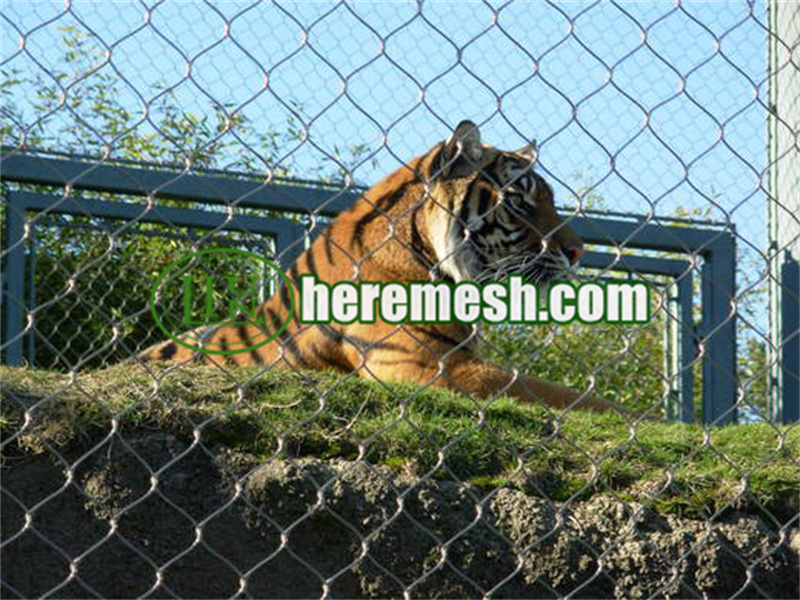
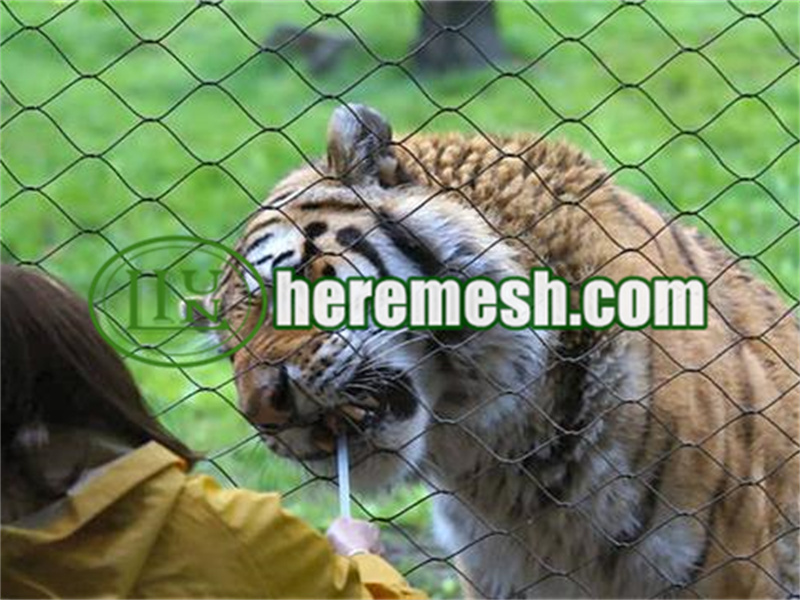
The aesthetic advantage of the stainless steel rope netting is extremely prominent. It adopts a diamond-shaped grid design, which can maximize the transparency of views both inside and outside the enclosure, without blocking the view. In zoo scenarios, visitors can clearly observe the animals, bringing people closer to the animals. At the same time, it can also provide animals with a wider field of vision, reducing the anxiety and stress reactions caused by closed vision. In addition, the stainless steel rope netting has a luxurious appearance, novel styles, and fine metallic texture. The color can be customized according to needs (such as original color, black, etc.), and can adapt to different environmental styles. Whether it is a modern zoo, a park, or a scenic area, it can perfectly integrate and has both ornamental value and decorative value.
Animal Friendliness
The design of animal enclosures should not only take into account human needs, but also respect the living habits of animals and ensure their welfare. Traditional enclosure materials often neglect the needs of animals and cause interference with their living habits. However, stainless steel rope nets fully consider the friendliness of animals and become the “guardian” of animal welfare.
The flexible structure design of stainless steel rope nets fully respects the living habits of animals. It has excellent flexibility and can be stretched, twisted, and folded at will. It can be flexibly customized according to the shape of the site and is suitable for various complex sites, providing animals with a broader and more free activity space.
For primates that like climbing, the surface of stainless steel rope nets is smooth and has a certain friction, making it convenient for animals to climb and move, and can meet their climbing habits. For animals that like running, the buffering effect of the flexible mesh surface can avoid injuries when animals collide. In addition, stainless steel rope nets are environmentally friendly, do not release harmful substances, and do not cause harm to the skin and fur of animals. It can effectively prevent rodents and other animals from gnawing, providing animals with a safe and comfortable living environment.
Customizable and Multi-Scene Adaptable
Different animal scenes and different animal species have different requirements for the specifications and dimensions of the enclosures. Therefore, the flexibility and adaptability of the enclosure materials are of vital importance. Traditional enclosure materials have poor flexibility and cannot meet diverse needs. However, flexible zoo netting has extremely strong flexibility and adaptability, and can easily handle various scenarios.
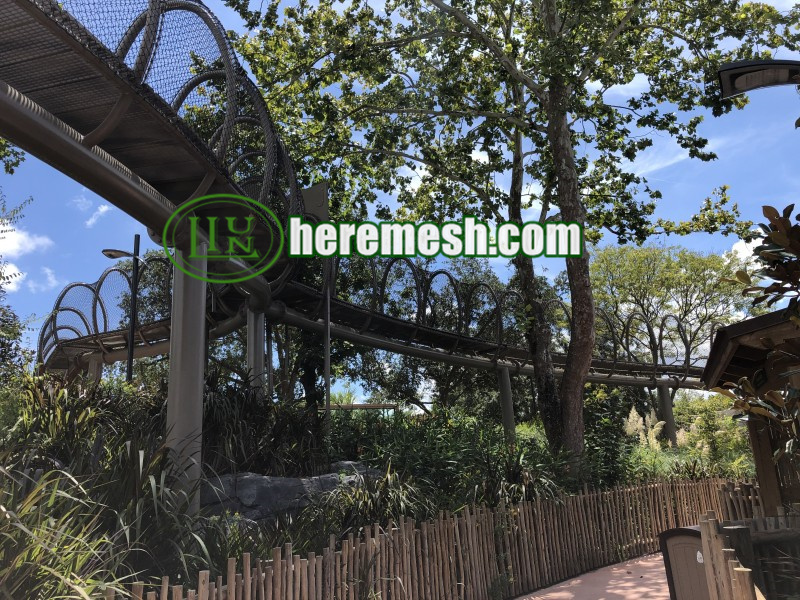
The flexibility and adaptability of stainless steel rope nets can be described as “all-round”. Firstly, their specifications can be customized as needed. The mesh aperture, rope diameter, size, color, etc. can all be flexibly adjusted according to the animal’s size, the size of the site, and the usage scenario. The mesh aperture can range from 20mm × 20mm to 100mm × 100mm, and the rope diameter can range from 1.2mm to 3.2mm for selection and customization. The size can be customized according to the site requirements. Secondly, its flexible structure can adapt to various irregular sites and complex terrains. The flexible zoo netting can easily fit and be installed conveniently. In addition, the installation method of stainless steel rope nets is flexible and diverse, such as using column fixation, wall fixation, and other methods.
Material Guide
The configuration of the stainless steel animal enclosure netting directly determines its protective performance, durability, and adaptability. Different project scenarios and animal types have different requirements for configuration. Choosing the correct configuration can ensure the safety and durability of the enclosure, while reducing the overall cost and avoiding safety hazards or resource waste caused by improper configuration. The following provides a flexible zoo net selection guide from several aspects to help you choose the correct configuration for your project.
The material of the stainless steel animal enclosure net mainly includes 304, 304L, 316, and 316L. Different materials have different corrosion resistance, strength, and prices. The selection of the material should be based on the environmental corrosion, animal type, and budget of the project.
304 Stainless Steel
This is the most commonly used stainless steel material, with good corrosion resistance and rust prevention performance. The price is relatively affordable and suitable for most conventional scenarios, such as zoos, bird parks, etc. The service life of 304 stainless steel can meet the durability requirements of most projects, and it is the most cost-effective choice.
304L Stainless Steel
It is an optimized version of 304 stainless steel, with a lower carbon content and slightly better corrosion resistance than 304 stainless steel. It is suitable for humid and slightly corrosive environments, such as areas with frequent rainfall. The price is slightly higher than 304 stainless steel and is suitable for projects with certain requirements for corrosion resistance but a limited budget.
316 Stainless Steel
Its corrosion resistance is far superior to 304 stainless steel, enabling it to withstand highly corrosive environments such as salt spray, acid, and alkali. It has higher strength. It is ideal for coastal areas with high salt spray, rainy and foggy regions, large zoos, and animal reserves. Take coastal zoos as an example. Due to long-term exposure to salt spray, 316 stainless steel offers excellent rust protection and prolongs the service life of enclosures, although it is more expensive than 304 stainless steel.
316L Stainless Steel
It is an optimized version of 316 stainless steel, with a lower carbon content and better corrosion resistance and toughness. It is suitable for strong corrosive environments, such as large carnivore enclosures in coastal high-salt fog areas, wetland reserves, etc. The price is high, but it has the longest service life, up to 50 years, and is suitable for high-end projects with extremely high requirements for durability and corrosion resistance.
Wire Diameter Guide
The rope diameter is one of the core factors determining the strength of the stainless steel rope netting. The thicker the diameter, the higher the strength, and the stronger the resistance to impact and gnawing. The thinner the diameter, the better the permeability, but the strength will decrease. The appropriate rope diameter should be selected based on the size and ferocity of the animals, balancing the strength and permeability to ensure the safety of the animals.
Common rope diameters and applicable scenarios:
1. 1.2mm – 1.6mm: This is a fine rope diameter, mainly suitable for small animals, birds, etc. These animals have small sizes and weak attack power. The net surface with a fine rope diameter has good permeability, can ensure air circulation, and can effectively prevent them from escaping. For example, the bird enclosure of Bird Talk Park, you can choose a rope diameter of 1.2mm – 1.6mm.
2. 2.0mm – 2.4mm: This is a medium rope diameter, mainly suitable for medium-sized animals, such as medium-sized birds (such as peacocks, parrots), primates, etc. These animals have medium-sized sizes and weaker attack power than large animals. The medium rope diameter can balance strength and permeability, preventing them from escaping while ensuring clear vision, and will not harm the animals. For example, the wolf enclosure, monkey enclosure, you can choose a rope diameter of 2.0mm – 2.4mm.
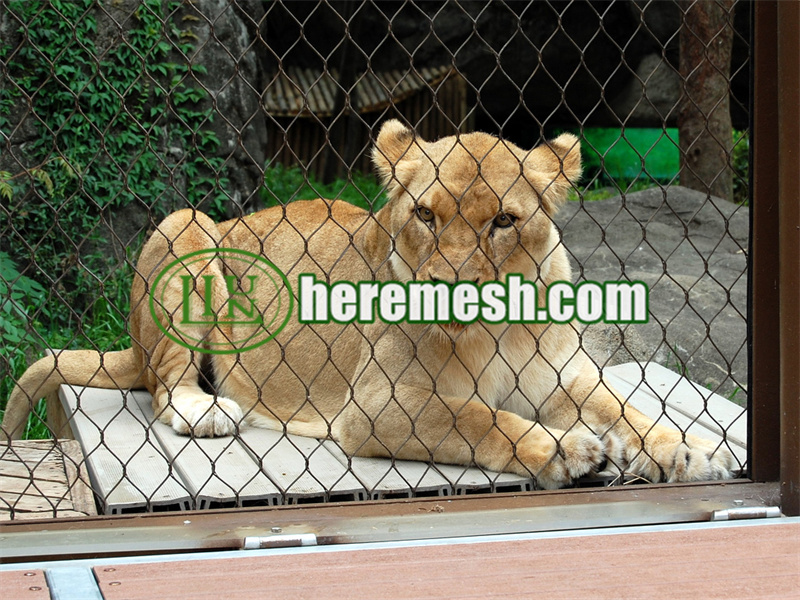
3. 3.2mm and above: This is a thick rope diameter, mainly suitable for large animals, fierce animals, such as tigers, lions, leopards, etc. These animals have large sizes, strong attack power, and strong impact force. The net surface with a thick rope diameter has high strength, can effectively resist their impact, gnawing, and prevent them from escaping. For example, large predator enclosure, you can choose a rope diameter of 3.2mm and above.
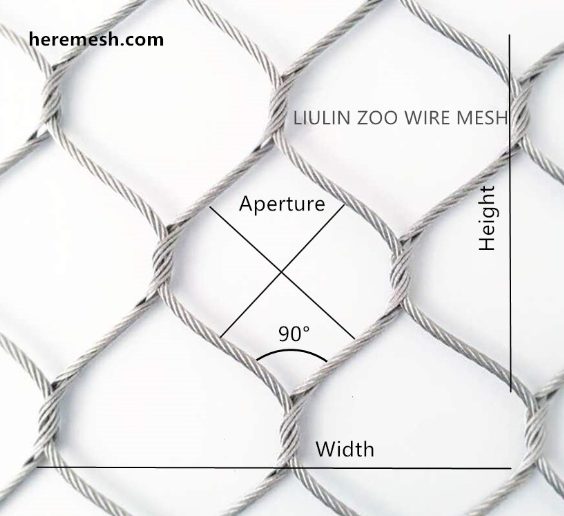
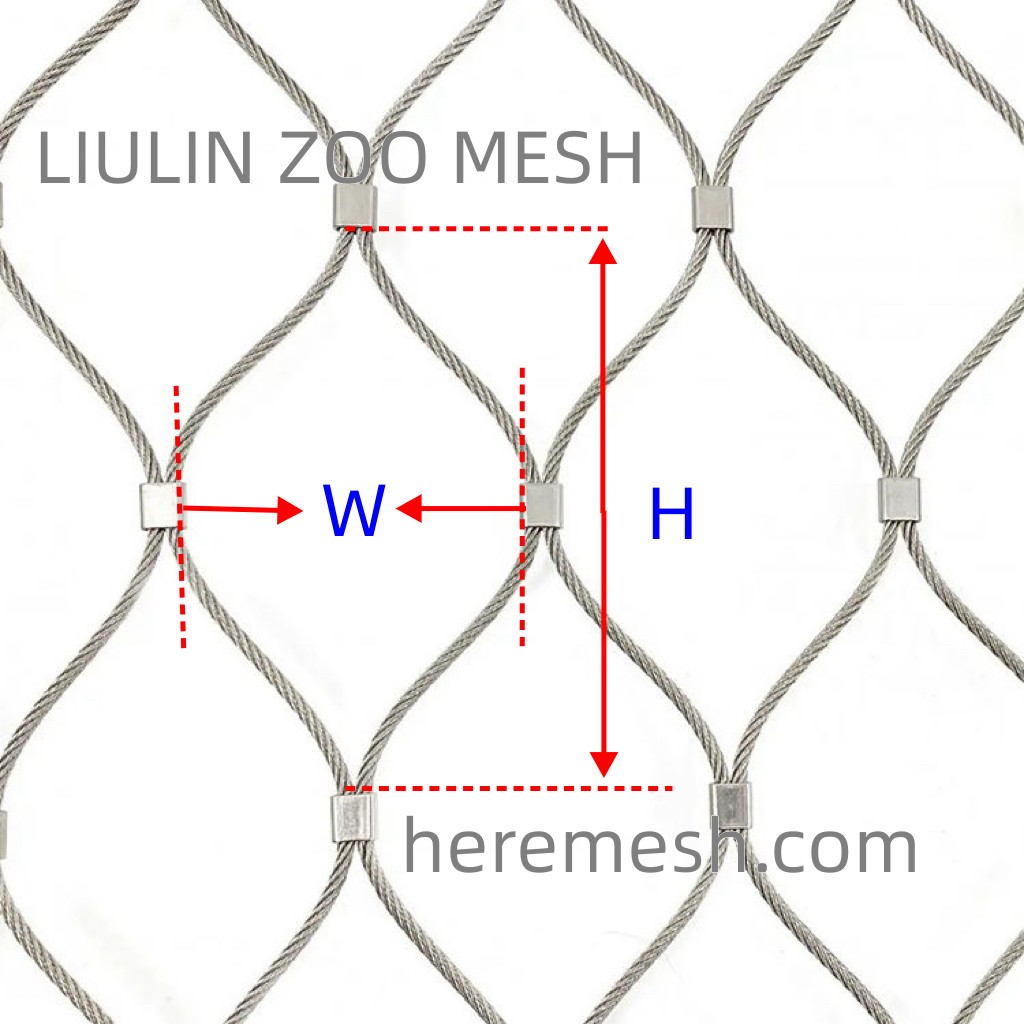
Aperture Guide
The mesh aperture directly determines the protective effect of the enclosure. The core is “preventing animals from escaping and preventing them from getting stuck”. If the aperture is too large, animals may be able to squeeze out and escape. If the mesh opening is too small, animals may get their limbs stuck. It also reduces ventilation and raises costs. The appropriate mesh aperture should be selected based on the animal’s size.
Common mesh aperture and applicable scenarios:
1. 20mm – 25mm: Mainly suitable for small birds. These animals are small in size. A fine mesh aperture can effectively prevent them from escaping without trapping their limbs.
2. 30mm – 38mm: Mainly suitable for small animals and medium-sized birds. These animals are medium-sized. The mesh aperture can prevent their escape without trapping their limbs, while ensuring good permeability.
3. 51mm – 76mm: The most widely applicable, mainly suitable for medium-sized animals and medium-sized predators. These animals are medium‑sized. The mesh aperture prevents them from escaping, ensures good permeability, and avoids trapping their limbs. For example, tiger enclosures, wolf enclosures.
4. 90mm – 100mm: Large mesh aperture. Mainly suitable for large predators (such as tigers, lions, and leopards). These animals have large bodies, and the large mesh aperture can ensure permeability, allowing them to have an open view, while effectively preventing them from escaping. For example, tiger and lion enclosures, giraffe and zebra enclosures.
Installation Accessories
The installation accessories are the key to ensuring the stability of the stainless steel animal enclosure netting. Different installation scenarios and site conditions require the selection of different installation accessories. Commonly used installation accessories include columns, clamps, connectors, and fixatives, and the appropriate installation accessories should be selected based on the installation method and site conditions.
1. Columns: Columns are the core support of the enclosure, responsible for fixing the netting and ensuring the stability of the enclosure. Commonly used column materials include stainless steel columns, galvanized columns, and concrete columns. Users should choose based on site conditions and the impact force of the animals. Stainless steel columns are corrosion-resistant, aesthetically pleasing, and coordinate well with the stainless steel netting, making them suitable for most scenarios.
2. Clamps and connectors: They are used to fix the netting to the columns and between the netting. Commonly used include stainless steel clamps and stainless steel connectors. The clamps and connectors should be selected to match the rope diameter and material to ensure a secure connection and avoid loosening or detachment. For cross-woven netting, stainless steel clamps are recommended for fixation. For clamped connection netting, matching stainless steel connectors can be selected to ensure a secure connection.
3. Fixatives: They are used to fix the columns to the ground or walls. Commonly used include expansion bolts and anchor bolts.
Conclusion
In conclusion, the flexible zoo netting, with its five core advantages of safety protection, long-term durability, aesthetic transparency, animal friendliness, and flexible adaptability, has become the preferred material for modern zoo enclosures. It has perfectly addressed the shortcomings of traditional enclosures in terms of safety, durability, animal welfare, and environmental integration.
In actual project selection, we need to choose materials scientifically. We should take into account environmental corrosiveness, animal size and ferocity, protection requirements, and installation scenarios. This includes selecting the right materials, wire diameters, mesh apertures and installation accessories. This ensures the safety, stability and long‑term durability of the fence. It also considers animal welfare, viewing experience and cost control. In this way, we can provide efficient, safe and friendly enclosure solutions for zoos and various animal breeding sites.