

Walk-through Aviary Materials: Air Shipment Delivered

Stainless Steel Rope Netting: The Invisible Guardian for Animal Protection
03/03/2026
New Animal Enclosure Materials: Flexible Zoo Netting Solutions
03/20/2026Walk-through Aviary Order
This week, we successfully completed production and shipped the order for the walk-through aviary project at a renowned zoo in United States. The client conducted rigorous multi-party comparisons over a period of three months before ultimately selecting our mesh as the core construction material.
The origins of this order can be traced back to an animal enclosure project at the same zoo last spring. Our stainless steel rope nets, renowned for their exceptional corrosion resistance and transparent visual effect, immediately caught the attention of the aviary project team. At that time, the zoo was facing critical challenges with their newly designed walk- through aviary project. Traditional materials either lacked durability or compromised visitor viewing experiences. Additionally, avian safety protection was an absolute non-negotiable requirement.
When project leaders discussed potential material solutions, they discovered our stainless steel rope nets as the ideal answer. This led to an official inquiry from the client.
During the initial order coordination phase, the client imposed stringent specifications on the product. The rope nets had to be manufactured from 316 stainless steel, with a mesh aperture of 25.4mm × 25.4mm. These precise specifications were designed to achieve two conflicting goals simultaneously: firstly, to resist the gnawing of large birds such as macaws, and secondly, to ensure that birds would not damage their feathers during flight collisions. Furthermore, given the project’s coastal location, extreme resistance to salt spray corrosion was imperative.
To meet these exacting standards, we provided the client with sample products for evaluation, accompanied by detailed specification sheets and case studies from previous zoo projects. This allowed the client to visually verify our product quality and technical prowess. After meticulous consideration and comprehensive comparison, the client officially placed their trust in us to supply the core materials for this major project.
Rigorous Order Process
The rigor of foreign trade orders was fully demonstrated in this project. Every link, from the calculation of quotations to the item-by-step verification of proforma invoices and finally to contract confirmation, was without the slightest room for error.
In the quotation, we clearly listed the product material, specifications, unit price, total price and transportation method. When confirming the order, we conducted multiple rounds of communication with the client on key information such as material standards, mesh size, panel dimensions and delivery cycle, and finally reached a consensus, laying a solid foundation for the subsequent smooth delivery.
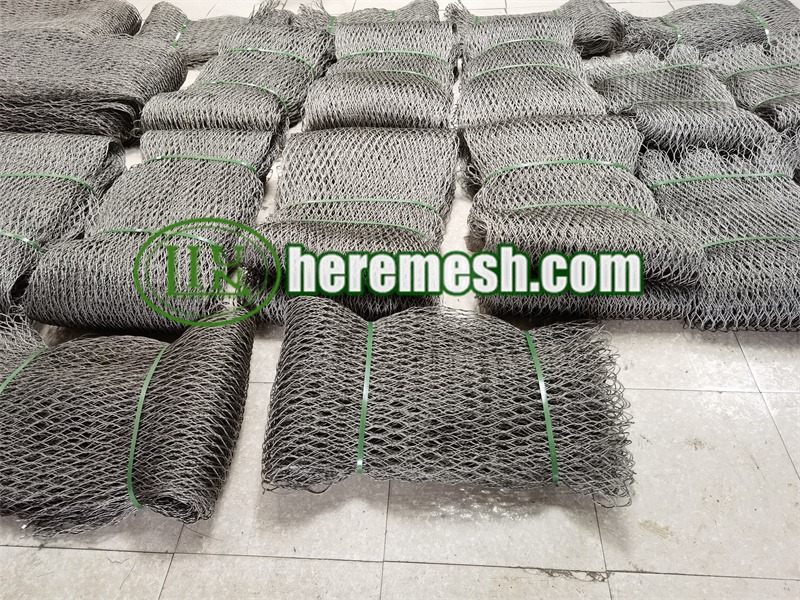
During the production phase, we prioritized this order. From raw material procurement to finished product delivery, we ensured strict product quality. All raw materials for mesh panels were produced using 316 stainless steel wire ropes. The weaving process adopted a cross-weaving technique, and each mesh panel underwent tension testing to ensure a flat mesh surface and firm nodes. Before the finished products left the warehouse, quality inspectors checked the specifications and quantities one by one to ensure they were qualified.
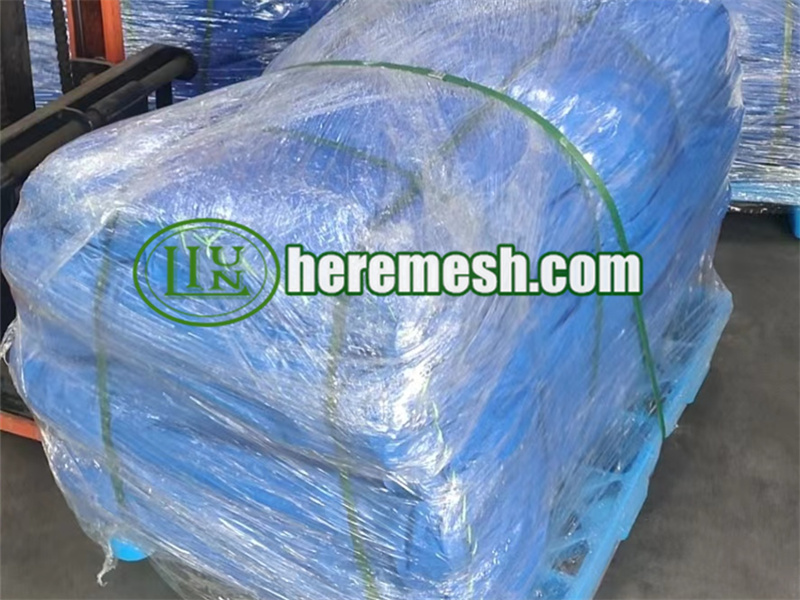
Meanwhile, the foreign trade order follow-up staff promoted the preparation of logistics and customs clearance in parallel. According to the client’s requirements, air transportation was determined as the mode. We contacted cooperative international logistics suppliers in advance to confirm the shipping space and transportation routes. We also prepared a full set of documents for customs clearance, including contracts, invoices and packing lists, to ensure a smooth customs clearance process.
From order signing to finished product delivery, the entire process was completed 5 days ahead of schedule, fully demonstrating our efficient production capacity.
Stainless Steel Rope Net: The Core Building Material for Walk-through Aviary
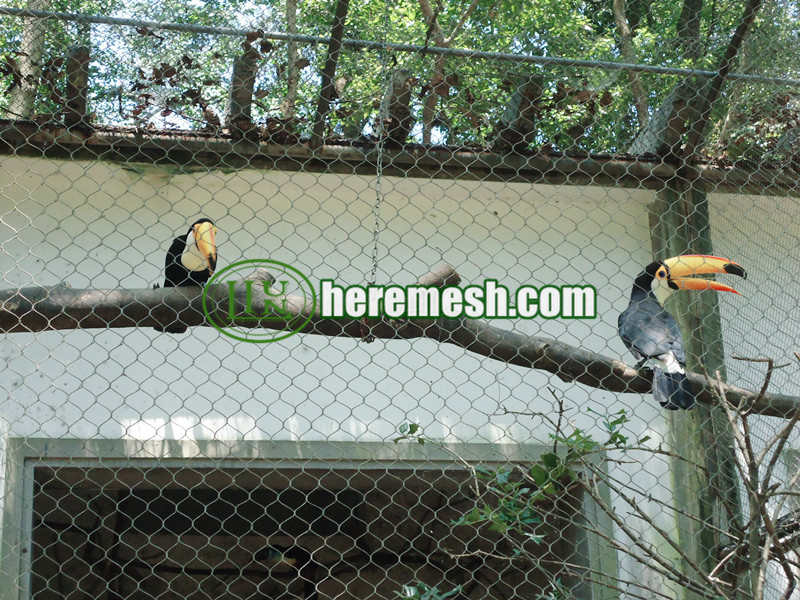
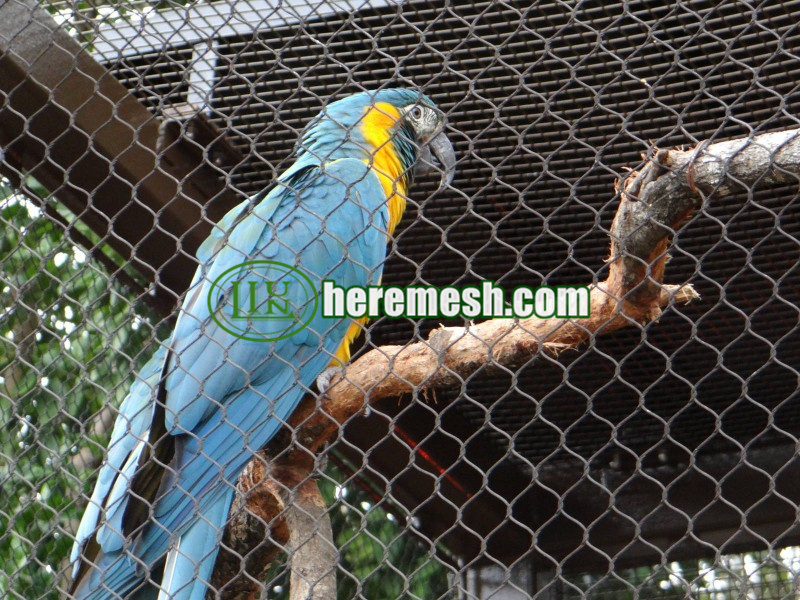
Walk-in aviaries are common in zoos. These scenic, large-scale structures bring visitors close to nature and serve as homes for various bird species. Typically supported by steel columns and cables, they are covered with stainless steel rope nets. This new type of facility imposes extremely high requirements on the safety, durability, and aesthetic appeal of building materials. Leveraging its unique performance advantages, stainless steel rope net has become the ideal choice for such projects, earning itself the reputation as the “golden material for aviary construction” in the industry.
Core Material & Craftsmanship
The stainless steel rope net customized for this walk-through aviary project is made of 316 stainless steel. Compared to standard 304 stainless steel, it contains an additional 2-3% molybdenum element, which enhances its resistance to chloride corrosion by more than 2.3 times. This makes it particularly suitable for coastal or high-humidity environments. The rope structure adopts a 7×7 design, balancing both strength and flexibility. With a rope diameter of 1.6mm, it can resist the gnawing of large birds while maintaining sufficient flexibility.
The mesh is designed to a precise dimension of 25mm × 25mm — it prevents small birds from escaping while ensuring unobstructed views for visitors, eliminating visual blockages. The mesh panels are crafted using a cross-weaving technique with a knot-free design. This not only avoids sharp edges that could scratch the birds’ delicate claws but also ensures uniform force distribution, significantly boosting the overall structural stability.
Key Features Suitable for Walk-through Aviary
Ultimate Safety: 100% non-toxic and eco-friendly, with no harmful substance emission, complying with the safety standards of international animal protection associations. The soft and elastic mesh surface acts as a buffer when birds collide during flight, protecting their feathers and skin. The firm node connections provide high impact resistance, capable of withstanding collisions from large birds and effectively eliminating escape risks.Ultra-Long Durability: With a service life of over 30 years under normal working conditions, it far outperforms galvanized nets (3-5 years) and nylon nets (5-8 years). Resistant to acids, alkalis, UV rays, and salt spray corrosion, it will not rust or crack even in long-term humid or coastal environments, greatly reducing maintenance costs.
Superior Aesthetics: The natural stainless steel finish offers an elegant, lightweight appearance that blends seamlessly with the natural surroundings without compromising the overall landscape design. With a mesh transparency rate of 92%, visitors can enjoy a comprehensive view of bird activities, enhancing their viewing experience.
Flexible Installation: Highly flexible, it can be bent and cut to fit curved or irregular aviary structures, accommodating various design schemes. Mesh panel dimensions are customizable. It is recommended that single panels do not exceed 8 meters in width and 20 meters in length to facilitate transportation and installation.
The Unrivaled Top Choice for Aviary Construction
Among the common alternative materials for walk-through aviary construction—such as galvanized steel wire nets, nylon nets, and aluminum alloy nets—stainless steel rope nets stand out significantly in terms of safety, durability, cost-effectiveness, and aesthetic appeal. Through a multi-dimensional comparison, it is evident that stainless steel rope nets offer superior advantages, making them the most reliable option.
Comparison with Galvanized Steel Wire Nets
Galvanized steel wire nets are traditional materials for animal enclosures, designed to prevent corrosion by coating the wire surface with a layer of zinc. However, they have obvious shortcomings:
Inadequate Durability: The zinc coating easily peels off at welding points, stress points, or in humid environments, leading to rusting of the base material. They typically need replacement every 3-5 years, resulting in a far higher total cost than stainless steel rope nets.
Compromised Safety: Welded nodes are prone to breakage, and sharp edges may injure birds. Their resistance to gnawing is weak; large birds can easily peck through them, posing escape risks.
High Maintenance Costs: Rust removal and repainting are required promptly after rusting, leading to high labor costs. Frequent replacements also disrupt the normal operation of the aviary.
In contrast, stainless steel rope nets completely eliminate these issues. The 316 stainless steel material fundamentally solves the corrosion problem, eliminating the need for frequent maintenance. The knot-free design avoids sharp edges, and its ultra-long 30-year service life significantly reduces the total lifecycle cost.
Comparison with Nylon Nets
Nylon nets, once used in some small aviaries due to their low cost and light weight, are unsuitable for large walk-through aviary:
Easy Aging and Damage: Long-term exposure to ultraviolet rays and high temperatures causes nylon nets to gradually become brittle and crack, with a service life of only 5-8 years. They have poor acid and alkali resistance, and bird droppings can easily corrode and deform them.
Low Safety: Low tensile strength means the net surface may rupture when large birds collide with it. It softens in high-temperature environments, failing to ensure protective effects.
Poor Aesthetics: Monochrome and prone to fading and deformation, nylon nets detract from the overall aesthetic of the aviary.
Stainless steel rope nets, however, boast excellent anti-aging and anti-corrosion properties, maintaining stable performance in various environments. Their transparent texture complements the natural surroundings, offering both safety and aesthetic appeal.
Comparison with Aluminum Alloy Nets
While aluminum alloy nets are lightweight and aesthetically pleasing, they have notable limitations:
Weak Impact Resistance: Lower tensile strength than stainless steel rope nets means the net surface is prone to deformation and damage from frequent collisions by large birds, compromising protective effects.
Higher Costs: The raw material price of aluminum alloy is higher than stainless steel. Additionally, its susceptibility to deformation leads to high post-maintenance costs, resulting in a higher total lifecycle cost than stainless steel rope nets.
Stringent Installation Requirements: Aluminum alloy nets have high hardness, making them difficult to adapt to irregular structures. Cutting them easily causes edge cracking, increasing installation difficulty.
Stainless steel rope nets, with their superior flexibility, can easily adapt to various complex structures, enabling easy installation. Their strong impact resistance provides a safer habitat for birds.
Total Lifecycle Cost Analysis
Stainless steel rope nets offer the lowest total lifecycle cost. Despite a higher initial cost, they eliminate the need for replacements for 15 years, delivering the highest overall cost-performance ratio. In contrast, galvanized steel wire nets and nylon nets, though low in initial cost, have high replacement and maintenance costs, eventually surpassing stainless steel rope nets in total cost. Aluminum alloy nets, with high initial and maintenance costs, provide the worst cost-performance ratio.
Supporting Diverse Projects
Thanks to its exceptional performance, stainless steel rope net is not only the core material for walk-through aviary projects but also widely applied across various sectors such as zoos, marine parks, scenic spots, and municipal construction. It supports the safe construction and efficient operation of diverse projects, earning its reputation as the industry-recognized “Flexible Protection Expert.”
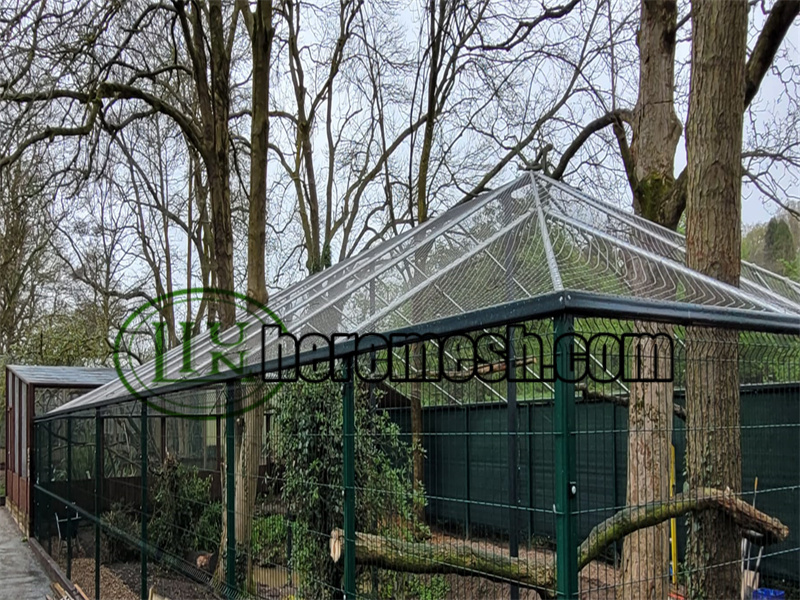
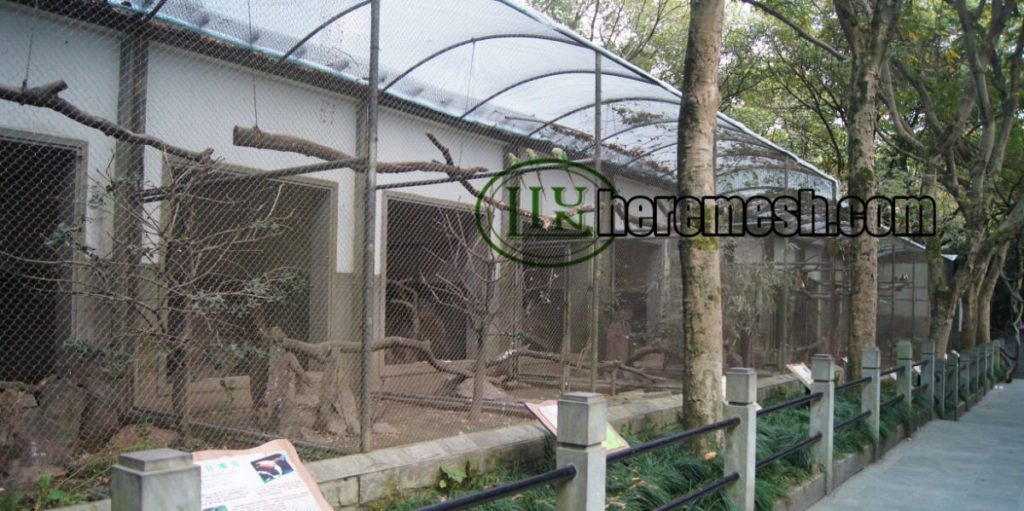
Zoo Sector
Large Animal Enclosures: Used for enclosures of ferocious animals like tigers, lions, and leopards. With a rope diameter of 3.2mm, it can withstand impacts from large predators and prevent escape. Meanwhile, its transparent design facilitates visitor viewing, enhancing the aesthetic appeal of the enclosures.
Primate Enclosures: Designed for monkeys, orangutans, and other highly intelligent and destructive animals. Stainless steel rope nets with a diameter of 1.6-3.2mm effectively prevent animals from damaging the enclosures or escaping.
Avian Exhibits: In addition to walk-in aviaries, it is suitable for parrot houses, peacock parks, flamingo houses, etc. The rope diameter and mesh size can be adjusted according to the size of birds, balancing safety and ornamental value.
Wildlife Reserves: Applied for isolation and protection in wildlife activity areas. It resists harsh environments, has a long service life, and reduces long-term maintenance costs.
Scenic Spot & Park Sector
High-Altitude Walkway Protection: Used as protective nets in scenic spot glass walkways, cliff walkways, etc. It ensures visitor safety without damaging the natural landscape.
Landscape Decoration: Applied for fences and flower rack decorations in parks and botanical gardens. Custom-shaped according to design needs, it creates unique landscape effects while serving both protection and decoration.
Marine Parks: Used in aquatic animal enclosures such as dolphin, whale, and penguin habitats. It resists seawater corrosion, is non-toxic and eco-friendly, and ensures animal health.
Municipal & Construction Sector
Bridge Protection: Used as fall-proof and decorative nets on both sides of bridges. Its lightweight design reduces bridge load-bearing capacity, while corrosion resistance makes it suitable for outdoor environments.
Stadium Fences: As protective fences in stadiums, it has high impact resistance to withstand ball collisions and is transparent without affecting audience views.
Architectural Decoration: Used for decorative protection of building exteriors, balconies, and stair handrails. Its high-end texture enhances the overall appearance of the building.
Airports & Highways: As bird-proof nets in airports and protective nets on highways, it resists wind and corrosion, with a long service life.
Exhibition Halls & Shows: Used as partitions and decorative nets in exhibition halls. It is elegant and adaptable to various exhibition layouts.
Conclusion
The successful delivery of the American walk-through aviary project not only fully demonstrates our company’s production strength, efficiency and product quality, but also confirms the core advantages and irreplaceability of stainless steel rope nets in the construction of high-end aviaries. From the strict demand response during order coordination to the rigorous control in the production process and the efficient promotion of logistics, we have won the recognition and trust of customers with professional, meticulous and efficient services.
Thanks to the excellent anti-corrosion performance of the 316 material, scientific specification design, safe and non-toxic product characteristics, as well as its extremely long service life and high cost performance, the stainless steel rope net not only perfectly meets the multiple requirements of freestanding aviaries for safety, durability and visual appeal, but also realizes diversified applications in zoos, scenic spots, municipal construction and other fields, providing safe, reliable and beautiful protective solutions for various projects. In the future, we will continue to deepen product research and development to meet the diverse needs of customers from all over the world with higher-quality stainless steel rope net products.