

Black Oxide Zoo Mesh Shipping to United States

Zoo Mesh Supplier: A Complete Guide to Animal Enclosure Mesh
10/10/2026Order Information
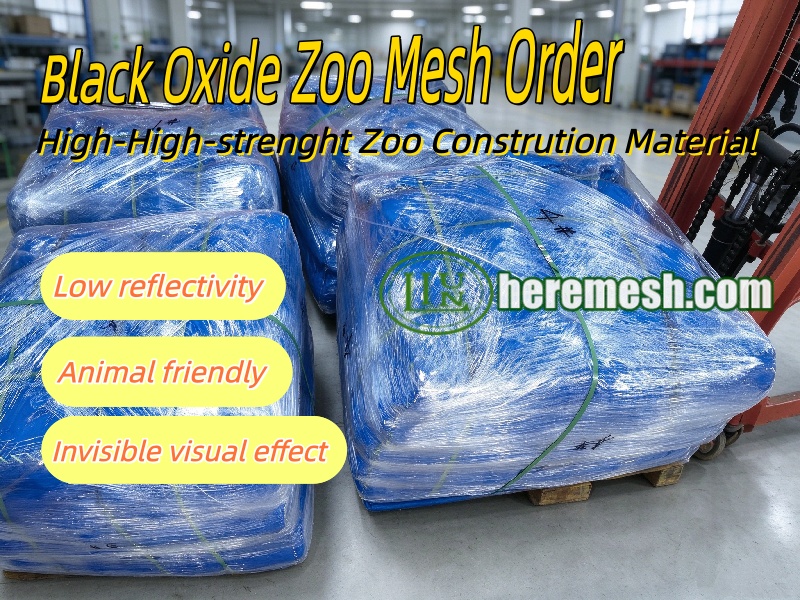
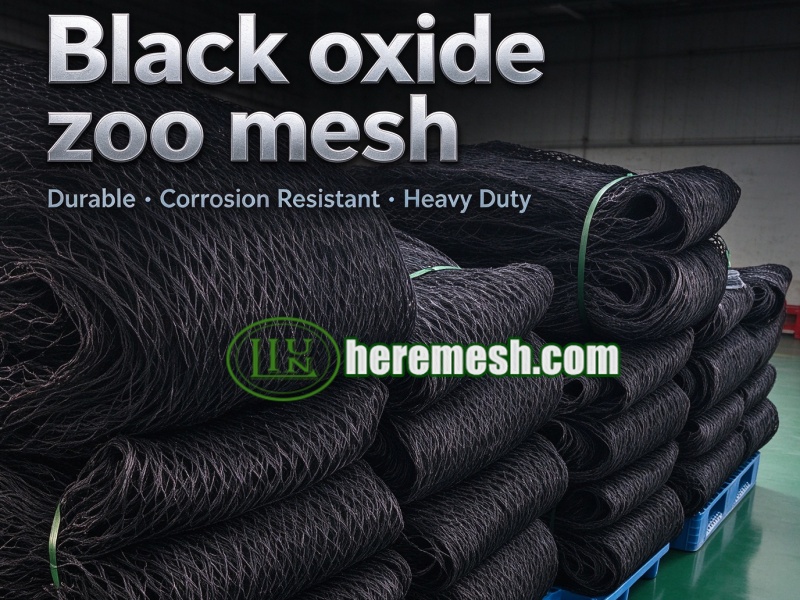
This order for black oxide zoo mesh is specifically intended for a large-animal enclosure protection project at an overseas zoo. The entire enclosure consists of two main components—vertical fencing and a roof netting. The entire enclosure used for isolation and protection within the animal exhibit area. The project imposes extremely high requirements regarding animal safety, visual discretion, and long-term outdoor weather resistance. Consequently, the client ultimately selected black oxide 316 rope netting rather than conventional natural-colored stainless steel rope netting.
The base material for this order is AISI316 stainless steel wire rope with a single-strand diameter of 3.2mm; the mesh size is 51 × 51 mm, with a 90° angle. The finished product’s breaking strength meets the client’s requirements, and the strength at the joints where the mesh panels are assembled is consistent with that of the rope itself, ensuring no breakage occurs. All mesh panels undergo a black oxide treatment, requiring a matte black finish with no glare and uniform color.
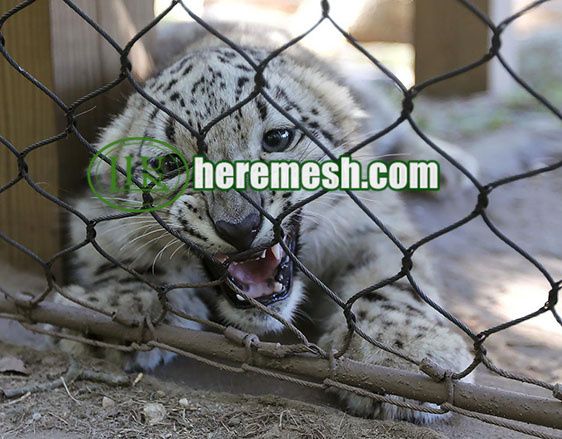
The client’s decision to reject other black finish options was primarily driven by animal safety concerns. Animals may chew on or scratch the enclosure mesh. If spray-painted or PVC-coated surfaces become damaged, plastic fragments or paint flakes could be accidentally ingested by the animals. Risks such as accidental ingestion and poisoning pose major safety hazards in zoo engineering projects. Black oxide mesh carries no risk of coating peeling, which was the primary reason the client selected this solution. Additionally, since the exhibit area is open to visitors, the designer required the cage mesh to be as visually “invisible” as possible to minimize metal glare that could interfere with the viewing experience. Black oxide zoo mesh perfectly meets these landscape design requirements, helping to create a natural environment.
What is Black Oxide?
Many purchasers and designers mistakenly believe that black oxidation is simply a black coating. This is the most common misconception. Black oxidation, also known in the industry as chemical blackening of stainless steel, does not involve applying an additional layer of paint or electroplating to the surface of the wire rope. Instead, it uses chemical agents to induce a chemical reaction on the surface of the stainless steel substrate, transforming the metal’s surface into a dense, black oxide film.
Black oxidation treatment must be performed after the wire rope mesh has been woven. If oxidation is performed before weaving, the bending and folding during the weaving process will cause the oxide layer to crack. When oxidizing large-area mesh panels, it is essential to ensure uniform color across the entire batch, with no color variations, localized whitening, or spots. The oxidation process does not increase the thickness of the wire rope, and the outer diameter of the finished product remains virtually unchanged.
The black oxide film itself has a matte, low-reflective finish, which is the aspect most valued by zoo landscape designers. In addition to its aesthetic benefits, the black oxide film enhances corrosion resistance. At the same time, black oxidation does not alter the mechanical properties of the stainless steel itself. As long as the process parameters are properly controlled, the wire rope’s breaking strength and flexibility will not be reduced, and the rope netting will retain its excellent bending performance.
Black Oxide vs Powder Coated / PVC Zoo Mesh
At the zoo project selection stage, black oxide, powder coating and PVC dipping are the three mainstream black-finish stainless steel cable mesh solutions available on the market. There are significant differences among them in many aspects. These aspects directly determine whether the enclosure is suitable for animal exhibits.
Differences in Process Principles
Spray Coating: Electrostatic powder coating involves applying a layer of powder coating to the surface of the woven mesh, which is then cured at high temperatures. This constitutes an external coating. The coating adheres to metal surfaces, yet its limited adhesion fails under hard friction and sustained animal gnawing.
Plastic Coating: The wire mesh is heated and then immersed in a PVC powder bath, resulting in a thick layer of PVC plastic coating on the exterior of the steel wire rope. The plastic completely envelops the steel wire rope, creating a noticeable coating thickness that alters the rope’s diameter.
Black Oxide: A chemical conversion coating that modifies the metal’s surface without adding an additional coating. The outer diameter remains unchanged, and the coating fuses seamlessly with the substrate.
Animal Safety
Black oxide zoo mesh poses no risk of flaking or debris, eliminates the risk of accidental ingestion and poisoning. It is the preferred solution for high-risk animal enclosures. Spray-applied coatings tend to be thin. Prolonged scratching and bumping by animals can easily cause the paint to peel off. If the paint chips are ingested by the animals, they can cause gastrointestinal damage. The plastic dip-coating is thick and offers short-term wear resistance, but when animals peck at it forcefully, plastic fragments are highly likely to be accidentally ingested. As the plastic ages, it hardens and cracks, and this aging process accelerates in outdoor environments with strong ultraviolet (UV) radiation.
Reflectivity & Landscape Effect
Black Oxidation: Natural matte finish with low reflectivity. No glaring reflections under bright light. The mesh panel offers visual transparency, perfectly complementing the natural exhibition area design.
Spray Coating: The powder-coated surface is relatively smooth but exhibits some reflectivity. Color variations may occur between different batches, and the gloss level is inconsistent.
Plastic Dip Coating: The PVC-coated surface is more reflective, has a heavy plastic texture, and appears distinctly plastic-like, which detracts from the natural atmosphere of the exhibition area.
Outdoor Weather Resistance & Maintenance
Black Oxidation: The coating is UV-resistant and will not age or chalk. Only in environments with prolonged exposure to high salt spray or coastal conditions is periodic, simple cleaning required.
Spray Coating: Prolonged exposure to outdoor UV radiation causes the coating to age, fade, and chalk. Rust spreads rapidly from damaged areas, and repairs require sanding and re-spraying, making on-site work difficult.
Plastic Dip Coating: Prolonged UV exposure causes PVC to age, become brittle, and crack. Once a localized damage occurs, the affected area continues to expand. Repairs almost always require replacing the entire section, making repairs extremely difficult.
Cost Range Comparison
Plastic-coated surfaces have the lowest unit price, but their replacement and maintenance costs are high in the long run. Black oxidation requires a higher initial investment but offers a longer service life and poses the lowest risk to animal safety, making it suitable for professional zoo projects intended for long-term operation.
Difference Between Black Oxide Finish and Natural Finish
Black oxide zoo mesh and normal color zoo mesh are identical in terms of the base material’s mechanical properties, basic corrosion resistance, breaking strength, and flexibility. The core differences between the two lie in their appearance, applicable scenarios, manufacturing costs, and production lead times. Many customers struggle to choose between the two options. Essentially, they are balancing landscape design requirements against budget constraints.
First, differences in appearance and reflectivity. Natural stainless steel rope mesh features the metal’s inherent silvery sheen and strong mirror-like reflectivity. After black oxidation treatment, it takes on a uniform matte black finish that significantly reduces reflectivity, making the mesh less conspicuous and visually “invisible”, thereby enhancing the aesthetic experience.
Second, surface protection. Natural stainless steel relies on its native chromium passivation layer for rust prevention. Black oxidation forms a black conversion coating on top of the native passivation layer, enhancing surface protection.
Third, production lead time and cost. For natural stainless steel rope mesh, the product is ready for shipment immediately after weaving and quality inspection. Black oxidation requires the entire mesh to undergo blackening treatment after weaving, resulting in a longer production lead time and higher material processing costs.
Fourth, trade-offs based on application scenarios. If a project has a limited budget, no requirements regarding reflectivity, or is intended for a low-light indoor exhibition area, natural-colored stainless steel rope netting offers better value for money. However, for outdoor open-air exhibition areas, aviaries, or primate houses—where landscape design aims for a natural, low-impact aesthetic and requires reduced glare and minimized animal stress—black oxidation is the more suitable choice.
Which zoo scenarios prefer black oxide zoo mesh?
Not all zoo enclosures require a black oxide finish. Based on years of experience with overseas zoo projects, we recommend prioritizing black oxide zoo mesh for the following scenarios:
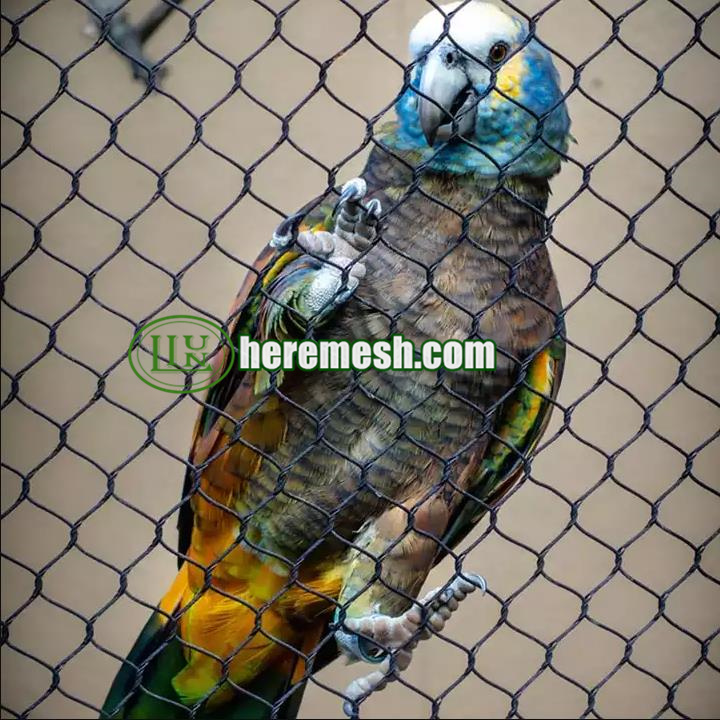
1. Large aviaries, open-air bird enclosures, and parrot houses. Birds are visually sensitive, and strong glare can easily cause stress or lead to collisions with the netting. Species such as parrots and macaws have a strong tendency to peck. Spray-painted or plastic-coated surfaces can be pecked to pieces and accidentally ingested. Black oxide zoo mesh offers two key advantages: no debris and low reflectivity. These features make it the perfect solution and the most widely used option in zoos worldwide. Large expanses of black zoo mesh on aviary roofs virtually blend into the sky, eliminating visual barriers.
2. Immersive ecological exhibits. The core objective of these exhibits is to recreate native natural environments, where landscape design requires artificial structures to be as inconspicuous as possible. Natural-colored, shiny metal mesh disrupts the landscape, whereas black oxide zoo mesh blends seamlessly with trees, rocks, and shadows to achieve an optimal visual effect.
3. Close-up visitor viewing of enclosure mesh. In these exhibits, visitors stand very close to the mesh. Natural-colored mesh panels would obstruct their view. Black zoo mesh eliminates glare and enhances the visitor experience, making it ideal for animal display cases and close-up viewing barriers.
Conclusion
Black oxide zoo mesh is a high-end enclosure solution for animals. Its core value lies in meeting three major requirements simultaneously: animal safety, visual invisibility and high-strength protection. When purchasing black stainless steel zoo mesh, comprehensive evaluation should be carried out from multiple dimensions including base material, mechanical indicators, surface treatment and animal habits. Differentiate the gaps between mesh panels of various materials and select the proper material matching project requirements, so as to adopt long-term stable, safe and reliable construction materials for zoos.