

Stainless Steel Rope Net: The Ideal Choice for Gibbon Cage Fence

Stainless Steel Outdoor Aviary Netting: Top Choice for Eco-Friendly Aviaries
01/22/2026
Macaw Aviary Bird Netting Delivered to the Bird Park
02/04/2026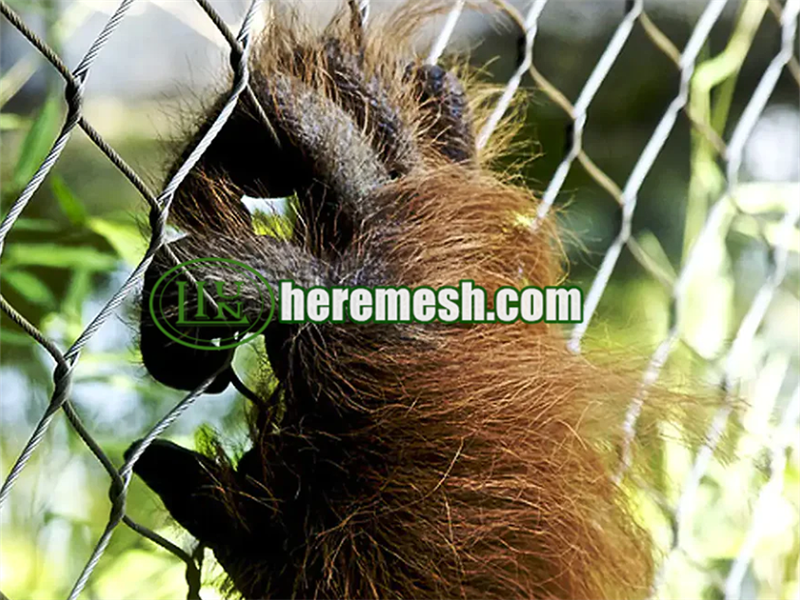
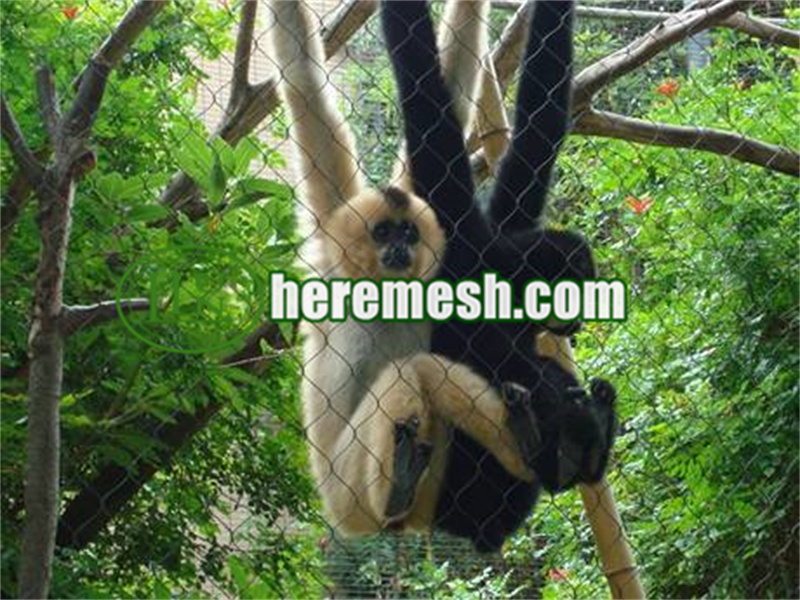
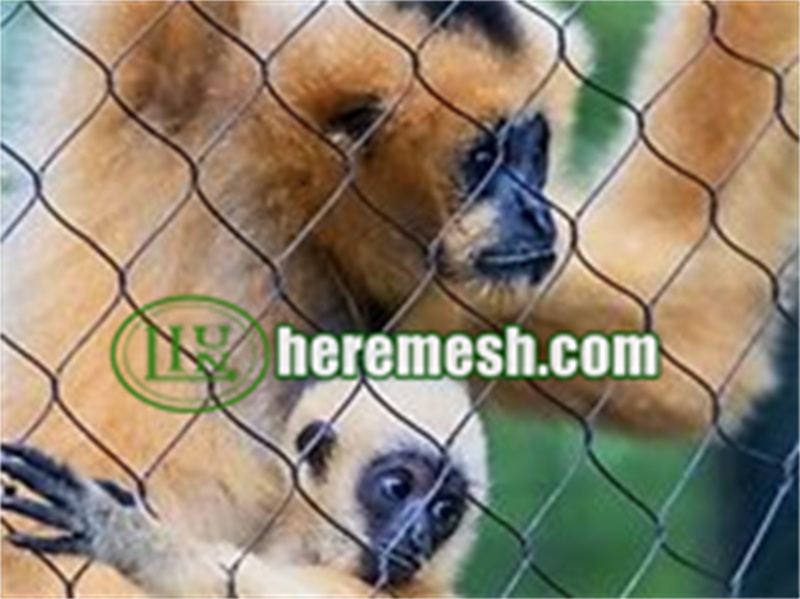
Gibbons, as typical arboreal primates, are renowned for their agile climbing abilities and graceful aerial swinging movements. The creation of their captivity environment must not only meet the animal welfare requirements, ensure sufficient activity space and natural habits, but also take into account safety protection and viewing experience. Stainless steel rope nets, with their unique performance advantages, have become the core material of the gibbon cage fence systems in modern zoos and wildlife conservation bases, creating a safe, comfortable and nature-closer habitat for gibbons.
The Core Advantage for Adapting to The Habits of Gibbon Cage Fence
Gibbons require a large amount of vertical movement and aerial travel on a daily basis. Therefore, gibbons have strict requirements for the flexibility, safety and weather resistance of the enclosure net. The stainless steel rope net precisely meets these demands.
Superior Strength Combined with Excellent Flexibility
It combines high strength with flexibility. Although the gibbons are not particularly large in size, the impact force generated during their climbing cannot be underestimated. The stainless steel rope net is made of 304 or 316L stainless steel wire ropes and is commonly structured in 7×19 (7 strands of 19 wires). The rope diameters ranging from 2.4mm to 3.2mm have extremely strong breaking tension. And it can easily withstand the impact and biting of the gibbons. At the same time, the stainless steel gibbon cage fence has good flexibility. It will not cause rigid injuries due to animal collisions, protecting the fur and bones of the gibbons from damage.
Safe Design
It is designed for safety without any hidden dangers. The surface of the hand-woven stainless steel rope net is smooth without burrs. And all nodes are specially treated with no sharp edges, completely avoiding the risk of being scratched or caught by the long-arm apes when climbing. Compared to traditional metal nets and wooden fences, the stainless steel rope net is non-toxic and does not rust. Even if the gibbons gnaw or come into contact with it, it will not cause poisoning or infection problems, ensuring the health of the animals from the source.
High Transparency & Aesthetics, Integrated with Natural Environment
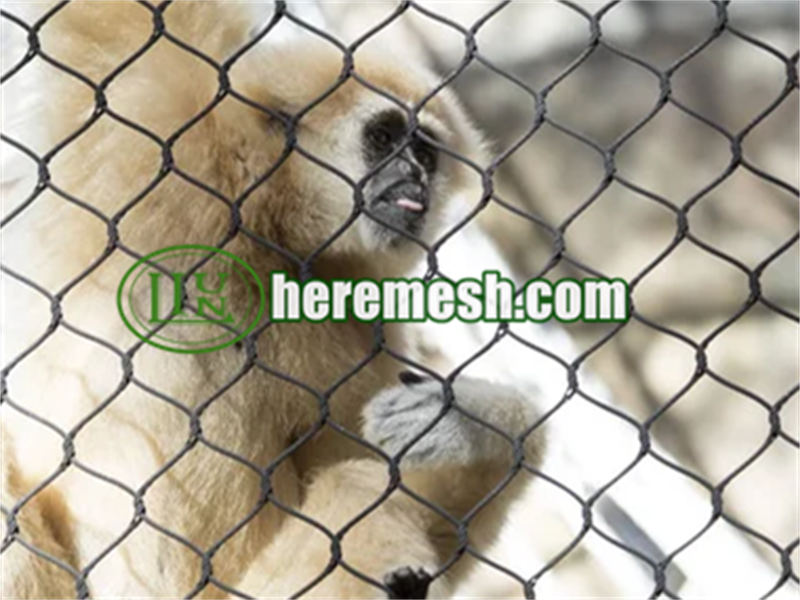
It is transparent, beautiful, and integrates naturally. The diamond-shaped mesh design has an extremely high light transmittance and does not block the view. It not only allows tourists to clearly observe the activities of the long-arm apes, but also provides sufficient lighting and ventilation within the net, simulating the forest environment where the gibbons live in the wild, reducing the stress response caused by captivity. At the same time, the net body is slender and does not stand out, which can be naturally integrated with the park’s landscape, enhancing the overall viewing quality.
Ultra-Long Service Life
It has an extremely long service life and low maintenance cost. Stainless steel materials have excellent weather resistance and corrosion resistance, can withstand adverse environmental conditions such as rain, ultraviolet rays, and humidity, and have a service life far exceeding that of ordinary netting materials, reaching over 30 years. Daily maintenance only requires regular checks of the net tension and connection nodes, without the need for frequent replacement or major repairs, significantly reducing the operating and maintenance costs of the zoo.
The core difference from traditional materials
In the application of gibbon nets, stainless steel rope nets demonstrate significant advantages over traditional materials, effectively avoiding various usage problems.
Traditional metal welded nets are rigid and lack flexibility. When gibbons collide with them, they are prone to suffer external injuries, and the net surface is prone to rusting and bacterial growth, posing potential health risks for the animals. Wooden fences have a natural appearance but have weak load-bearing capacity and are easily chewed and damaged, with a typical lifespan of no more than 5 years and high maintenance costs. PVC nets have poor weather resistance and tend to age and crack under long-term exposure to the sun, unable to withstand the grasping and impact of gibbons. Stainless steel rope nets combine safety, durability, and ecological characteristics. They not only solve the usage defects of traditional materials but also adapt to the behavioral habits of gibbons, making them the core choice for modern netting upgrades.
Specification Selection for Gibbon Cage Fence
Considering the physical characteristics and behavioral traits of gibbons, the selection of stainless steel rope net specifications must balance safety and practicality. Key parameters include rope diameter, mesh aperture, and material grade, complemented by a well-designed support structure.
Material Selection
For material selection, prioritize 316L stainless steel, which offers superior corrosion and oxidation resistance compared to 304 stainless steel. 316L is particularly suitable for zoos in humid, rainy, or coastal regions. It is effectively preventing rust caused by salt spray and moisture while extending the enclosure’s lifespan. In dry inland areas, 304 stainless steel meets basic requirements, balancing cost-effectiveness and practicality.
Specification Selection
Rope diameter and mesh aperture must precisely match gibbon body dimensions to prevent escape and injury. Stainless steel rope netting with a diameter of 2.4mm to 3.2mm is recommended, with mesh apertures controlled between 51mm × 51mm and 76mm × 76mm. This specification prevents juvenile gibbons from slipping through while allowing adult gibbons to climb and grasp freely, ensuring the net’s flexibility and breathability. For enclosures housing larger gibbon species, increase rope diameter while maintaining mesh size to enhance load-bearing capacity.
Support Structure Requirements
Support structures must accommodate gibbons’ vertical movement requirements. Given their proficiency in scaling heights, enclosure fencing should be no less than 6 meters (approximately 20 feet) tall. The top may incorporate arched or sloped protective netting to prevent escape attempts. The support framework should utilize steel pipes with column spacing of 3 to 4 meters. Connectors such as stainless steel ferrules and anti-theft bolts should be used to ensure a secure attachment between the netting and the framework. Tension should be controlled between 15 and 18 KN to prevent netting slackness that could compromise protective effectiveness.
Key Points for Construction and Maintenance
The construction quality of stainless steel rope netting directly impacts the safety and stability of gibbon cage fence. It must adhere to professional procedures and standards while establishing a regular maintenance system.
Prior to construction, site leveling and survey layout must be conducted. Enclosure boundaries should be planned based on gibbon activity ranges to ensure precise post positioning. Foundation construction involves concrete pouring with embedded anchor bolts to ensure post stability. In areas with loose soil, deepen foundation pits and reinforce with steel frameworks to prevent fence tilting or collapse from animal impacts.
During net installation, pre-tension each panel to 1.2 times the design tension before securing it to the support framework, ensuring a flat, wrinkle-free surface. The gap between the net and frame must not exceed 5mm to prevent gibbons from squeezing through. Stainless steel specialized clips and sleeves are used at connection points to enhance joint strength. Anti-loosening washers can be added to prevent loosening over time.
Daily maintenance should focus on three key areas: First, regularly inspect net tension. Adjust tensioners promptly if slack is detected to ensure the net remains secure. Second, inspect connection points and support structures. Check for loose clips or bolts, and assess steel pipe frames for corrosion. Replace or repair any issues promptly. Third, clear debris and dirt from the netting to maintain ventilation and appearance. Rinse with clean water; avoid using corrosive cleaning agents. Additionally, conduct an annual comprehensive safety inspection, including impact resistance and breaking strength tests, to ensure the enclosure consistently meets safety standards.
Customized Service
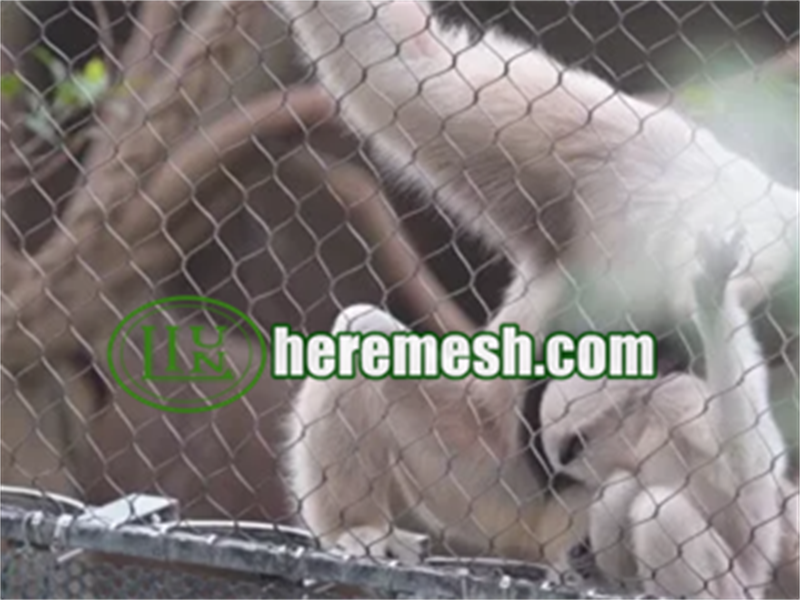
The gibbon exhibit areas vary in layout and housing capacity. Stainless steel gibbon cage fence offers comprehensive customization to precisely meet diverse site requirements. For large open exhibits, a wide-span mesh design with arched top protection maximizes gibbon activity space. For rehabilitation enclosures, denser mesh (38mm × 38mm) and finer rope diameter (2.0mm – 2.4mm) can be selected to balance protection with comfort, preventing secondary injuries to injured gibbons. Additionally, custom services like black oxidation can be provided to align the enclosure with the park’s landscape design, ensuring it blends seamlessly with the overall aesthetic. During customization, factors such as gibbon species, population size, and site topography must be considered. Collaboration between architects and zoo management is essential to ensure enclosures meet safety standards while fulfilling animal welfare and visitor viewing requirements.
Conclusion
Today, stainless steel rope netting has become the preferred enclosure material for gibbon exhibits in leading zoos worldwide. It not only meets core captive protection requirements but also embodies modern animal welfare principles—allowing gibbons to freely exhibit natural behaviors within secure boundaries while minimizing the physiological and psychological impacts of captivity. In wildlife parks, habitats enclosed by stainless steel gibbon cage fence provides a secure living environment that supports healthy growth.
Creating an ideal captive environment for gibbons hinges on balancing safety with natural instincts. Stainless steel gibbon enclosures masterfully solve this challenge through their strength, safety, weather resistance, and ecological compatibility. They establish a reliable “safety barrier” for gibbons while preserving activity spaces that closely mimic nature. Their modular design and customizable services adapt to diverse park layouts and design requirements, delivering precise enclosure solutions for both large open exhibits and small rehabilitation enclosures. As the premier choice for zoo gibbon cage fence systems, they provide robust support for primate conservation and science education initiatives.