

Snow Leopard Enclosure Netting for Zoos and Wildlife Reserves

Macaw Enclosure Mesh from Factory Direct Shipped to Australia
04/09/2026
All-Round Safety Protection, High-Performance Safety Barrier Metal Net
04/23/2026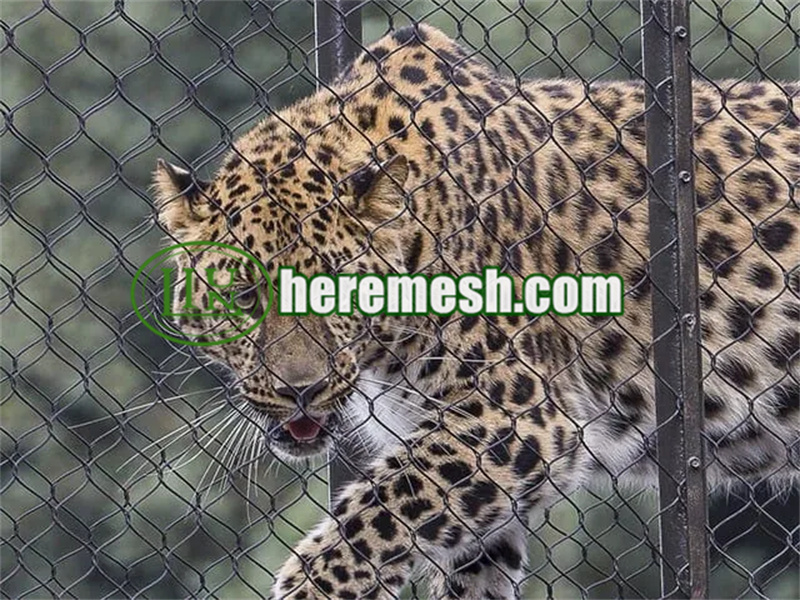
Different types of enclosures can meet the living habits of different animals. Snow leopard enclosures are different from ordinary fences. Snow leopard enclosure netting needs to simultaneously meet the four core requirements of “safety protection, animal-friendliness, environmental adaptation, and clear visibility for viewing”. Enclosures are indispensable core protective facilities for zoos, wildlife rescue centers, and nature reserves. Stainless steel rope net, with its high strength, flexible safety, and long-lasting weather resistance, have become the mainstream choice for snow leopard enclosure netting in modern zoos and nature reserves.
What is a Special Snow Leopard Enclosure Netting for Zoos?
The snow leopard enclosure netting for zoos is not an ordinary protective netting. It is a custom-built barrier designed specifically for the captive display, breeding, wild training, and reserve isolation of snow leopards. This net is a customized product that balances safety, animal welfare, visibility, and practicality. It uses 304 or 316 stainless steel wire rope as the core material. It manufactured with professional weaving techniques (commonly 7×7 or 7×19 strand construction). The entire mesh is uniform, flat, and highly flexible. Specifications and structure are tailored to the physiological habits and activity characteristics of snow leopards to fully meet their conservation requirements.
Core Standards for Special Snow Leopard Enclosure Netting
Compared with ordinary zoo enclosure netting, snow leopard enclosure netting follows strict core standards, all of which are essential. These standards are what distinguish it from other types of metal netting.
Safety and Protection Standards
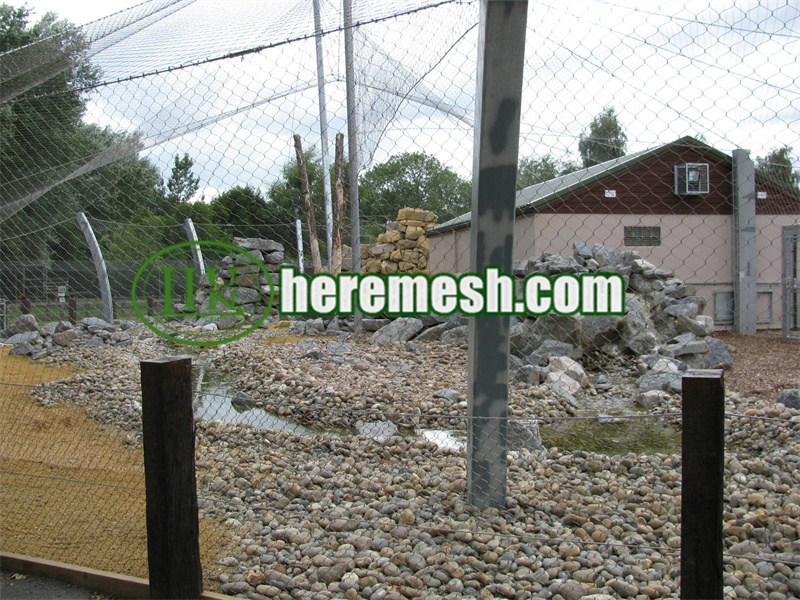
First, safety and protection standards to eliminate escape and damage risks. Snow leopards have great explosive power, sharp teeth and claws. The enclosure netting must provide sufficient tensile strength, impact resistance and bite resistance. High-strength netting can withstand full-force charging, biting and climbing by snow leopards. Mesh aperture must be precisely controlled, usually 50–76mm with a wire rope diameter of 2.4–3.2mm. Fence height shall be no less than 4 meters. Key areas such as outdoor activity yards and wild-training zones must be equipped with top netting and underground netting to form a fully enclosed system, completely preventing snow leopards from escaping.
Animal Welfare Standards
Second, animal welfare standards to reduce stress and injury. Snow leopards are naturally sensitive to environmental changes and external stimuli. Traditional rigid netting easily causes collisions during running, climbing and jumping, leading to fur scratches, limb injuries and stress responses. Special snow leopard enclosure netting must be flexible and cushioning. It provides elastic buffer upon impact to reduce force and avoid direct harm. The netting surface is smooth to prevent scratches, creating a safe and comfortable environment that supports natural behaviors.
Environmental Adaptability Standards
Third, environmental adaptability standards for complex highland conditions. Whether in zoo snow leopard exhibits or high-altitude nature reserve isolation zones, conditions often include extreme temperature changes, wind and snow erosion, and strong ultraviolet radiation. Netting material must have excellent weather resistance, corrosion resistance and aging resistance. It must not rust, deform or become brittle in extreme environments, ensuring long-term stable use, lower maintenance costs and less frequent replacement.
Practical Adaptability Standards
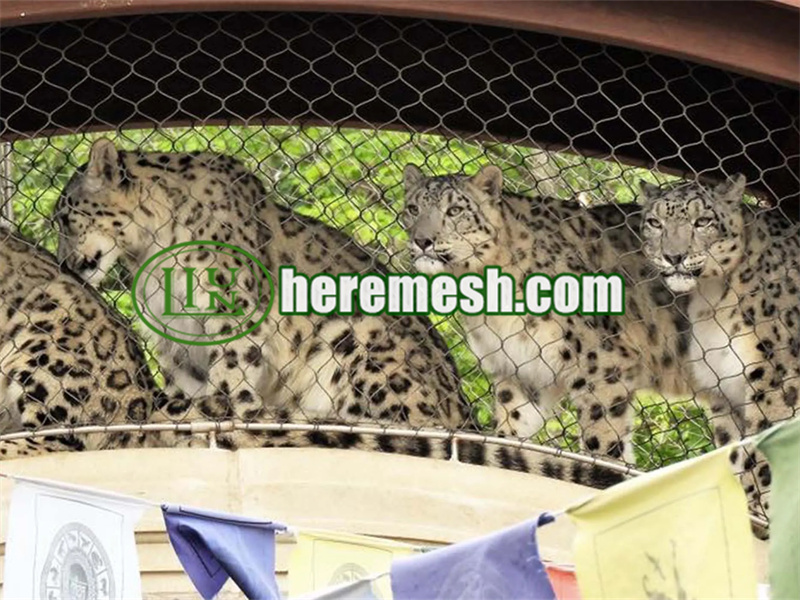
Fourth, practical adaptability standards for both viewing and monitoring. Zoo snow leopard enclosure netting must support both visitor experience and keeper monitoring. The netting offers high transparency without blocking vision, allowing visitors to clearly observe snow leopards in their natural posture. It also enables keepers to monitor feeding, activity and health around the clock and detect abnormalities in a timely manner. For reserve use, the netting adapts to complex terrain, flexibly fitting the landscape to provide full-area isolation and protection.
Why Choose Stainless Steel Wire Rope Mesh as Leopard Netting
Among various enclosure mesh materials, stainless steel rope netting is the top choice for snow leopard-specific enclosures, owing to its unique material advantages and structural characteristics. It fully meets the multiple requirements of snow leopard enclosures, including safety, animal welfare, weather resistance and practicality.
Ultimate Safety
Safety is the core requirement for snow leopard enclosures, and also the most prominent advantage of stainless steel rope netting. With high-quality base materials and professional weaving technology, stainless steel rope netting achieves both high strength and high toughness.
First, the base material delivers outstanding strength. Special stainless steel snow leopard enclosure netting can withstand full-force charging and biting by snow leopards, without cable breakage or mesh damage.
Second, the structural design is scientific. Stainless steel cable netting adopts a 7×7 or 7×19 strand braided structure. This weaving method distributes force evenly across the mesh; even under local impact, the load is dispersed throughout the entire netting, preventing local failure. Meanwhile, the mesh remains tight and stable, with no deformed or loose openings.
Flexible Protection
The flexible nature of stainless steel rope netting matches the welfare needs of snow leopards, effectively reducing stress and physical injuries, and allowing snow leopards to maintain natural behaviors in captive environments. The flexible yet sturdy mesh enables snow leopards to perform natural activities such as climbing and jumping freely, lowering stress caused by environmental restrictions.
Long-Lasting Weather Resistance
Snow leopard captive breeding and conservation sites are often located in harsh environments, requiring enclosure materials with excellent weather and corrosion resistance for long-term stable use and reduced maintenance costs.
Stainless steel rope netting features superior corrosion resistance, aging resistance and weatherability. Type 304 stainless steel withstands general exposure, rain and humidity. Type 316 stainless steel adapts to more severe conditions such as high altitude, high salt spray and extreme cold. In harsh environments, stainless steel snow leopard enclosure netting do not rust or deform, with a service life of more than 30 years – far superior to traditional enclosure materials.
Transparent and Aesthetic
For zoos, snow leopard enclosure netting must provide safety while ensuring visitor experience. For nature reserves, enclosures need to facilitate keepers and researchers in monitoring snow leopards’ behavior and health. The transparent and aesthetic design of stainless steel rope netting perfectly satisfies these needs.
Woven with thin-diameter steel cables, stainless steel rope netting offers extremely high transparency, with light transmission exceeding 90%. It does not block visitors’ view, allowing clear observation of snow leopards’ natural postures, feeding and climbing, and improving the visiting experience. In addition, mesh color can be customized for different scenarios. For example, black netting blends into zoo landscaping, reducing visual obtrusiveness. The high transparency also preserves snow leopards’ vision, allowing them to clearly perceive their surroundings and adapt more quickly to captive or semi-wild environments.
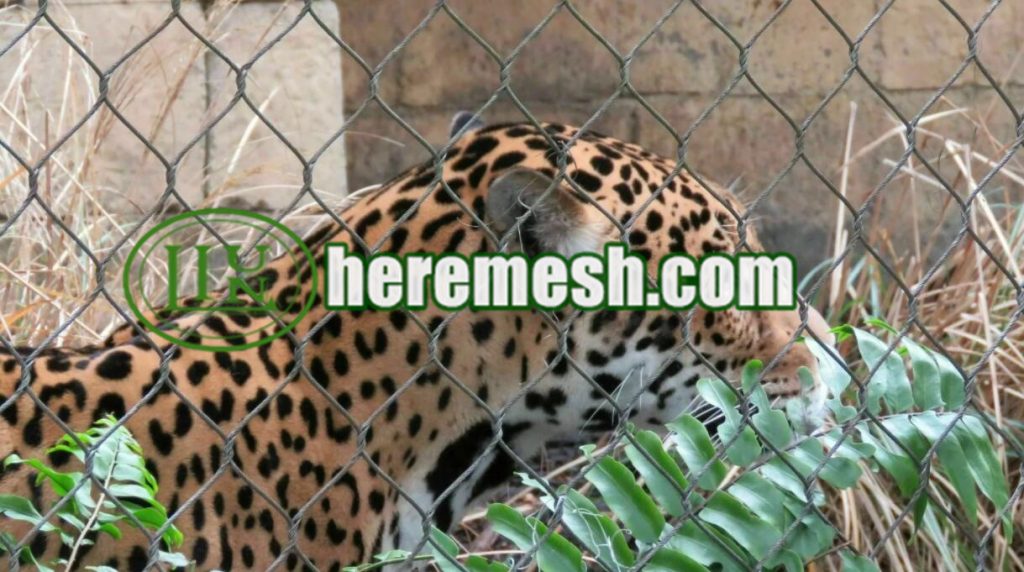
Flexible Application Scenarios of the Snow Leopard Enclosure Netting
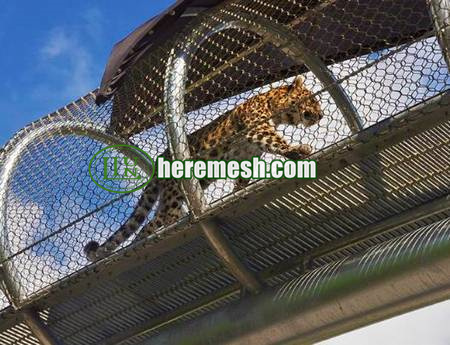
Stainless steel rope netting, with its advantages, is widely used in various snow leopard protection scenarios such as zoos, snow leopard breeding centers, and nature reserves. It covers multiple fields including enclosure protection, public exhibition, wild training, and reserve isolation.
Special Netting for Snow Leopard Enclosures
The enclosure is the core area where snow leopards rest, eat and breed on a daily basis. The safety and comfort of the snow leopard enclosure directly affect its health condition. The stainless steel rope mesh used as the enclosure netting can fully meet the living needs of snow leopards.
The inner enclosure netting is mainly used for snow leopards to rest at night, shelter from rain and cold. The core requirement is safety, warmth and comfort. Therefore, the mesh holes of the inner enclosure netting are controlled below 40mm to prevent the snow leopard’s limbs from getting stuck. The outer activity field netting is the main area where snow leopards move around, climb and exercise during the day. The core requirement is safety, transparency and natural fit. The rope diameter of the outer activity field netting is selected as 3.2mm, and the mesh holes are controlled between 50-76mm. The net body is transparent, facilitating the observation of the snow leopard’s activity status by tourists and keepers.
Public Exhibition Netting for Snow Leopards
The public exhibition area for snow leopards in the zoo is an important place for visitors to learn about snow leopards and to popularize knowledge about species conservation. Therefore, the enclosure netting not only needs to have safety protection functions, but also needs to take into account the viewing experience of visitors and the aesthetic appeal of the exhibition area. The stainless steel rope netting, with its transparent and beautiful advantages, has become the ideal choice for public exhibition enclosures.
The public exhibition enclosure net for snow leopards adopts a large-span design, reducing the number of columns and improving the transparency, allowing visitors to observe the snow leopards from multiple angles and obtaining a better viewing experience. In addition, the exhibition enclosure netting can be combined with transparent protective glass and stainless steel rope netting for dual protection, forming a safe isolation between visitors and snow leopards, which not only ensures the safety of visitors but also does not affect the viewing line of sight.
For large exhibition areas, a partitioned enclosure net design can be adopted, dividing the exhibition area into activity area, rest area, and feeding area. Each area is separated by different-sized enclosures, which not only ensures the activity space of the snow leopards but also facilitates the management of the keepers and the observation of visitors.
Isolation Netting for Snow Leopard Nature Reserves
The core requirement of the snow leopard nature reserve is to protect the wild habitat of snow leopards and prevent human activities and external disturbances. The isolation fences in the reserve are mainly used to divide the core area, buffer zone and experimental area of the snow leopard reserve. They are installed flexibly according to the terrain characteristics, fitting the complex terrain and reducing the construction difficulty and damage to the natural environment. The stainless steel snow leopard enclosure netting have a long service life and do not require frequent maintenance, making them suitable for reserves with difficult maintenance.
Conclusion
The enclosure netting, as the core facility for raising, training and isolating snow leopards as well as for protecting them in reserves, directly affects the survival safety and welfare guarantee of snow leopards. The stainless steel rope netting, with its unparalleled advantages such as high strength, flexible safety, long-lasting weather resistance, transparent and beautiful appearance, and flexible customization, perfectly suits the living habits and protection needs of snow leopards, and has become the preferred choice for snow leopard-specific wire nets in modern zoos and nature reserves.
The diverse application scenarios of the stainless steel rope netting have built a safe, natural and livable activity space for snow leopards, and also provided reliable protection support for the conservation of rare species. With the continuous upgrading of stainless steel rope netting technology, its application will be more extensive and more focused on animal welfare.