

Stainless Steel Outdoor Aviary Netting: Top Choice for Eco-Friendly Aviaries

Stainless Steel Cargo Net: Optimal Truck Cargo Covering Solution
01/16/2026
Stainless Steel Rope Net: The Ideal Choice for Gibbon Cage Fence
01/29/2026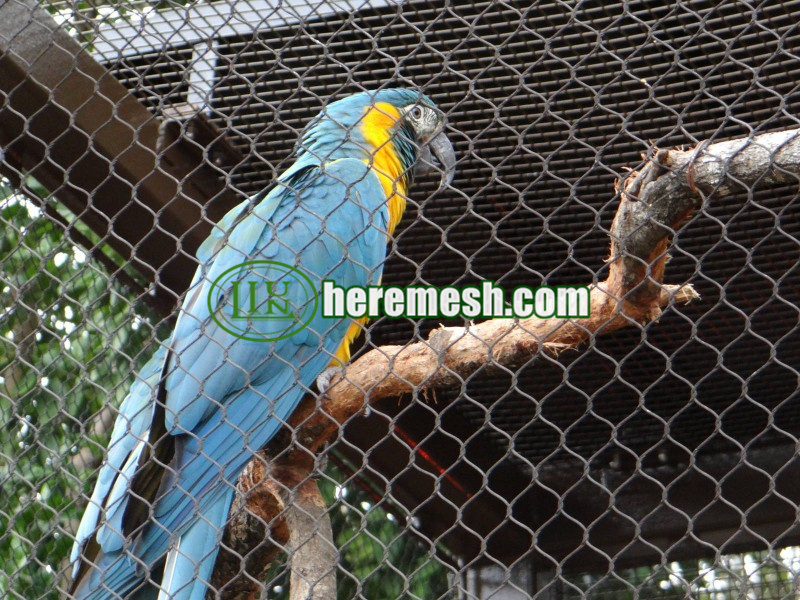
In today’s era of accelerating urbanization, achieving harmonious coexistence between humans and nature has become a critical challenge. Serving as a bridge between urban life and nature, ecological bird shelters provide safe habitats for birds while allowing the public to experience the beauty of wildlife up close. Stainless steel cable mesh, with its unique material advantages and adaptability, has become the core building material for constructing high-quality ecological outdoor aviary netting. It not only lays a solid foundation for avian habitats but also builds a bridge for human-nature interaction.
What is an ecological aviary?
An ecological aviary is not merely a simple “cage” for birds, but rather a multifunctional space designed to simulate natural habitats while balancing the survival needs of birds with human requirements for observation and conservation. Its core principle lies in abandoning the constraints of traditional enclosed breeding to create living environments for birds that closely resemble their native habitats. Simultaneously, ecological aviaries enable the public to achieve dual values of ecological observation and science education without disrupting the birds’ normal lives.
The application of stainless steel rope netting perfectly aligns with the core requirements of ecological aviaries. Compared to traditional enclosed materials like brick, stone, or glass, stainless steel outdoor aviary netting offers exceptional transparency, ensuring ample sunlight and air circulation. This netting recreates the natural light and airflow conditions birds experience in the wild while providing them with expansive views, minimizing feelings of spatial confinement.
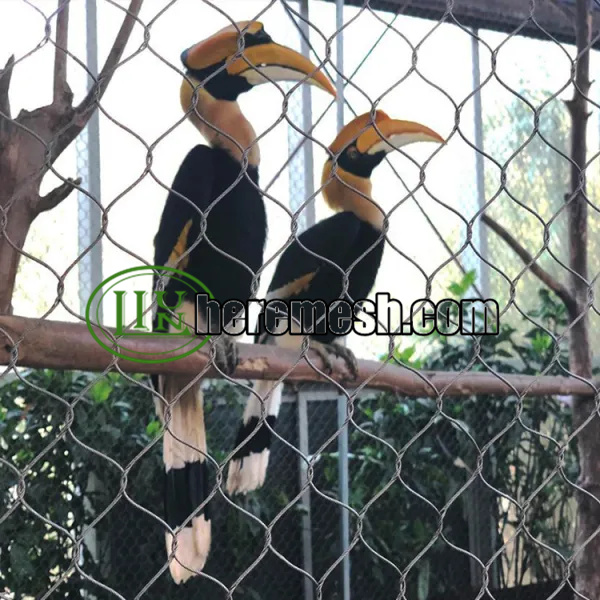
Additionally, the flexible structure of the rope netting prevents scratches to birds’ feathers or limbs. When combined with natural elements like branches, vegetation, and water sources, ecological outdoor aviary netting can rapidly create layered habitats—such as tree-dwelling zones, shrub-feeding areas, and aquatic play zones—to meet diverse bird species’ nesting and breeding needs. Whether in ecological exhibits of urban parks, aviaries of zoos, or nature observation points of scenic areas, stainless steel rope net ecological bird enclosures achieve a three-way win: providing birds with a safe home, offering humans an enjoyable viewing experience, and supporting ecological cycles.
The Durable Choice for Outdoor Aviary Netting
Eco-friendly bird enclosures are typically placed in outdoor environments, enduring prolonged exposure to wind, sunlight, rain, temperature fluctuations, and corrosion from bird droppings. This demands exceptional durability and corrosion resistance from construction materials. Stainless steel rope netting, with its superior material properties, emerges as the ideal choice for ecological outdoor aviary netting, completely resolving the pain points associated with traditional netting materials—such as susceptibility to aging, damage, and high maintenance costs.
Regarding corrosion resistance, premium stainless steel rope netting utilizes 304 or 316 grade stainless steel. Its surface undergoes specialized brushing and anti-corrosion treatment, effectively resisting erosion from outdoor humidity, rainwater, UV radiation, and acidic substances in bird droppings. It remains resistant to rust, deformation, and breakage. Even in harsh environments like coastal areas with high salt fog or southern regions with heavy rainfall and humidity, it maintains long-term structural stability. Its service life can reach several decades, far exceeding traditional materials like nylon netting or wire mesh. Regarding toughness and strength, stainless steel rope netting employs a multi-strand wire weaving technique, delivering high tensile strength and exceptional resilience. It withstands extreme weather impacts like strong winds and hail while supporting the weight of clustered birds. Simultaneously, it effectively prevents predator intrusions from snakes, rodents, and other threats, creating a secure and stable habitat barrier for birds.
Furthermore, the durability of stainless steel outdoor aviary netting is evident in its low-maintenance design. Its smooth surface resists dust and droppings accumulation, requiring only simple wiping for routine cleaning without frequent replacements. Even localized damage can be repaired selectively without replacing the entire net, significantly reducing long-term maintenance costs and labor for outdoor aviaries. This provides robust support for the stable, sustainable operation of ecological bird habitats.

Presence of Recreational Spaces
The “welfare and comfort” of birds serves as the core metric for evaluating aviary quality. A space that ensures welfare and comfort not only provides sufficient activity area but also incorporates environmental design that meets the physiological and psychological needs of the animals. Stainless steel rope netting, with its unique structural advantages, creates activity spaces for birds that combine safety with comfort. This facilitates the display of natural behaviors and enhances overall welfare standards.
Core Elements of a Comfortable and Relaxing Space
A comfortable and enriching space for birds requires three essential elements: ample freedom of movement, diverse behavioral expression tools, and a secure habitat environment.
Freedom of movement refers to the animal’s ability to fly, run, climb, and jump freely within the space without restrictions from the enclosure structure. Behavioral expression tools refer to facilities such as trees, rocks, and ropes installed within the exhibit area, which guide animals to exhibit natural behaviors like foraging, nesting, and socializing. A safe habitat environment means enclosure materials pose no harm to animals and provide spaces for them to retreat from disturbances. Traditional enclosure materials often fail to meet these requirements, whereas the application of stainless steel outdoor aviary netting makes the creation of such welfare-friendly spaces possible.
Stainless Steel Outdoor Aviary Netting Enhance Birds’ Freedom of Movement
The flexible structure of stainless steel rope netting breaks free from the rigid constraints of traditional aviaries, offering birds greater freedom of movement.
Unlike fixed walls made of reinforced concrete, stainless steel rope netting enables the construction of open, three-dimensional aviary spaces. For instance, in large walk-through exhibits, it can form uniquely shaped bird enclosures. Birds of prey like eagles and hawks can freely soar within corridors, fully showcasing their flight capabilities. Furthermore, the installation methods for stainless steel rope netting are flexible and diverse, allowing the shape of enclosures to be adjusted according to the behavioral habits of the birds.
Stainless Steel Outdoor Aviary Netting Enable Animals to Express Natural Behaviors
The expression of natural behaviors in animals is a crucial indicator of their welfare. Stainless steel rope netting is designed to effectively encourage animals to exhibit natural behaviors. Traditional glass aviaries restrict birds’ flight height and range, leading to the phenomenon of “behavioral stereotypy.”
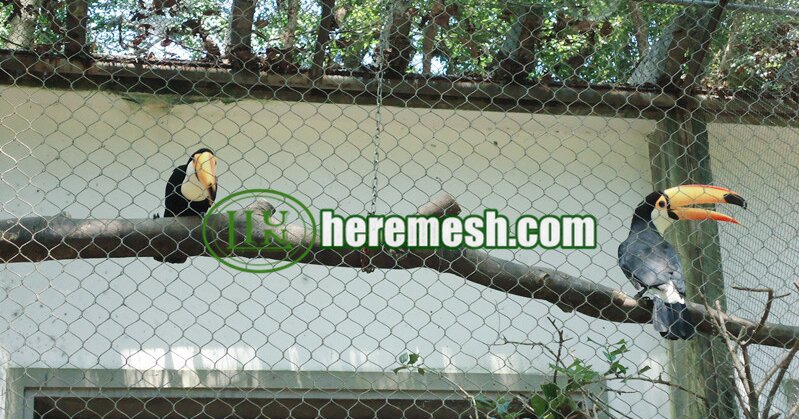
In contrast, aviaries constructed with stainless steel rope netting offer expansive space and excellent light transmission. Birds can freely spread their wings and fly, while also building nests and resting on the netting. The moderate mesh size prevents obstruction of flight while deterring predator intrusion, providing a secure breeding environment. The flexible structure of the rope netting also cushions the impact of raptor collisions, minimizing injury.
Create a safe habitat
A safe habitat is fundamental to animal well-being and comfort. Stainless steel rope netting provides comprehensive safety for birds, from its material composition to its structural design.
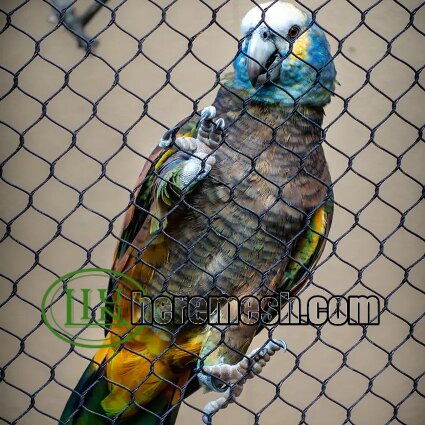
First, stainless steel rope netting has no sharp edges or harmful substances. Birds cannot be injured by contact, nor can they contract diseases from accidentally ingesting rust particles. Second, the netting offers strong protective performance, effectively blocking predators and providing birds with a secure resting space.
Additionally, stainless steel rope netting creates “refuge spaces” for animals. By incorporating concealed corners formed by the netting within exhibit areas, birds can retreat to rest when feeling stressed or disturbed, reducing their stress response. This design fully respects the psychological needs of animals, further enhancing their welfare and well-being.
Public Safety
Public safety is the fundamental requirement for constructing zoo exhibits. A qualified exhibit must ensure bird welfare while providing an absolutely safe viewing environment for the public. Stainless steel rope netting, with its exceptional protective performance and user-friendly design, serves as the core barrier for safeguarding public safety.
Core Public Safety Requirements
Zoo visitors span all age groups, including children, seniors, and adults. Thus, core public safety requirements include: preventing direct animal-human contact; preventing injuries from damaged protective structures; and preventing accidental falls or pinching injuries.
Traditional protective measures exhibit significant shortcomings in meeting these requirements. Glass barriers are prone to shattering, with broken glass posing a hazard to visitors. Standard wire mesh lacks sufficient strength, making it susceptible to bird damage and posing escape risks. While reinforced concrete barriers offer safety, they severely limit visibility and detract from the viewing experience. The implementation of stainless steel rope netting effectively resolves these issues.
Stainless Steel Cable Nets: A Robust Safety Barrier
The high tensile strength of stainless steel outdoor bird netting makes it a formidable barrier against raptor collisions. For raptor exhibits, nets with 1.6mm+ diameter cables paired with high-strength anchors achieve tensile strengths of thousands of Newtons, effortlessly withstanding violent bird impacts. Even with prolonged animal impacts, the netting remains intact without breaking or deforming, fundamentally eliminating escape risks and potential injuries.
Additionally, stainless steel rope netting features secure knotted joints that prevent wire loosening. Unlike conventional wire mesh, its wires and joints form an integrated structure. Localized damage won’t compromise the entire system, significantly enhancing reliability.
Stainless Steel Cable Netting: Dual Advantages of Safety and Aesthetics
While ensuring public safety, stainless steel cable netting also enhances the viewing experience, achieving “safety and beauty coexisting.”
Compared to reinforced concrete barriers, stainless steel cable netting offers exceptional light transmission, allowing the public to clearly observe birds’ natural behaviors. Unlike glass barriers, it produces no glare, delivering a more authentic viewing experience. Additionally, the flexible structure of stainless steel rope netting effectively cushions accidental impacts. Should someone accidentally fall onto the netting, its elasticity reduces the force of impact, lowering the risk of injury. This human-centered design further enhances the public’s sense of safety during observation.
Convenient Maintenance of Stainless Steel Rope Netting
Maintaining safety barriers is crucial for long-term security. The durable and low-maintenance characteristics of stainless steel rope netting significantly reduce the likelihood of safety hazards.
Stainless steel rope netting boasts a long service life, resisting rust and aging without requiring frequent replacement. Routine maintenance involves only periodic checks of anchor points for stability and inspection of the netting for damage—simple and efficient. In contrast, traditional wire mesh requires regular rust removal and repainting; delayed maintenance leads to corrosion and damage, increasing safety risks. Glass walls necessitate frequent crack inspections, entailing higher maintenance costs and greater complexity.
Conclusion
Ecological outdoor aviary netting serves as vital conduits for harmonious coexistence between humans and nature. Stainless steel rope netting emerges as the optimal choice for constructing high-quality ecological bird enclosures due to its corrosion-resistant, high-tensile durability, open and comfortable spatial advantages, customizable adaptability, and low-carbon, eco-friendly attributes. It creates safe, healthy, and nature-inspired habitats for birds while offering the public secure, premium viewing and educational experiences, aligning perfectly with green ecological development principles. Whether enhancing urban public spaces or protecting birds in nature reserves, stainless steel rope netting will continue playing a pivotal role in building more bird habitats where nature and humanity coexist.