

Stainless Steel Wire Rope Pheasants Cage Netting

Black Oxide Zoo Mesh Shipping to United States
10/16/2026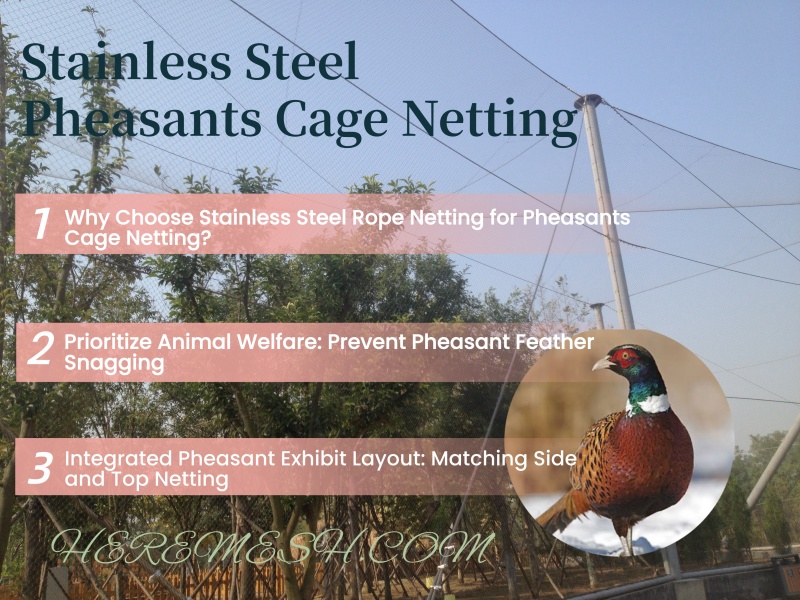
In the planning and design of zoo avian exhibits, the selection of protective netting for the pheasant exhibit has always been a key consideration for landscape design firms and zoo infrastructure departments. Pheasants are naturally alert and highly active, frequently engaging in flight, jumping, and charging behaviors. Standard welded wire mesh, plastic netting, and chain-link fencing can easily injure the birds and have a short lifetime. Furthermore, these conventional mesh materials are visually jarring and disrupt the natural ambiance of the exhibit area. Stainless steel wire rope pheasants cage netting—
also known as flexible stainless steel rope netting — has now become the mainstream protective solution for pheasant exhibits at major zoos, wildlife parks, and science and ecology parks across China, thanks to its multiple advantages, including safety, animal-friendliness, weather resistance, durability, and low visual impact.
Why Zoo Exhibition Projects Prefer Stainless Steel Rope Netting for Pheasants Cage Netting?
There is a fundamental difference between bird exhibits at zoos and standard animal housing facilities. Animal housing facilities prioritize cost, high-density housing, and ease of cleaning. In contrast, the core requirements for a pheasant exhibit at a zoo fall into three main categories. Animal safety and welfare, the visitor viewing experience, and the long-term structural stability of outdoor installations. Traditional metal protective netting has revealed numerous intractable shortcomings during long-term field use. As a result, many zoo renovation projects prioritize the use of stainless steel rope netting as a building material.
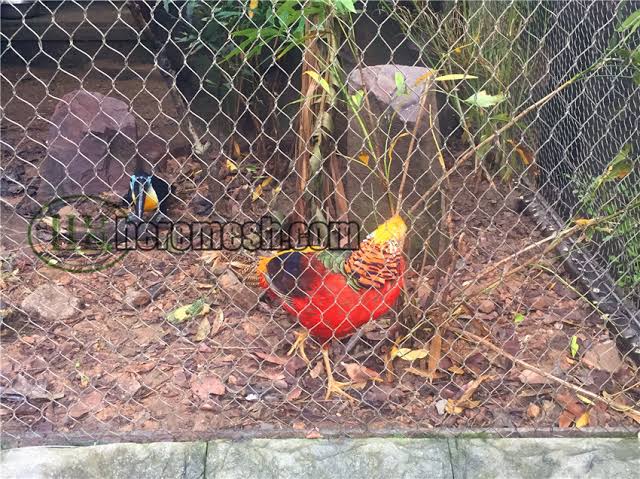
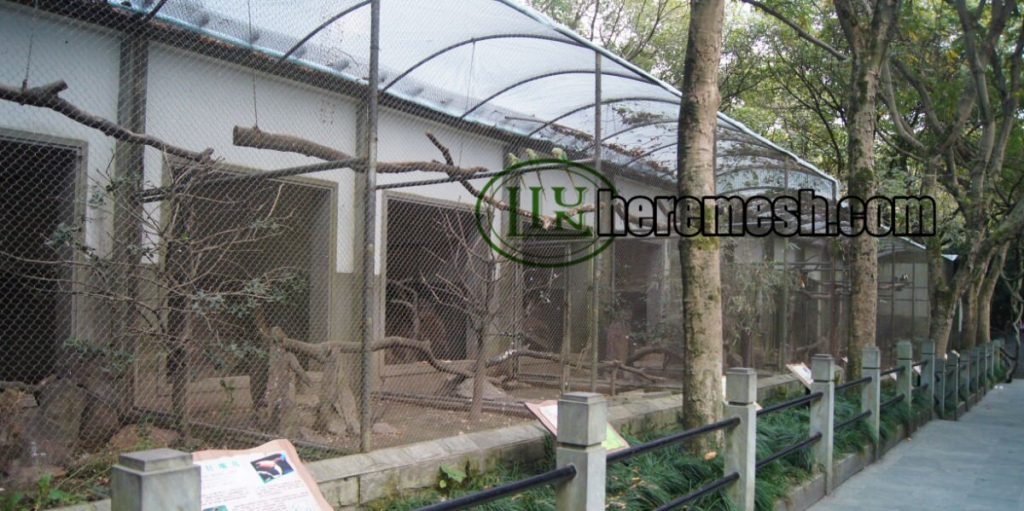
The stainless steel rope netting in the pheasant exhibit features a multi-strand woven design, creating a flexible mesh structure. With no welded joints, the entire mesh surface possesses moderate resilience. When pheasants jump or fly into the netting, the structure absorbs part of the impact, reducing the risk of injury. From a landscape perspective, the fine strands—combined with a black oxidation finish—are virtually imperceptible to visitors from a distance. The finished black mesh preserves the exhibit area’s natural landscape to the greatest extent possible, allowing trees, rocks, and vegetation to be fully showcased. Visitors can observe the pheasants’ natural behaviors up close without being distracted by bulky protective netting.
From an engineering and maintenance perspective, the stainless steel substrate delivers excellent corrosion resistance. It works well for outdoor applications such as waterside pheasant exhibits and avoids frequent replacement. The flexible woven structure fits curved and irregular zoo exhibits for diverse display designs. Precisely because it balances animal welfare, landscape aesthetics, and long-term engineering value. More zoos choose stainless steel rope netting as the main fencing material for new or renovated pheasant exhibits.
Prioritize Animal Welfare: Prevent Pheasant Feather Snagging
Animal welfare is one of the core principles of modern zoo exhibit design. Pheasants are known for their vibrant plumage, which is a key feature for visitors. At the same time, the integrity of their feathers and skin is directly related to their health. Pheasants have unique behavioral patterns—they are adept at short-distance gliding and, when startled, will rush toward the enclosures. Hard mesh surfaces, as well as mesh materials with barbs or sharp edges, pose hidden safety hazards in exhibits.
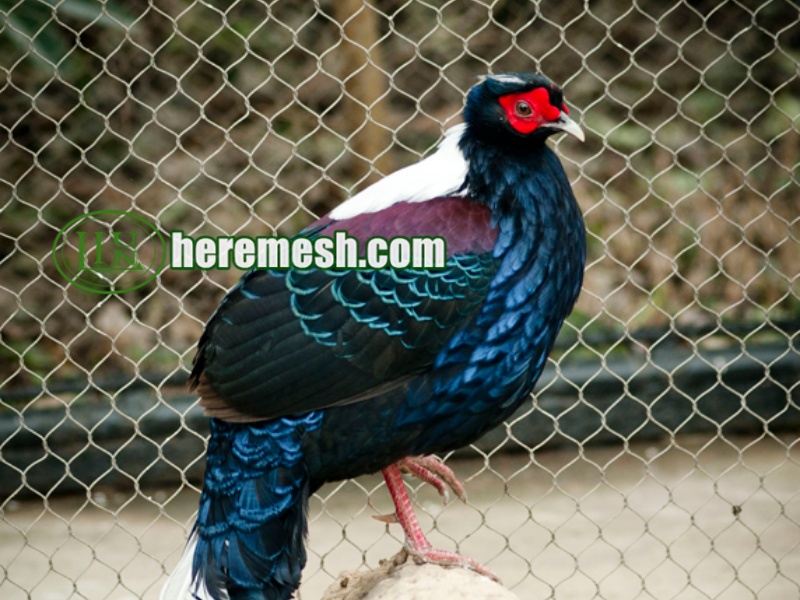
During the manufacturing process of pheasants cage netting, all wire rope ends are securely sealed, and after weaving, the knots are tight and smooth. The entire netting surface is smooth and supple, with no sharp edges that could snag feathers. Compared to rigid, hard mesh, its flexible structure is key to protecting pheasants. The netting has an appropriate amount of stretch. When impacted, it undergoes slight, cushioned deformation rather than rebounding rigidly, significantly reducing contusions and broken feathers caused by pheasants colliding with the mesh.
Long-term observation shows rigid netting frequently injures pheasants’ wings and tail feathers. This not only detracts from the viewing experience, but damaged feathers can also lead to stress or other issues. After switching to stainless steel rope netting, the incidence of such abrasion incidents has dropped significantly.
Furthermore, the rope netting itself is non-toxic, does not leach harmful substances, and poses no risk of poisoning. The netting openings are uniform and regular, with no irregular holes that are too large or too small, preventing the pheasants’ claws or heads from becoming trapped. Per avian exhibit safety standards, stainless steel pheasants cage netting satisfies welfare needs of pheasants and similar ground birds.
How to Choose Weatherproof & Anti-Corrosion Netting for Open-Air Avian Exhibits?
Although both are stainless steel rope nets, the AISI304 and AISI316 grades differ significantly in their suitability for pheasant exhibits. The appropriate choice must be determined based on the specific park environment.
AISI304 stainless steel is the most commonly used material in zoo pheasant exhibits due to its excellent rust resistance. In most inland zoos, under dry or typical outdoor conditions, AISI304 material can be used reliably for many years and offer outstanding value for money. AISI304 stainless steel rope netting meets long-term needs for most inland and forest park pheasant exhibits.
AISI316 stainless steel contains added molybdenum, giving it significantly better resistance to chloride ion corrosion than AISI304. It is suitable for several specific pheasant exhibit environments. Coastal zoos with salt-laden sea spray. Exhibits beside ponds or persistently wet ground. Enclosures cleaned often with chlorine disinfectants. AISI316 resists chloride ion corrosion, delays rust formation, and offers a longer service life.
Selection Guidelines: For most standard open-air pheasant exhibit areas in inland regions, AISI304 stainless steel rope netting is recommended. For coastal parks, waterfront exhibits, and indoor-outdoor pheasant enclosures that require frequent washing and disinfection, choose AISI316 material. Once the correct material is selected, it must be accompanied by regular cleaning and inspections to ensure its corrosion-resistant properties remain effective over time. When purchasing building materials, select materials suited to zoo site conditions to avoid wasted budget on unnecessary AISI316.
Black Oxide Pheasants Cage Netting
The black oxidation process is a surface treatment solution specifically developed to meet the needs of zoo landscape displays. Black oxidation is a chemical conversion coating process. It is not a paint or powder coating. It creates a uniform black passivation film on the surface of the stainless steel substrate. This film has strong adhesion, does not flake, and is safe for use in avian environments.
After treatment, the netting takes on a matte black finish without strong reflections. The black netting blends seamlessly with tree trunks, shadows, and the tones of dark rocks, significantly reducing its visual presence when viewed from a distance. When observing the animals, visitors’ attention naturally focuses on the pheasants and the exhibit’s landscaping rather than the protective structures. For creating immersive avian exhibits, matte black, low-visibility rope netting is a highly favored solution among landscape designers.
Black oxide pheasants cage netting does not alter the base material’s inherent rust-resistant properties. If a project does not prioritize landscape integration and has a limited budget, natural-colored stainless steel may also be selected. For pheasant exhibits with natural themes, an ecological style, or educational displays, black oxide pheasants cage netting is highly recommended.
Integrated Pheasant Exhibit Layout: Matching Side and Top Netting
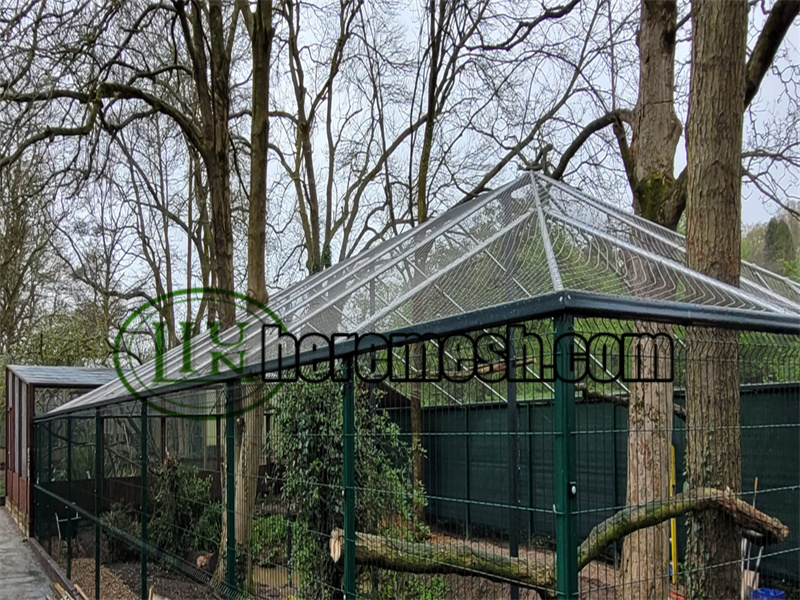
A complete pheasant exhibit area is not simply a single wall of netting, but rather an enclosed space formed by a combination of side netting and top netting. The side netting provides lateral containment, preventing pheasants from escaping sideways and separating visitor walkways from the animal activity area. Its height is designed based on the pheasants’ jumping ability and the elevation differences within the exhibit area. The top netting covers the entire activity area, restricting upward flight and escape. Since many pheasant exhibits are not regular rectangles, the flexibility and adaptability of stainless steel rope netting are fully demonstrated here. The top netting can be tensioned and secured to follow the undulating terrain, eliminating the need for a flat, horizontal roof and allowing it to blend seamlessly with the natural landscape.
Both netting systems can be made of the same material with the same surface finish to ensure a uniform appearance. Alternatively, they can be configured differently. For areas with a higher probability of side collisions, nets with larger rope diameters and higher structural strength are selected. Since bird collisions with the top netting are less frequent, thinner rope diameters are prioritized to further enhance the aesthetic appeal of the canopy.
Conclusion
Compared to traditional mesh fencing and rigid metal mesh, stainless steel pheasants cage netting is better suited to the unique requirements of zoo exhibits and has become a highly recognized protective solution in new construction and renovation projects for pheasant enclosures at domestic zoos in recent years. The complete rope netting system is designed to meet the long-term operational needs of zoo avian exhibits. While ensuring the safety of the pheasants, it preserves the natural beauty of the exhibit area, allowing the animals to move freely and providing visitors with an immersive viewing experience.